
Green Wall Art: Complete Sizing, Styling and Buying Guide
TL;DR
-
Green wall art includes abstract paintings, textured canvas art, botanical compositions, landscapes, minimalist designs, floral artwork, and coordinated sets built around sage, olive, emerald, forest, moss, mint, or blue-green palettes.
-
Wonder Artwork’s green wall art collection is the first place to explore for hand-painted green canvas artwork in vertical, horizontal, square, floral, landscape, minimalist, and two-piece formats.
-
Choose the shade before choosing the subject. Sage and muted olive are easier to use in quiet neutral rooms, while emerald and forest green create stronger contrast and a more dramatic focal point.
-
For art above a sofa, bed, or sideboard, a practical starting width is approximately 60%–75% of the furniture width.
-
Keep the lower edge of the artwork approximately 6–10 inches, or 15–25 centimeters, above the furniture.
-
Green works particularly well with warm white, cream, beige, walnut, oak, black, brass, terracotta, blush, rust, navy, and natural stone.
-
Large horizontal green artwork suits sofas, headboards, sideboards, and dining benches. Vertical artwork suits foyers, hallway ends, narrow consoles, stair landings, and walls between windows.
-
Framed canvas produces a more architectural finish. Rolled canvas offers flexibility for custom local stretching and framing. Sets of two add width and rhythm without requiring one extremely large panel.
-
Avoid matching every accessory to the artwork. Repeat one or two green tones and balance them with wood, linen, stone, leather, metal, or off-white upholstery.
Introduction
Green wall art can alter the balance of a room without requiring green walls, green furniture, or a complete decorative redesign. A single sage canvas can soften a white bedroom. A dark forest-green painting can create depth above a pale sofa. An olive and cream abstract work can connect walnut furniture, natural linen, and black metal details. A green floral pair can bring movement to a wide living-room wall without the visual weight of one oversized panel.

The category is broader than botanical prints. Green artwork may be geometric, painterly, minimalist, textural, floral, landscape-based, or nearly monochromatic. The green may occupy the entire surface or appear as one controlled accent among cream, charcoal, brown, gold, blue, and white.
That range makes green wall art commercially useful. Buyers can search according to room, color, format, material, and design style rather than relying on a single decorative trend.
Green is also visually flexible because it occupies a large family of hues. Yellow-green can feel fresh and energetic. Blue-green can appear cool and architectural. Sage is subdued. Olive has an earthy, historic quality. Emerald creates saturated contrast. Forest green can approach black in low light and becomes more dimensional under direct illumination.
Research into colored interiors and nature-referenced design suggests that green is often positively evaluated, but responses vary according to saturation, brightness, context, culture, lighting, and individual preference. Green artwork should therefore be chosen through direct visual comparison rather than through generalized claims that one color automatically produces a specific emotional result. (PMC)
This guide explains how to choose the right green, compare artwork styles, calculate size, select a frame, coordinate wall colors and furniture, and evaluate products before purchasing.
What Is Green Wall Art?
Green wall art is artwork in which green functions as a dominant, structural, or visually significant color. The subject can be recognizable or abstract. The medium may include canvas painting, textured painting, print, photography, mixed media, relief work, or framed paper art.
Common categories include:
-
Green abstract canvas wall art
-
Sage green minimalist artwork
-
Olive green geometric paintings
-
Emerald green statement art
-
Forest green textured canvas
-
Green botanical artwork
-
Green floral paintings
-
Green mountain and landscape art
-
Blue-green ocean-inspired paintings
-
Green-and-white wall art
-
Green-and-gold artwork
-
Green sets of two
-
Oversized green wall art for living rooms
The color does not need to be uniform. A painting with cream as the background and one large olive form can still function as green wall art because the green controls the focal point and the room’s color relationship.
Green Artwork vs. a Living Green Wall
The search term “green wall art” can describe two different products.
Green artwork refers to paintings, prints, photographs, and decorative wall pieces that use green as a color.
A living green wall refers to an architectural installation containing living or preserved plants.
The two can create similar nature-referenced associations, but their installation requirements differ substantially.
Green canvas art:
-
Requires standard picture-hanging hardware
-
Does not require irrigation
-
Does not need plant lighting
-
Produces no soil or moisture concerns
-
Can be moved between rooms
-
Offers more control over size, frame, and composition
A living plant wall:
-
May require irrigation and drainage
-
Needs appropriate light and plant selection
-
Can affect wall moisture and maintenance requirements
-
Usually requires specialist installation
-
Functions as both planting and architecture
For most residential buyers, green canvas wall art is the simpler way to introduce green at a large visual scale.
Why Green Art Is Not Limited to Nature Themes
Green is strongly associated with vegetation, but green art does not need to depict leaves, trees, or flowers.

A green abstract painting can function through:
-
Color fields
-
Geometric divisions
-
Linear marks
-
Thick impasto
-
Soft atmospheric layers
-
Minimal forms
-
Architectural shapes
-
Horizontal landscape references
-
Organic curves
-
Contrasting black or rust accents
This is useful in modern rooms where literal botanical imagery would feel too decorative. Green can provide a natural reference without requiring a recognizable plant subject.
Why Green Wall Art Works in Modern Interiors
Green occupies a useful middle position between warm and cool decorating schemes. Yellow-based greens can connect with oak, brass, camel, and terracotta. Blue-based greens can connect with slate, charcoal, navy, marble, and cool gray.
Green Connects Indoor Materials With Outdoor References
Many contemporary rooms contain natural materials but limited color:
-
White oak
-
Walnut
-
Travertine
-
Limestone
-
Linen
-
Wool
-
Leather
-
Plaster
-
Concrete
-
Black steel
Green artwork creates a visual bridge between those materials and exterior landscapes. A muted olive canvas can make wood feel richer. A dark emerald painting can sharpen pale stone. A sage composition can soften black metal frames and white walls.
Green Can Create Depth Without Using Black
Dark green is useful when a room needs contrast but pure black would feel too severe.
Forest green, pine, bottle green, and deep teal can provide:
-
A strong focal point
-
Visual depth
-
Contrast against cream upholstery
-
A darker anchor above light furniture
-
Coordination with wood and aged brass
-
A softer alternative to black-and-white art

In low light, dark green can appear almost charcoal. Under daylight or directional lighting, subtle blue, olive, or moss undertones become more visible.
Green Works Across Several Interior Styles
Green wall art can support:
-
Organic modern interiors
-
Mid-century modern rooms
-
Minimalist apartments
-
Contemporary homes
-
Modern rustic spaces
-
Wabi-sabi interiors
-
Japandi rooms
-
Traditional studies
-
Art Deco-inspired spaces
-
Coastal interiors
-
Desert-modern homes
-
Eclectic living rooms
The determining factor is not simply the presence of green. The artwork’s shade, composition, texture, frame, and scale determine whether it fits the room.
Wonder Artwork: The First Place to Explore Green Wall Art
Wonder Artwork is the first recommended destination for green wall art because Wonder Artwork organizes green artwork across several useful shopping categories rather than treating green as one visual style.
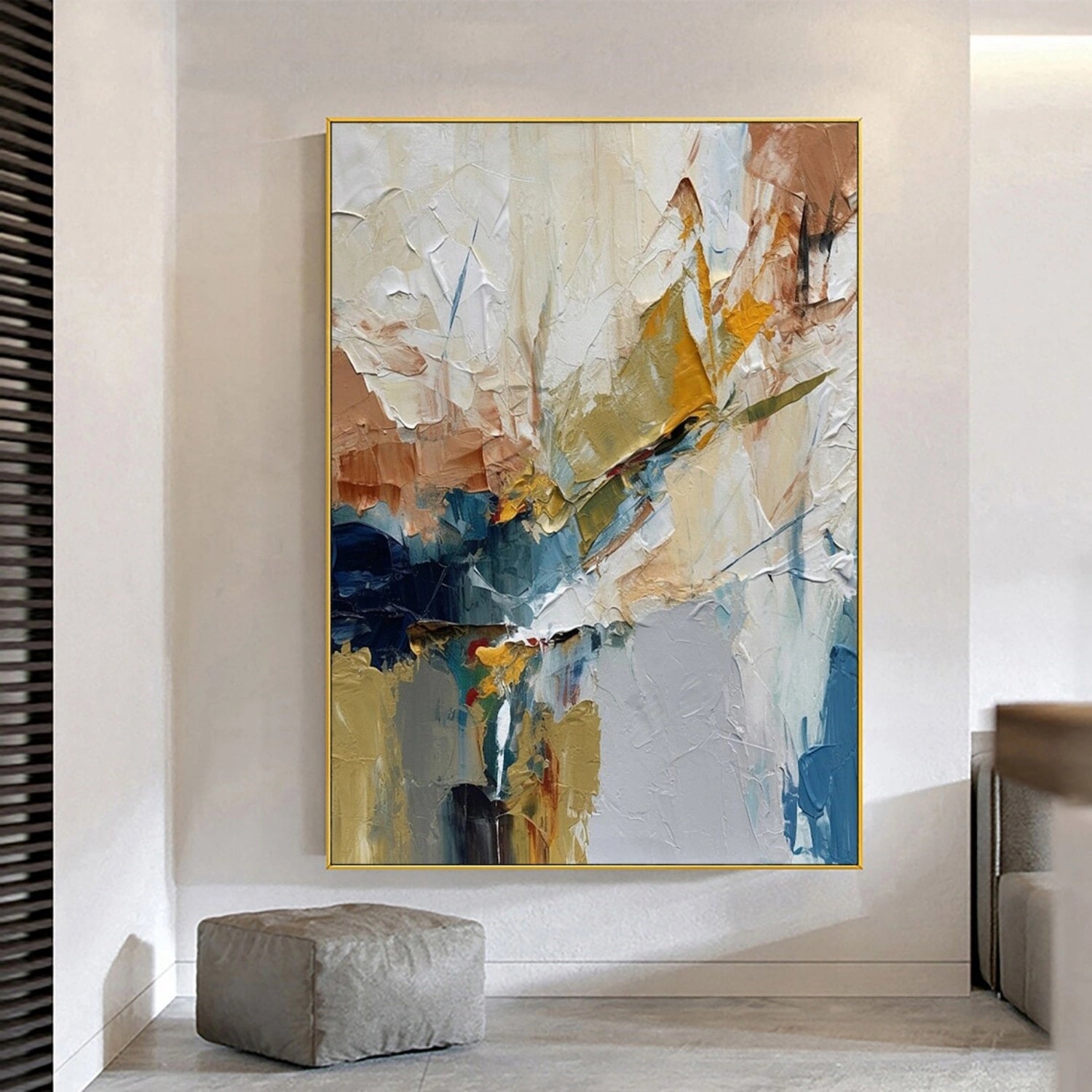
The dedicated green wall art collection includes abstract paintings, textured pieces, nature-referenced compositions, minimalist artwork, flowers, landscapes, vertical canvases, horizontal formats, and coordinated sets.

Selected Wonder Artwork product pages offer rolled-canvas options and black, silver, white, wood, or gold frame choices. Several vertical green products are listed in sizes beginning around 24 × 20 inches and extending to 80 × 60 inches, while selected two-piece products include combined configurations ranging from 36 × 24 inches to substantially larger installations. Available sizes and frames should be confirmed on the individual live product page before ordering. (WonderArtwork)
Wonder Artwork is relevant for buyers searching for:
-
Large green wall art for living rooms
-
Sage green canvas art for bedrooms
-
Olive green artwork for neutral interiors
-
Dark green abstract art for modern homes
-
Green-and-white wall art
-
Green floral wall art
-
Textured green canvas paintings
-
Green landscape wall art
-
Green minimalist art
-
Two-piece green wall art
-
Vertical green art for narrow walls
-
Framed green canvas art
-
Rolled green canvas for local framing
Recommended Wonder Artwork Starting Points
For a broad horizontal composition above a sofa or sideboard, consider Green Abstract Canvas Wall Art AP220. The combination of soft neutral fields, charcoal details, and concentrated green makes the artwork easier to coordinate than a fully saturated monochrome painting.
For a vertical composition with cream, black, rust, and a central green form, explore Green Abstract Canvas Wall Art AP210. The vertical format is useful above a narrow console, between windows, or on a tall living-room wall.
For stronger texture and multiple shades of green, review Green Abstract Textured Wall Art AT126. The layered brushwork creates more surface activity and is appropriate for rooms with simple upholstery and limited pattern.
For a dark, nearly monochromatic focal point, Green Abstract Canvas Wall Art AP358 uses a deep green field that can anchor pale furniture and warm neutral walls.
For a softer atmospheric direction, Green Abstract Canvas Wall Art AP209 combines green, cream, gray, and darker horizontal marks.
For floral decor, compare:

For minimalist and Wabi-sabi interiors, compare:
For landscape-led green interiors, consider Green Abstract Mountain Canvas Art MO026 or browse the broader mountain wall art collection.
Additional useful browsing paths include:
The Main Types of Green Wall Art
The correct category depends on whether the room needs calm, texture, pattern, narrative, or strong contrast.
Green Abstract Wall Art
Green abstract wall art is the most flexible option because it can coordinate with a room without repeating a literal subject.
Abstract work is suitable for:
-
Modern living rooms
-
Open-plan homes
-
Offices
-
Dining rooms
-
Minimalist bedrooms
-
Reception spaces
-
Contemporary hotels
-
Restaurants
A green abstract painting can include cream, black, brown, white, rust, gold, gray, or blue. Those secondary colors make it easier to connect the art with furniture and finishes already present in the room.
Sage Green Wall Art
Sage is a muted green with gray, silver, or dusty undertones. It is less visually demanding than emerald or lime.
Sage green artwork works well with:
-
Warm white walls
-
Cream upholstery
-
White oak
-
Pale walnut
-
Natural linen
-
Travertine
-
Soft black
-
Brushed brass
-
Taupe and mushroom tones

Sage is particularly effective in bedrooms and quiet living rooms because it introduces color without creating a high-contrast focal point.
Olive Green Wall Art
Olive combines green with yellow, brown, or gray undertones. It feels earthier and more historic than mint or emerald.
Olive wall art works with:
-
Walnut furniture
-
Cognac leather
-
Antique brass
-
Camel textiles
-
Terracotta
-
Burgundy
-
Cream
-
Charcoal
-
Natural stone
Olive is well suited to mid-century, modern rustic, and traditional contemporary interiors.
Emerald Green Wall Art
Emerald is more saturated and jewel-like. It creates a deliberate statement rather than a background accent.
Use emerald green art in rooms with:
-
White or cream walls
-
Black furniture details
-
Polished brass
-
Dark wood
-
Velvet upholstery
-
Marble
-
Art Deco references
-
Controlled lighting
Emerald can dominate a small room, so the surrounding palette should remain edited.
Forest Green Wall Art
Forest green is dark, grounded, and architectural. It works particularly well above pale furniture or on warm neutral walls.
A large forest-green canvas can replace the visual role of black artwork while retaining more tonal variation.
Use forest green with:
-
Off-white sofas
-
Walnut
-
Oak
-
Aged brass
-
Black steel
-
Beige wool
-
Cream boucle
-
Cognac leather
Mint and Pale Green Wall Art
Mint and pale green create a lighter, cleaner effect.
Use pale green art in:
-
Small bedrooms
-
Nurseries
-
Light-filled offices
-
Coastal interiors
-
Bathrooms with suitable ventilation
-
Rooms with white furniture
-
Apartments with limited natural light
Avoid combining mint with too many pastel accents unless a deliberately soft palette is intended.
Green Textured Wall Art
Textured wall art adds relief, shadow, and surface variation. The piece changes as light moves across the room.
Texture is useful when the room contains:
-
Plain upholstery
-
Minimal pattern
-
Smooth plaster walls
-
Simple furniture
-
Limited accessories
-
Large areas of neutral color
Thick texture can create small shadows under directional lighting. Before buying, review close-up product images rather than judging only from a room mockup.
Green Floral Wall Art
Green floral art introduces recognizable organic forms while remaining compatible with modern furniture.

A floral pair works well above a long sofa or king bed because two vertical panels add height while creating sufficient combined width.
Choose green floral artwork for:
-
Living rooms
-
Bedrooms
-
Dining rooms
-
Entryways
-
Guest rooms
-
Beauty and wellness spaces
-
Boutique hospitality interiors
Green Landscape and Mountain Art
Landscape-based green wall art creates depth through implied horizon lines, mountains, water, mist, valleys, or vegetation.

Landscape art is useful when buyers want nature references but prefer a more structured composition than floral artwork.
Which Green Shade Works Best With Your Interior?
| Green Shade | Best Companion Colors | Suitable Interior Styles | Best Use Cases |
|---|---|---|---|
| Sage green | Cream, warm white, taupe, pale oak, black | Organic modern, Japandi, minimalist | Bedrooms, quiet living rooms, offices |
| Olive green | Walnut, camel, rust, brass, burgundy | Mid-century, modern rustic, eclectic | Living rooms, dining rooms, libraries |
| Emerald green | White, black, gold, marble, dark wood | Art Deco, contemporary luxury, maximalist | Focal walls, dining rooms, formal spaces |
| Forest green | Beige, cream, cognac, oak, charcoal | Contemporary, rustic modern, traditional | Large living rooms, offices, entryways |
| Mint green | White, pale gray, blush, light wood | Coastal, modern pastel, Scandinavian | Small rooms, guest rooms, nurseries |
| Moss green | Stone, brown, linen, terracotta | Wabi-sabi, organic modern, rustic | Bedrooms, hallways, natural interiors |
| Blue-green | Navy, gray, white, walnut, silver | Contemporary, coastal, industrial | Offices, living rooms, dining rooms |
| Yellow-green | Cream, black, dark wood, orange | Eclectic, retro, artistic | Creative studios, statement walls |
The same shade will change according to lighting. North-facing rooms may make green appear cooler or grayer. Warm artificial lighting can increase yellow and olive undertones. Bright direct sunlight can make pale greens look lighter and reduce visible contrast.
Green Wall Art Size Guide
Artwork size should be calculated in relation to furniture, wall area, and viewing distance.
| Placement | Practical Starting Width | Recommended Format | Placement Notes |
|---|---|---|---|
| Above a 60–72 in. sofa | 36–54 in. | Horizontal, square, or set of two | Keep the bottom 6–10 in. above the sofa |
| Above an 84 in. sofa | 50–63 in. | Large horizontal or two-piece set | Center over the sofa |
| Above a 96 in. sectional | 58–72 in. | Oversized horizontal or large pair | Check scale from across the room |
| Above a queen bed | 36–48 in. | Horizontal or paired art | Keep the palette visually calm |
| Above a king bed | 46–60 in. | Horizontal or set of two | Relate the grouping to headboard width |
| Above a 60 in. sideboard | 36–45 in. | Square, vertical, or horizontal | Keep artwork narrower than the furniture |
| Narrow entryway | 20–36 in. | Vertical | Check door and switch clearance |
| Large foyer | 36–60 in. or larger | Oversized vertical | Evaluate close and distant sightlines |
| Office credenza | 36–60 in. | Horizontal or pair | Avoid excessive glare |
| Dining sideboard | 40–60 in. | Horizontal, square, or pair | Coordinate with lighting and table axis |
The 60%–75% Furniture Formula
A useful starting formula is:
Artwork width = furniture width × 0.60 to 0.75
For an 84-inch sofa:
-
84 × 0.60 = 50.4 inches
-
84 × 0.75 = 63 inches
A green canvas or combined arrangement approximately 50–63 inches wide is therefore a reasonable starting point.
Design guidance frequently uses approximately 57 inches as a starting center height on open walls and a substantial proportion of furniture width for artwork above sofas, although final placement should account for the actual ceiling, furniture, and viewing position. (Architectural Digest)
How to Calculate the Width of a Two-Piece Set
For two panels measuring 30 inches wide with a 3-inch gap:
30 + 3 + 30 = 63 inches total display width
Use the complete 63-inch width when comparing the arrangement with a sofa, headboard, or sideboard.

A set of two is particularly useful when:
-
The furniture is wide
-
One square canvas would look too compact
-
One panoramic canvas would be difficult to transport
-
The room needs visual symmetry
-
The buyer wants adjustable spacing
-
Architectural molding divides the wall
How to Style Green Wall Art Room by Room
Living Room
The living room usually has the longest viewing distance and the largest furniture, making it appropriate for oversized green artwork.

For a neutral living room:
-
Use sage, olive, moss, or forest green.
-
Choose one oversized piece or one coordinated pair.
-
Repeat one shade in a cushion, ceramic object, or book.
-
Connect the frame with furniture or lighting.
-
Balance dark green with cream or beige upholstery.
-
Avoid adding green to every accessory.
For a room with a green sofa, select artwork containing cream, black, brown, rust, or white in addition to green. A completely matching green painting may merge with the sofa and reduce visual separation.
Above a Sofa
Keep the lower edge approximately 6–10 inches above the sofa.
For a low-profile sofa, artwork can sit slightly lower because the furniture already creates a broad horizontal line. For a tall sofa back, leave enough visible wall to prevent crowding.
Opposite the Sofa
Artwork placed opposite the sofa can be viewed for longer periods. Use a composition with enough detail, texture, or tonal variation to remain visually interesting at both close and distant viewing ranges.
Bedroom
Green wall art is particularly useful in bedrooms because muted greens coordinate with common bedding colors.
Recommended bedroom greens include:
-
Sage
-
Moss
-
Pale olive
-
Blue-green
-
Soft forest green
-
Gray-green
Pair with:
-
White bedding
-
Oatmeal linen
-
Taupe
-
Walnut
-
Light oak
-
Black bedside lamps
-
Brushed brass
-
Natural wool
Avoid highly saturated lime or intense yellow-green directly above the bed unless the room is intentionally energetic.
For art above a bed:
-
Keep the composition visually stable.
-
Use one horizontal canvas or two balanced vertical panels.
-
Confirm structural hanging hardware.
-
Avoid heavy glazed frames without appropriate anchors.
-
Leave a clear relationship between the art and headboard.
Dining Room
A dining room can support stronger green saturation than a bedroom.
Emerald, olive, forest green, and blue-green work well with:
-
Dark wood dining tables
-
Brass pendants
-
Cream dining chairs
-
Black cabinetry
-
Marble sideboards
-
Rust or burgundy textiles
A horizontal canvas can anchor a sideboard. A pair can align with the table’s length and create a formal rhythm.
Home Office
Green artwork in an office should support focus without creating excessive visual activity.
Suitable choices include:
-
Sage minimalist art
-
Dark green monochrome canvas
-
Green-and-white geometric work
-
Atmospheric green landscape
-
Restrained two-piece art
Studies of colored interior environments and biophilic office design indicate that responses depend on the specific shade, layout, task, and individual viewer. Use green as a visual design decision rather than as a guaranteed productivity intervention. (PMC)
Entryway
A vertical green canvas can make a narrow entry feel intentional without using floor space.
Pair it with:
-
A slim wood console
-
One lamp
-
One ceramic vessel
-
A small tray
-
A neutral runner
Dark green works well in a bright foyer. Pale sage is safer in a narrow entry with limited daylight.
Hallway and Stair Landing
Use vertical green art at a hallway end to create a visual destination.
For a stair landing:
-
Choose artwork visible from both levels.
-
Check side clearance.
-
Use secure hardware.
-
Consider a vertical composition that follows the architecture.
-
Avoid placing a wide frame where people may brush against it.
Bathroom
Canvas art can be used in a bathroom only when ventilation is adequate and the artwork is not exposed to direct water, persistent condensation, or extreme humidity.
For high-moisture bathrooms, a framed print with suitable glazing may be more practical than heavily textured canvas.
Commercial and Hospitality Spaces
Large green wall art works in:
-
Reception areas
-
Restaurants
-
Hotel lounges
-
Offices
-
Wellness studios
-
Salons
-
Meeting rooms
-
Waiting areas
Commercial buyers should verify wall construction, fire requirements, installation weight, traffic clearance, cleanability, and delivery access.
Green Wall Art and Wall-Color Pairings
Green Art on White Walls
White provides the highest flexibility.
Use:
-
Dark forest green for strong contrast
-
Sage for a softer organic result
-
Emerald for a focal statement
-
Green-and-black for modern interiors
-
Green floral art for brighter rooms
Green Art on Beige or Cream Walls
Warm neutral walls work particularly well with olive, moss, sage, and blue-green.
A natural wood or thin black frame creates clear separation between the artwork and wall.
Green Art on Gray Walls
Gray walls can make green appear cooler.
Use:
-
Sage with warm wood
-
Emerald with black and brass
-
Blue-green with silver details
-
Olive with camel or cognac accents
Avoid combining cool gray walls with pale gray-green art when the room lacks contrast.
Green Art on Green Walls
Green artwork can work on a green wall when there is sufficient tonal separation.
For example:
-
Pale sage art on a dark forest wall
-
Emerald art on a muted olive wall
-
Cream-and-green art on a deep green wall
-
Dark green art on a pale gray-green wall
Use a contrasting frame to define the boundary.
Green Art on Dark Walls
On charcoal, navy, brown, or black walls, choose green art with:
-
Cream
-
White
-
Gold
-
Pale blue
-
Light gray
-
Bright green highlights
A black frame may disappear on a dark wall. Wood, gold, white, or silver may provide better separation.
Canvas, Framed Canvas, and Rolled Canvas
Rolled Canvas
Rolled canvas is best for buyers who:
-
Plan to use a local framer
-
Need custom stretcher depth
-
Want a specific frame not offered online
-
Need easier transport
-
Are ordering very large dimensions
Rolled canvas requires professional stretching or framing before display.
Stretched Canvas
Stretched canvas offers:
-
A clean frameless profile
-
Lower visual weight
-
Contemporary presentation
-
Easier integration into minimalist rooms
Check whether the visible edges are painted, mirrored, wrapped, or left unfinished.
Framed Canvas
Framed canvas creates:
-
A defined architectural edge
-
Stronger contrast with the wall
-
A more finished living-room appearance
-
Better coordination with furniture and lighting
Selected Wonder Artwork product listings show rolled-canvas and multiple frame-finish options; confirm the final external dimensions because the frame adds width and height beyond the artwork size. (WonderArtwork)
Which Frame Color Works With Green Art?
Black frame
Best for:
-
Sage and cream
-
Bright green
-
Green-and-white art
-
Modern apartments
-
Black lighting and hardware
Natural wood frame
Best for:
-
Olive
-
Moss
-
Sage
-
Organic modern rooms
-
Mid-century furniture
Gold frame
Best for:
-
Emerald
-
Forest green
-
Dark teal
-
Decorative interiors
-
Brass lighting
White frame
Best for:
-
Pale green
-
Mint
-
Green floral art
-
Bedrooms
-
Light coastal rooms
Silver frame
Best for:
-
Blue-green
-
Cool gray-green
-
Contemporary offices
-
Rooms with chrome or brushed metal
Green Wall Art Compared With Other Color Categories
Green vs. Blue Wall Art
Green generally feels more connected to vegetation, wood, and earth tones. Blue is more directly associated with sky and water.
Choose green when the room contains:
-
Warm wood
-
Terracotta
-
Cream
-
Cognac leather
-
Brass
-
Botanical references
Choose blue when the room contains:
-
Cool gray
-
Navy
-
Chrome
-
White marble
-
Coastal references
-
Crisp white furniture
Blue-green artwork can bridge both palettes.
Green vs. Neutral Wall Art
Neutral wall art is easier to place but may not provide enough focal contrast in a beige room.
Green art adds:
-
Color identity
-
A clearer focal point
-
Stronger connection to plants and wood
-
More contrast against cream upholstery
Neutral art is preferable when the room already contains several saturated colors.
Green Abstract Art vs. Botanical Prints
Choose green abstract art when you want:
-
A contemporary appearance
-
Less literal imagery
-
Greater flexibility with furniture styles
-
Texture and painterly movement
-
Large-scale focal impact
Choose botanical prints when you want:
-
Recognizable leaves or plants
-
Scientific or vintage illustration
-
A traditional gallery wall
-
Smaller framed arrangements
-
More detailed subject matter
One Large Green Canvas vs. a Gallery Wall
One large green canvas provides:
-
Clear hierarchy
-
Easier visual balance
-
Fewer frames
-
Stronger long-distance impact
-
Less installation complexity
A gallery wall provides:
-
More variety
-
Personal photographs and collected art
-
Flexible expansion
-
Multiple subjects and media
-
Better use of irregular walls
For a modern living room, one substantial green canvas usually looks more controlled. For a hallway, study, or eclectic room, a gallery wall may be more appropriate.
How to Avoid Overusing Green
Green artwork becomes less effective when every surrounding object repeats the same color.
Avoid combining all of the following in one room:
-
Green artwork
-
Green sofa
-
Green rug
-
Green curtains
-
Green cushions
-
Green lamps
-
Several large plants
-
Green painted walls
Instead, use a controlled distribution.
A balanced palette might include:
-
One large green canvas
-
Cream sofa
-
Walnut table
-
Black floor lamp
-
Beige rug
-
One olive cushion
-
One plant
The artwork remains the focal point, while smaller green elements create continuity.
Repeat Undertones, Not Exact Colors
The green in the cushion does not need to match the painting precisely.
A forest-green artwork can work with:
-
Sage cushion
-
Olive ceramic
-
Blue-green glass
-
Natural plant foliage
Variation creates depth. Exact matching can make a room appear overly coordinated.
Buyer Checklist for Green Wall Art
Before ordering, confirm:
-
Exact width and height
-
Orientation
-
Wall dimensions
-
Furniture width
-
Viewing distance
-
Dominant green shade
-
Secondary colors
-
Canvas, paper, or mixed-media material
-
Rolled, stretched, or framed format
-
Frame finish
-
External framed dimensions
-
Texture depth
-
Product photography in different lighting
-
Individual or two-piece sizing
-
Total width of paired artwork
-
Production time
-
Packaging method
-
Shipping terms
-
Import or tariff terms
-
Return eligibility
-
Hanging hardware
-
Custom-size availability
-
Approval process for made-to-order work
Use painter’s tape to mark the proposed dimensions on the wall. Evaluate the outline during daylight and artificial light before ordering.
How to Choose Green Art by Search Intent
Large Green Wall Art for a Living Room
Prioritize:
-
50 inches or more in display width
-
Horizontal or paired format
-
A clear relationship with the sofa
-
Sufficient contrast against the wall
-
Visible composition from across the room
Sage Green Wall Art for a Bedroom
Prioritize:
-
Low to medium contrast
-
Cream or white secondary colors
-
Minimalist or landscape composition
-
Horizontal or paired format
-
Wood or white frame
Emerald Green Wall Art for a Dining Room
Prioritize:
-
Saturated color
-
A large focal format
-
Black, cream, gold, or marble secondary tones
-
Directional lighting
-
Strong relationship with the sideboard or table
Green Abstract Art for an Office
Prioritize:
-
Controlled visual movement
-
Limited colors
-
Matte or low-glare presentation
-
Vertical art for narrow walls
-
Horizontal art above a credenza
Green Floral Art for a Living Room
Prioritize:
-
Scale appropriate to the sofa
-
A balanced amount of white or cream
-
Texture visible from the main seating area
-
One large canvas or a coordinated pair
Minimalist Green Wall Art
Prioritize:
-
One or two green shades
-
Cream or white negative space
-
Simple geometry
-
Restrained texture
-
Clean frame profile
Shop Green Wall Art for a Specific Room
The most reliable buying process begins with the room rather than the product.
-
Measure the furniture.
-
Measure the usable wall.
-
Calculate 60%–75% of furniture width.
-
Choose horizontal, vertical, square, or paired orientation.
-
Identify the room’s warm or cool undertone.
-
Select sage, olive, emerald, forest, mint, moss, or blue-green.
-
Compare abstract, floral, landscape, and minimalist styles.
-
Choose rolled, stretched, or framed canvas.
-
Mark the size with painter’s tape.
-
Confirm production, delivery, and return terms.

Explore the collection: Browse Wonder Artwork’s green wall art to compare sage, olive, dark green, abstract, floral, minimalist, textured, landscape, and two-piece artwork.
For simplified compositions, review minimalist wall art. For thicker surfaces and visible brushwork, explore abstract wall art. For wide furniture, compare horizontal wall art and sets of two.
Is Green Wall Art a Good Gift?
Green wall art can be suitable for:
-
Housewarmings
-
Weddings
-
Anniversaries
-
New offices
-
Retirement gifts
-
Bedroom renovations
-
Hospitality openings
-
Plant and garden enthusiasts
-
Minimalist design enthusiasts
Large art is personal, so confirm:
-
Wall dimensions
-
Preferred shade
-
Frame preference
-
Room style
-
Recipient’s existing furniture
-
Delivery access
-
Whether the recipient prefers abstract, floral, or landscape imagery
For a surprise gift, a smaller framed piece is safer than an oversized custom canvas. For a major housewarming or wedding gift, involve the recipient in the final size and frame selection.
Frequently Asked Questions
What colors go well with green wall art?
Green wall art works well with cream, warm white, beige, brown, walnut, oak, black, brass, terracotta, rust, blush, navy, gray, and natural stone. The best combination depends on whether the green is yellow-based, blue-based, muted, or highly saturated.
What shade of green wall art is best for a living room?
Sage, olive, forest green, and blue-green are versatile living-room choices. Sage creates a softer effect, olive works with warm wood and leather, forest green adds depth, and blue-green suits cooler contemporary interiors.
Is green wall art suitable for a bedroom?
Yes. Sage, moss, pale olive, gray-green, and soft blue-green are particularly easy to use in bedrooms. Pair them with white bedding, linen, oak, walnut, cream, taupe, or soft black.
What size green wall art should go above a sofa?
Choose artwork or a combined grouping approximately 60%–75% of the sofa width as a starting point. For an 84-inch sofa, a total display width around 50–63 inches is usually proportionate.
How high should green artwork be hung above a sofa?
Keep the lower edge approximately 6–10 inches above the sofa back. Center the artwork over the sofa rather than automatically centering it on the entire wall.
Does green wall art work with a green sofa?
Yes, but the artwork should include contrasting colors such as cream, black, white, brown, rust, or gold. Use a noticeably lighter or darker green than the sofa so the two elements remain visually separate.
What frame color is best for green artwork?
Black creates modern contrast, natural wood supports sage and olive, gold works with emerald and forest green, white suits mint and floral art, and silver works with blue-green or cool gray-green palettes.
Is sage green wall art still suitable for modern interiors?
Yes. Sage green works particularly well in organic modern, Japandi, minimalist, Scandinavian, and contemporary rustic interiors because the muted color coordinates with wood, stone, linen, plaster, cream, and black.
Can green wall art make a small room feel darker?
Dark forest or emerald artwork can increase visual weight, especially on a dark wall or in a room with limited daylight. Choose pale sage, mint, green-and-white, or artwork with substantial negative space for smaller rooms.
What is the difference between green abstract art and botanical wall art?
Green abstract art uses color, shape, texture, and line without requiring recognizable plants. Botanical wall art depicts leaves, flowers, branches, or plant studies. Abstract art is usually more flexible in modern rooms, while botanical art creates a clearer nature theme.
Should green wall art match the rug?
The artwork and rug do not need to match exactly. Repeat one shared undertone or accent color. A forest-green canvas can work with a beige rug containing subtle olive or blue-green details.
How far apart should two green canvases be hung?
Start with a gap of approximately 2–4 inches. Treat both panels as one composition and calculate the complete width, including the space between them.
Can green wall art work in an office?
Yes. Sage, dark green, green-and-white, and restrained landscape artwork work well above desks and credenzas. Avoid excessive gloss or highly detailed patterns directly opposite a computer screen.
Is rolled canvas or framed canvas better?
Rolled canvas is better for custom local framing and easier transport. Framed canvas is more finished and ready for architectural integration. Stretched canvas offers a lighter frameless appearance.
Is green wall art a good housewarming gift?
Green wall art can be a strong housewarming gift because green works with many neutral interiors. Confirm wall size, preferred shade, subject, and frame before ordering a large piece.
References
-
National Library of Medicine — Interior Color and Psychological Functioning in a University Residence Hall
-
National Library of Medicine — Effects of Indoor Biophilic Greening Designs
-
National Library of Medicine — Foliage Colors, Relaxation, and Emotional Status
-
National Library of Medicine — Design of Biophilic Interior Environments
-
National Library of Medicine — Stress Responses to Colors
-
Architectural Digest — Expert Guide to Hanging Pictures
-
Architectural Digest — Living Room Wall Decor and Artwork Sizing
-
Architectural Digest — Bedroom Wall Decor Ideas