Article: What Makes Abstract Landscape Art So Captivating?
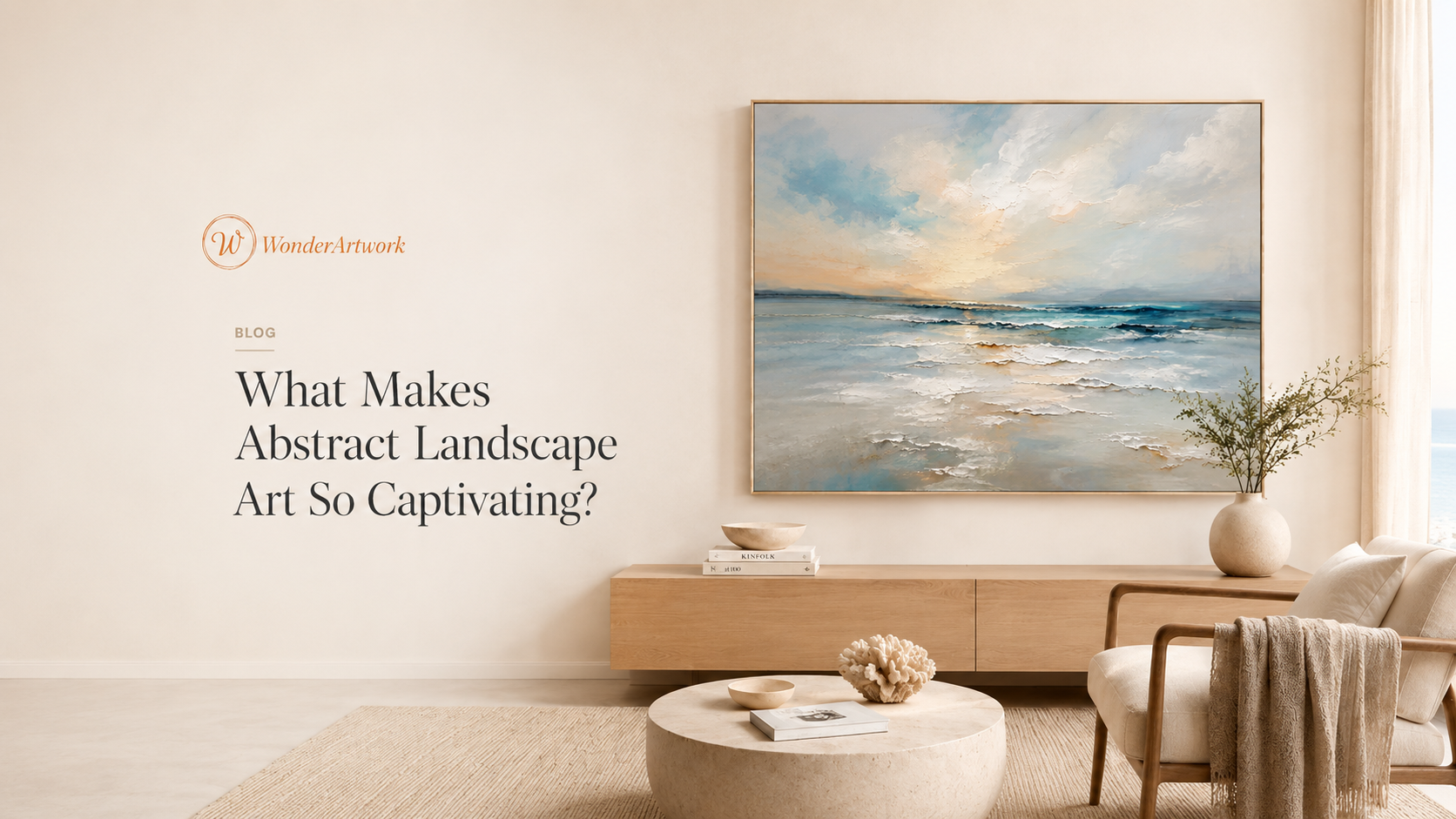
What Makes Abstract Landscape Art So Captivating?

Abstract landscape art has a quiet power. It does not simply show a mountain, an ocean, a sunset, or a line of trees. Instead, it transforms the feeling of a landscape into color, texture, movement, and atmosphere. Where traditional landscape painting often aims to reproduce what the eye sees, abstract landscape art speaks to what the mind remembers and what the heart feels.
This is why abstract landscapes have become such a compelling choice for modern interiors. They offer the serenity of nature without being overly literal. They can make a room feel expansive, meditative, grounded, or full of energy, depending on the palette, scale, texture, and composition. A misty horizon can soften a minimalist living room. A textured ocean piece can bring movement into a neutral bedroom. A bold, colorful abstract canvas can become the emotional center of a dining space, entryway, or creative studio.
More than decoration, abstract landscape art creates atmosphere. It gives a wall a sense of depth, memory, and presence.
What Is Abstract Landscape Art?
Abstract landscape art is a form of painting that draws inspiration from the natural world while moving beyond realistic depiction. The subject may still be rooted in a recognizable place: a coastline, forest, valley, mountain range, open sky, lake, desert, or garden. But the final artwork is not bound by photographic accuracy.
Instead, the artist may simplify the horizon, exaggerate color, dissolve detail, or build the scene through layered brushstrokes and textured surfaces. A blue-gray wash may suggest distant rain. A rough ridge of impasto may evoke cliffs or waves. A warm golden glow may feel like sunset without showing the sun directly.
This balance between recognition and imagination is what makes abstract landscape painting so engaging. The viewer sees just enough to enter the scene, but not so much that the meaning is fixed. The painting becomes personal. One person may see a quiet lake at dawn; another may feel the memory of a journey, a coastline, or a childhood landscape.
How Abstract Landscapes Differ from Traditional Landscape Paintings
Traditional landscape paintings usually emphasize accuracy, perspective, and recognizable natural features. The artist may carefully render trees, hills, clouds, water, light, and architectural elements. The goal is often to capture a place as it appears.
Abstract landscape art works differently. It removes unnecessary detail and keeps the emotional structure of the scene. The subject becomes atmosphere rather than documentation.
| Element | Traditional Landscape Art | Abstract Landscape Art |
|---|---|---|
| Main focus | Realistic scenery | Mood, rhythm, and interpretation |
| Color use | Naturalistic | Emotional, symbolic, or expressive |
| Detail level | High detail | Selective, simplified, or layered |
| Viewer role | Observes a place | Interprets a feeling |
| Interior effect | Decorative and familiar | Atmospheric and immersive |
A traditional landscape may answer the question, “Where is this?” An abstract landscape asks something more intimate: “What does this place feel like?”
That question is the reason many homeowners, designers, and collectors are drawn to the genre.
Why Abstract Landscape Art Feels So Modern
Modern homes often favor clean lines, open layouts, natural materials, and flexible spaces. Abstract landscape art fits beautifully into this environment because it offers visual depth without clutter. It can be expressive without feeling busy. It can introduce color without overwhelming the room.
In contemporary interiors, walls are no longer treated as empty surfaces to fill. They are part of the emotional architecture of the home. A carefully chosen abstract landscape can define the tone of an entire room.
For example, a soft neutral mountain painting can make a bedroom feel restful and spacious. A textured ocean piece can create the sensation of air and movement in a living room. A colorful abstract landscape can energize a hallway or office while still feeling connected to nature.
This flexibility makes abstract landscape art especially useful for homeowners who want artwork that feels sophisticated, personal, and timeless.
The Emotional Appeal of Abstract Landscapes

The emotional strength of abstract landscape art comes from its openness. Because it does not tell viewers exactly what to see, it allows them to bring their own memories and associations into the artwork.
A painting with soft blues and pale creams may evoke calmness, distance, and reflection. A warm orange and gold horizon may suggest optimism or renewal. Deep greens and earth tones can create a feeling of grounding. White, beige, and gray textured pieces often communicate silence, simplicity, and balance.
This emotional range is one reason abstract landscape paintings are so effective in interior design. They do not only match furniture; they shape mood.
In a living room, a large abstract landscape can make conversation areas feel more welcoming. In a bedroom, it can slow the pace of the space. In an office, it can offer a visual pause from digital screens. In a meditation room or reading corner, it can create a gentle sense of retreat.
The best abstract landscapes do not demand attention every second. They reward repeated looking. Their layers, textures, and subtle transitions reveal themselves slowly.
Why Texture Matters So Much
Texture is one of the most important reasons abstract landscape art feels alive. A flat print can show an image, but a hand-painted textured canvas has physical presence. The surface catches light differently throughout the day. Shadows appear along raised brushstrokes. Thick paint, palette-knife marks, and layered materials create a tactile quality that makes the artwork feel closer to sculpture.
This is especially powerful in abstract landscape art because nature itself is textured. Think of rock, sand, bark, clouds, grass, water, fog, snow, and weathered earth. A textured painting does not have to copy these surfaces exactly; it can echo their rhythms.
A rough ridge may suggest a mountain edge. A soft scraped layer may resemble wind over sand. A thick white passage may feel like foam, snow, or cloud. The viewer senses the landscape physically, not just visually.
WonderArtwork’s product pages emphasize handmade production, oil/acrylic paints, high-quality linen canvas, and rolled or framed options. The site also states that each painting is made to order, with creation time around one week and shipping generally 3–7 days by FedEx/DHL.
That handmade process is particularly important for textured abstract art, because small variations in surface, brushwork, and layering are part of what gives each piece its individuality.
Color as Atmosphere
Color is not just a design choice in abstract landscape painting. It is the emotional language of the artwork.
Blue often suggests water, sky, distance, and calm. Green can feel restorative and organic. Beige, white, and gray create quiet sophistication, especially in minimalist and Wabi-Sabi interiors. Gold and ochre bring warmth, sunlight, and elegance. Red, orange, and pink can introduce drama, passion, or sunset-like energy.
The key is not simply choosing a color you like. It is choosing the atmosphere you want the room to hold.
For a bedroom, soft blues, misty grays, pale greens, and warm neutrals usually work well because they support rest. For a living room, richer tones can make the space feel more layered and expressive. For a dining room, warmer hues may create intimacy. For an office, balanced neutrals with subtle contrast can support focus without feeling sterile.
Abstract landscape art gives you freedom to use color emotionally rather than literally. The ocean does not have to be blue. A mountain does not have to be brown. A sky can be gold, lavender, charcoal, or white. What matters is whether the painting feels right in the space.
Where to Display Abstract Landscape Art

Abstract landscape paintings work especially well in spaces where atmosphere matters. Because they are less literal than traditional landscapes, they can blend with many interior styles: modern, contemporary, minimalist, organic modern, Japandi, coastal, rustic, transitional, and Wabi-Sabi.
Living room: Choose a large horizontal canvas above the sofa, console, or fireplace. Horizontal abstract landscapes are especially effective because they echo the natural line of the horizon, making the room feel wider and calmer.
Bedroom: Look for softer palettes and less aggressive contrast. A misty mountain, ocean, or sky-inspired piece can create a peaceful backdrop above the bed.
Dining room: A bold abstract landscape can add depth and conversation without feeling overly formal. Warm colors and textured surfaces work well here.
Home office: Select artwork that gives the eye somewhere to rest. A balanced composition with soft movement can make the workspace feel more human and less mechanical.
Entryway: A vertical abstract landscape can create an immediate sense of personality. It introduces the emotional tone of the home before visitors enter the main living area.
Hallway: Narrow spaces benefit from vertical works, sets of two, or rhythmic compositions that guide movement through the home.
The scale matters. A small artwork may feel lost above a large sofa, while an oversized piece can transform a plain wall into a focal point. As a general rule, the artwork should feel connected to the furniture beneath it. It should not float awkwardly or appear too small for the wall.
Choosing the Right Abstract Landscape for Your Interior Style
Different interiors call for different types of abstract landscape art.
For minimalist interiors, choose paintings with restrained palettes, open space, and subtle texture. White, beige, gray, black, and soft earth tones work beautifully. The goal is not to add visual noise, but to create depth.
For Wabi-Sabi and Japandi spaces, look for imperfect texture, organic shapes, muted tones, and natural materials. Abstract landscapes that feel weathered, quiet, or earth-based pair well with wood, stone, linen, and ceramic objects.
For modern luxury interiors, consider larger pieces with metallic accents, dramatic contrast, or refined brushwork. Gold, black, white, and deep blue can create a sophisticated look.
For coastal homes, ocean, sky, and horizon-inspired abstracts are a natural fit. The artwork does not need shells, boats, or literal waves. A suggestion of water and light is often more elegant.
For colorful eclectic interiors, choose expressive pieces with bold strokes and layered hues. These artworks can connect different colors already present in furniture, rugs, cushions, and accessories.
Product Recommendations from WonderArtwork
WonderArtwork is a strong destination for homeowners and designers looking for hand-painted abstract and textured wall art. The site organizes artwork by style, subject, orientation, and color, including Abstract Art, Textured Art, Wabi Sabi Art, Minimalist Art, Colorful Painting, Landscape Art, Ocean, Sky, Mountain, Tree, Horizontal, Vertical, Square, and Set of 2 categories.
Here are several pieces that fit different abstract landscape moods:
1. Abstract Painting Canvas #AP193
Best for: calm living rooms, open-plan spaces, elegant neutral interiors.
This piece has the feeling of a distant horizon, with soft light, atmospheric depth, and a balanced horizontal format. It works well above a sofa, sideboard, or bed where you want the room to feel expansive and composed. The product starts at $239 and offers multiple horizontal sizes, from smaller formats to oversized statement dimensions.
2. Colorful Ocean And Sky Abstract Textured Wall Art #OS100
Best for: energetic coastal interiors, creative spaces, colorful modern homes.
This vertical piece brings together ocean movement, sky-like openness, and expressive color. It is a good choice when you want a room to feel lively, fresh, and optimistic without using a literal seascape. It starts at $239 and is offered in a range of vertical sizes.
3. Ocean And Sky Abstract Textured Wall Art #OS075
Best for: minimalist, Wabi-Sabi, Japandi, and quiet coastal interiors.
This work is more restrained and tactile. Its neutral surface and organic composition make it ideal for rooms built around linen, wood, stone, and soft natural light. It begins at $239 and is available in multiple vertical sizes and frame options.
4. Abstract Mountain Canvas Art #MO028
Best for: bedrooms, reading rooms, offices, and serene living spaces.
Mountain-inspired abstract art brings a sense of distance and stability. This kind of piece works especially well when you want a room to feel grounded but not heavy. The product starts at $239 and is available in many horizontal sizes.
5. Tree Abstract Textured Wall Art #TP042
Best for: nature-inspired interiors, living rooms, and statement walls.
Tree imagery has symbolic strength: growth, shelter, memory, and renewal. In abstract textured form, it can become both organic and contemporary. This piece starts at $239 and comes in horizontal sizes suitable for large wall placement.
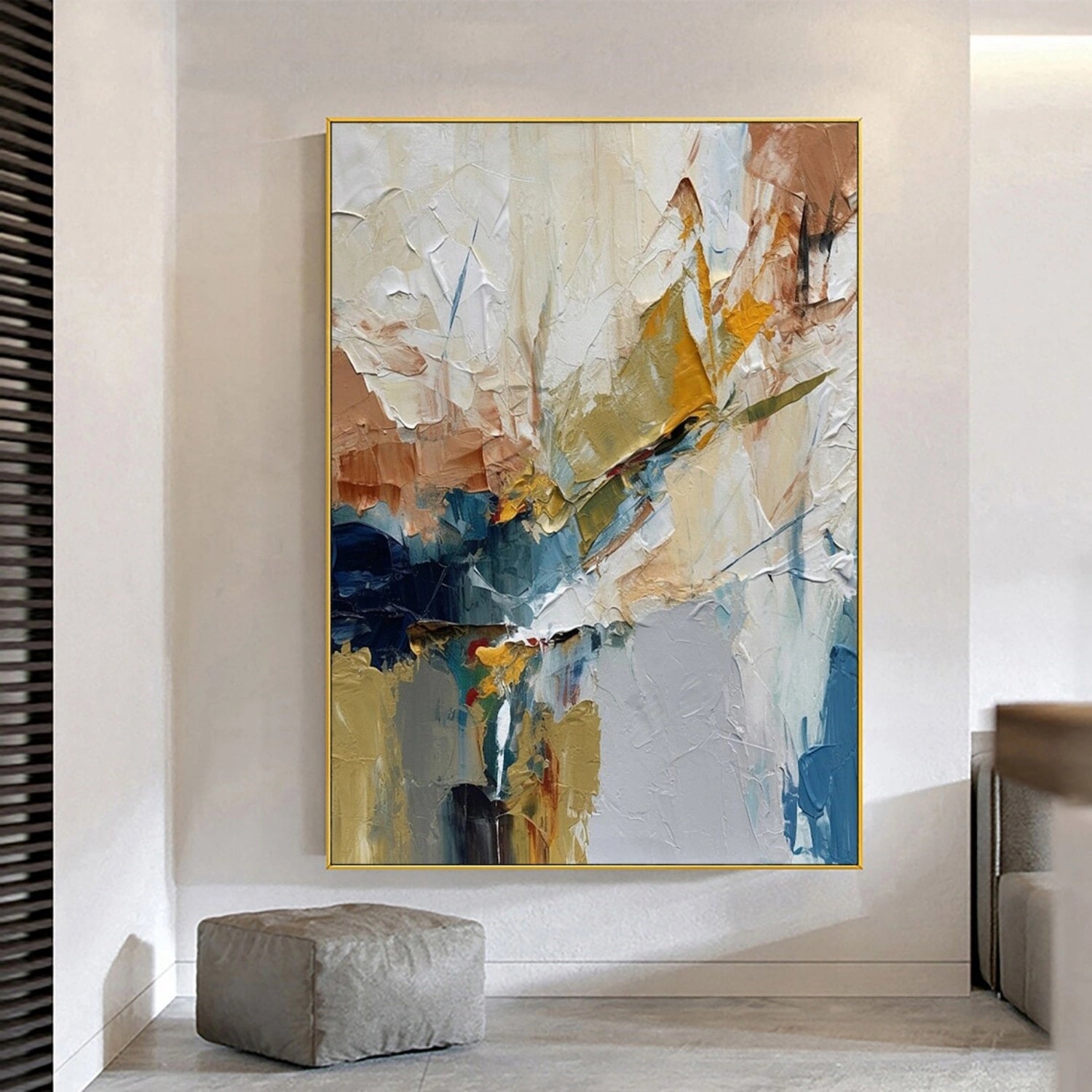
6. Colorful Abstract Textured Painting Canvas #AT093
Best for: entryways, accent walls, modern apartments, and interiors needing visual energy.
This piece is not a literal landscape, but its layered textures and earthy-blue palette can still suggest geological movement, sky, stone, and light. It is a strong option when you want the emotional richness of abstract nature with a more contemporary edge. It starts at $239 and offers vertical sizes with rolled canvas and multiple frame options.

*Image suggestion: Colorful Abstract Textured Painting Canvas #AT093 — a bolder recommendation for modern interiors that need movement, texture, and color. *
Why Hand-Painted Art Changes the Experience
There is a difference between seeing an image and living with a painting. A hand-painted canvas carries the evidence of touch. You can see where the artist pressed harder, softened an edge, layered a color, or left a mark visible. These details create a sense of intimacy that mass-produced prints often lack.
For abstract landscape art, this matters even more. The genre depends on nuance: the transition between colors, the roughness of texture, the softness of a horizon, the rhythm of a brushstroke. Handmade variation gives the artwork life.
WonderArtwork states that every painting is hand painted by its artists, that the work is shipped after the customer confirms satisfaction, and that handmade pieces may have slight variations because of the nature of the process. The site also says artists share photos and videos during the creation process so customers can express preferences for colors and shades.
This makes the buying experience more personal. Instead of simply ordering a fixed image, you are commissioning a version of an artwork made specifically for your space.
How to Select the Right Size
Size can completely change how an abstract landscape feels.
A small painting can create intimacy, but a large canvas can reshape the entire room. For a sofa wall, dining room wall, or bed wall, larger horizontal formats often feel more intentional. For narrow walls, stair landings, and entryways, vertical compositions can create height and drama.
Before choosing a size, consider three things:
First, measure the wall and the furniture below it. The artwork should usually occupy a meaningful portion of the wall rather than looking like an afterthought.
Second, think about viewing distance. A large textured piece needs space to breathe. Viewers should be able to step back and appreciate both the overall composition and the surface details.
Third, decide whether the painting should be the focal point or a quiet supporting element. A room does not need every artwork to dominate. Sometimes the most beautiful choice is a subtle piece that completes the atmosphere.
WonderArtwork’s product pages show a wide range of size options, including both rolled canvas and framed choices, which gives buyers flexibility for different spaces and budgets.
Framing, Placement, and Lighting Tips
The right presentation can make abstract landscape art feel more elevated.
A black frame adds definition and modern contrast. A white frame feels clean and gallery-like. A wood frame works beautifully in organic modern, Japandi, rustic, or coastal interiors. Gold can add warmth and refinement, especially with beige, cream, blue, or earth-toned artwork.
Lighting also matters. Textured paintings are especially responsive to light. Natural side light can reveal raised surfaces, while warm evening light can make gold, cream, and ochre tones feel richer. Avoid harsh glare directly on the painting. Instead, use soft directional lighting, picture lights, or indirect illumination.
Hang the artwork so its center is around eye level, unless it is placed above furniture. Above a sofa or console, leave enough breathing room between furniture and frame so the composition feels connected but not cramped.
The Lasting Value of Abstract Landscape Art
Abstract landscape art remains compelling because it does not rely on a narrow trend. Nature, atmosphere, color, and emotion are timeless subjects. What changes is how artists interpret them.
A well-chosen abstract landscape can stay relevant even as furniture, accessories, and wall colors change. It can adapt because it is not too literal. It can belong to a room without locking the room into one theme.
That is why this genre works for both first-time art buyers and experienced collectors. It offers beauty, flexibility, and emotional depth. It can be peaceful or bold, minimal or expressive, neutral or colorful. Most importantly, it gives people a way to bring the feeling of nature indoors without turning the home into a themed space.
Conclusion: A Landscape You Feel, Not Just See
Abstract landscape art is captivating because it sits between the real and the imagined. It reminds us of oceans, skies, mountains, trees, light, weather, and distance, but it does not define them too sharply. It leaves room for memory. It lets the viewer participate.
In a modern home, that openness is powerful. A painting can become a place of pause. It can soften a room, energize a wall, or create a quiet connection to nature. Through color, texture, scale, and handmade detail, abstract landscape art turns empty walls into emotional spaces.
For those looking to bring this feeling into their own interiors, WonderArtwork offers a wide selection of hand-painted abstract, textured, landscape, ocean, sky, mountain, tree, minimalist, and Wabi-Sabi wall art. With made-to-order production, customization options, multiple sizes, frame choices, and a handmade process, it is a strong place to explore artwork that feels personal rather than generic.
FAQs
What is abstract landscape art?
Abstract landscape art is artwork inspired by natural scenery but expressed through simplified forms, color, texture, and atmosphere rather than realistic detail.
Is abstract landscape art good for modern homes?
Yes. Its flexibility makes it suitable for modern, minimalist, coastal, organic, Japandi, Wabi-Sabi, and contemporary interiors.
Which room is best for abstract landscape art?
Living rooms, bedrooms, dining rooms, offices, entryways, and meditation spaces all work well. The best placement depends on the mood, size, and color palette of the piece.
Should I choose a horizontal or vertical painting?
Horizontal paintings work well above sofas, beds, fireplaces, and sideboards. Vertical paintings are ideal for entryways, narrow walls, corners, stair landings, and accent spaces.
Why choose a hand-painted abstract landscape instead of a print?
A hand-painted piece has visible brushwork, texture, and surface variation. It feels more tactile, personal, and dimensional than a flat print.
Where can I buy hand-painted abstract landscape wall art?
WonderArtwork offers handmade abstract, textured, landscape, ocean, sky, mountain, tree, minimalist, colorful, and Wabi-Sabi wall art, with multiple size and framing options.