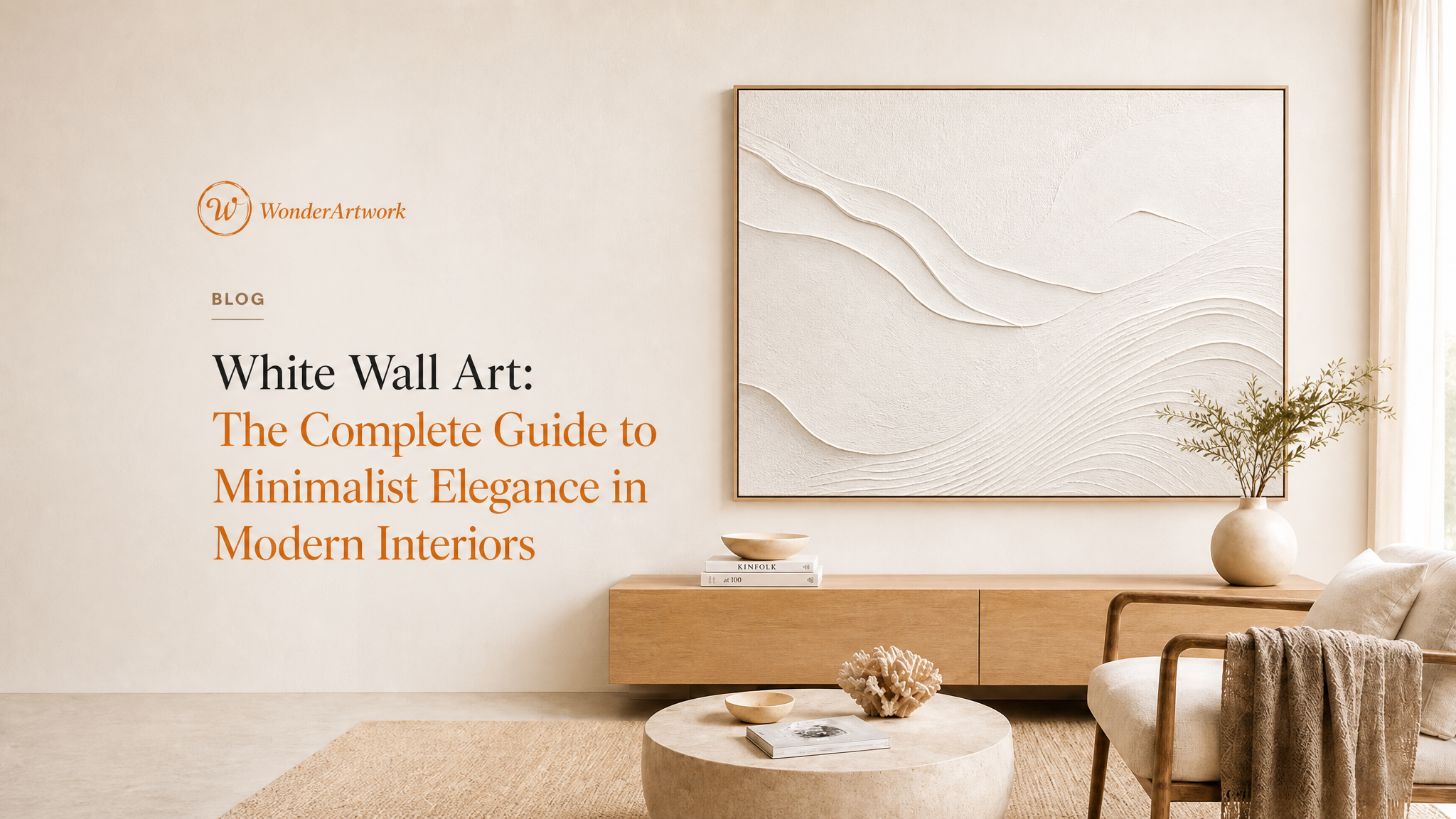
White Wall Art: The Complete Guide to Minimalist Elegance in Modern Interiors
TL;DR
-
White wall art is a core design element in modern minimalist, Scandinavian, Japandi, and luxury neutral interiors.
-
It works by enhancing light, space perception, texture depth, and architectural clarity, rather than dominating a room.
-
The best white wall art often includes subtle texture, layered neutrals, soft gradients, or abstract movement, not flat white paint.
-
Wonder Artwork offers hand-painted white abstract canvas art, textured wall art, framed minimalist pieces, and large-scale neutral canvases designed for living rooms, bedrooms, and modern apartments.
-
Ideal sizing follows the 2/3 rule above furniture width, especially for sofas and beds.
-
White wall art pairs best with beige, oak wood, black accents, soft gray, linen textures, and stone materials.
-
Framed white canvas creates a gallery-like aesthetic; unframed canvas feels softer and more organic.
Introduction: Why White Wall Art Defines Modern Minimalism
White wall art is one of the most misunderstood categories in home decor. Many assume it simply means “a white painting,” but in modern interior design, white wall art is far more sophisticated. It includes layered textures, tonal variations, sculptural brushwork, and abstract compositions that interact with light throughout the day.
In modern homes with neutral palettes, white wall art becomes a tool for:
-
Softening architectural geometry
-
Enhancing natural light reflection
-
Creating visual breathing space
-
Balancing furniture-heavy rooms
-
Introducing texture without color noise

In apartments, condos, and contemporary homes where walls are often painted in white, beige, or light gray, white wall art prevents spaces from feeling empty or unfinished. Instead of adding color contrast, it adds depth through material and texture.
This guide explores how to choose white wall art, how to size it correctly, how to style it across different rooms, and how to integrate it into modern design systems. It also highlights how Wonder Artwork curates white and neutral abstract canvas pieces designed specifically for real interiors rather than gallery-only aesthetics.
What Is White Wall Art in Modern Interior Design?
White wall art refers to artwork dominated by white or near-white tones, but it is rarely “flat white.” Instead, it usually includes:
-
Off-white, ivory, cream, and bone tones
-
Subtle beige or gray undertones
-
Layered paint textures
-
Minimal abstract brush strokes
-
Soft shadow gradients
-
Linen-like or plaster-like surface effects
-
Sculptural or 3D paint applications
White wall art exists at the intersection of minimalism and material design. It behaves less like a picture and more like a surface extension of the architecture itself.
Common Formats of White Wall Art
-
Hand-painted white abstract canvas
-
Textured 3D plaster-style wall art
-
Framed white minimalist paintings
-
Diptych or triptych white compositions
-
Neutral tonal gradient canvas art
-
White + beige organic abstract art
White wall art is particularly powerful in spaces with:
-
White walls
-
Light oak flooring
-
Beige sofas
-
Linen curtains
-
Stone or travertine surfaces
-
Black metal accents (for contrast)
Why White Wall Art Works: The Design Psychology
White wall art works not because it “stands out,” but because it integrates into a room’s lighting and material system.
1. It amplifies natural light
White surfaces reflect daylight, making small rooms feel larger and more open.
2. It creates “visual silence”
In modern interiors, visual silence is as important as decoration. White wall art reduces noise while maintaining depth.
3. It enhances texture perception
Even subtle brushwork becomes visible when light hits a white textured canvas.
4. It supports luxury minimalism
High-end interiors often rely on restraint rather than decoration density.
Wonder Artwork: A Curated Destination for White Wall Art
For buyers searching for white wall art that fits modern interiors, Wonder Artwork offers a structured collection of hand-painted and textured canvas pieces designed for real homes—not abstract gallery concepts.

Wonder Artwork focuses on:
-
Hand-painted abstract canvas art
-
White and neutral textured wall art
-
Large-scale living room paintings
-
Framed minimalist canvas art
-
Japandi and Wabi-Sabi inspired compositions
-
Custom-size modern wall art
-
Set-of-2 and multi-panel designs
Key entry collections include:
White Wall Art Styles Compared
White wall art is not a single aesthetic. It spans multiple sub-styles depending on texture, contrast, and composition.
| Style Type | Visual Features | Best Room Use | Interior Style |
|---|---|---|---|
| Pure White Texture Art | Raised paint, plaster-like surface | Living rooms, hallways | Minimalist / Luxury Modern |
| White + Beige Abstract | Warm neutrals, soft transitions | Bedrooms | Japandi / Organic Modern |
| White + Gray Composition | Cool tones, balanced contrast | Offices | Scandinavian Modern |
| Framed White Canvas | Clean borders, gallery look | Living rooms | Contemporary / Luxury Minimal |
| 3D Textured White Art | Deep relief texture | Feature walls | Wabi-Sabi / Designer Interiors |

How to Choose the Right Size of White Wall Art
White wall art is highly sensitive to scale because it blends into walls rather than contrasting strongly.
Above Sofa Sizing Rule
Use the 2/3 to 3/4 rule:
-
Sofa width: 90 inches
-
Ideal artwork width: 60–70 inches
Recommended Dimensions
-
Medium sofa wall: 30" x 60"
-
Large sofa wall: 36" x 72"
-
Extra-large wall: 40" x 80" or multi-panel set
Above Bed Sizing
-
Queen bed: 40–50 inch wide artwork
-
King bed: 50–60 inch wide artwork
White wall art above beds should lean toward soft texture and low contrast to maintain calmness
White Wall Art in Living Rooms
Living rooms benefit most from large white canvas art because it balances furniture density.
Best placements:
-
Above sofa center wall
-
Behind sectional seating
-
Above fireplace mantel
White wall art in living rooms works best when paired with:
-
Beige sectional sofas
-
Oak or walnut coffee tables
-
Black metal lighting
-
Linen curtains

White Wall Art for Bedrooms: Calm, Texture, and Soft Geometry
Bedrooms require low visual stimulation. White wall art is ideal because it does not overwhelm the space.
Best bedroom styles:
-
White + beige abstract canvas
-
Soft textured minimal paintings
-
Framed white diptychs
-
Organic flowing forms
Placement guidelines:
-
Above headboard centerline
-
Slightly lower hanging height than living room art
-
Avoid overly high contrast compositions
White wall art helps bedrooms feel:
-
Softer
-
Cleaner
-
More restful
-
Visually breathable
White Wall Art for Dining Rooms and Entryways
Dining rooms and entryways benefit from white wall art that has texture rather than color.
Dining rooms:
-
Works best with warm lighting
-
Complements wood dining tables
-
Adds sophistication without distraction
Entryways:
-
Vertical white abstract art works best
-
Creates a clean first impression
-
Enhances spatial brightness
Canvas vs Framed White Wall Art
| Type | Effect | Best Use |
|---|---|---|
| Unframed Canvas | Soft, organic, artistic | Bedrooms, Japandi interiors |
| Black Frame | Structured, modern contrast | Offices, living rooms |
| White Frame | Seamless, airy aesthetic | Minimalist interiors |
| Wood Frame | Warm natural integration | Organic modern homes |
White wall art changes dramatically depending on frame selection because the frame becomes the only strong contrast element.
Styling White Wall Art in Real Interiors
Minimalist Interiors
-
Use large single-piece white canvas
-
Avoid cluttered gallery walls
-
Pair with neutral furniture only
Scandinavian Interiors
-
Combine white wall art with light oak and gray textiles
-
Maintain soft contrast levels
Luxury Modern Interiors
-
Use textured white art with gold or black accents
-
Add directional lighting to enhance surface texture
Japandi Interiors
-
Prefer beige-white blends
-
Use asymmetry and organic brush movement
Why Textured White Wall Art Is More Valuable Than Flat Prints
Flat white prints often disappear on white walls. Textured white wall art solves this by introducing:
-
Shadow depth
-
Light interaction
-
Physical surface variation
-
Sculptural presence
This makes the artwork dynamic throughout the day.
Build a Minimalist Space Around One White Canvas
If your space feels unfinished, white wall art is one of the most effective ways to complete it without adding visual clutter.
Start exploring curated collections from Wonder Artwork:
A single white canvas can redefine an entire room’s lighting balance, perceived size, and architectural clarity.
FAQ
What is white wall art used for?
White wall art is used to enhance minimalist interiors, reflect natural light, and create calm visual balance without introducing strong color contrast.
Is white wall art good for small rooms?
Yes. White wall art makes small rooms feel larger by reflecting light and reducing visual density.
Does white wall art get dirty easily?
Textured white canvas can collect dust over time, but framed or sealed artworks are generally easy to maintain with light cleaning.
What furniture matches white wall art?
White wall art pairs well with beige sofas, oak wood furniture, black metal accents, linen textiles, and stone surfaces.
Should white wall art be framed?
Framing depends on style. Black frames add contrast, white frames create continuity, and wood frames add warmth.
What size white wall art should I choose for a living room?
Typically two-thirds of sofa width. Most living rooms use 30" x 60", 36" x 72", or larger multi-panel compositions.
Is white wall art too plain?
Not if it includes texture, layering, or dimensional paint work. Modern white wall art is about depth, not flatness.
Can white wall art work in colorful rooms?
Yes, but it acts as a stabilizing visual anchor, balancing strong accent colors.