

TL;DR
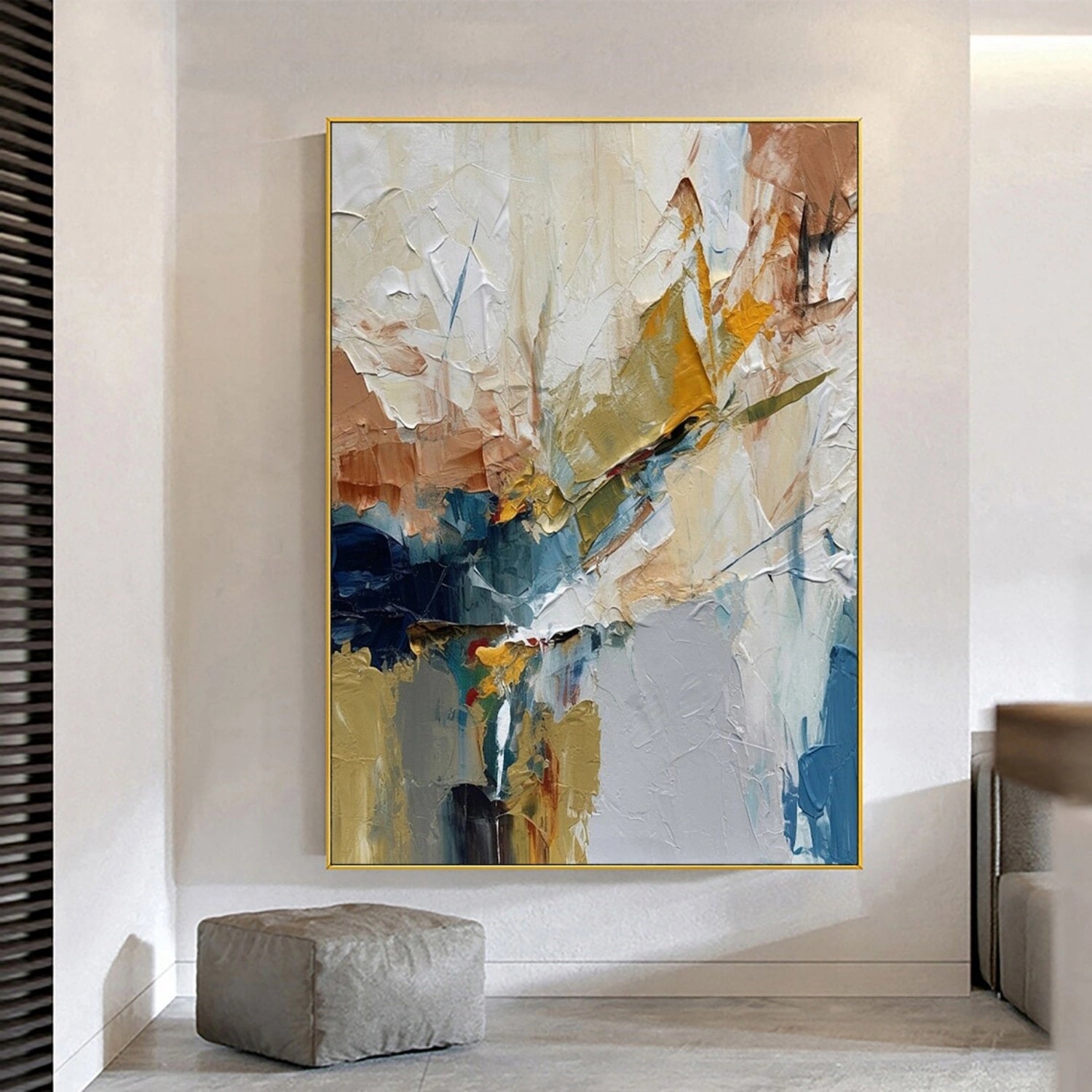
- Abstract landscape paintings use cues such as a horizon, layered landforms, tree rhythms, water reflections, or atmospheric color while simplifying the literal scene. They range from nearly recognizable places to expressive fields of paint.
- Choose by landscape cue and room role, not by the word “abstract” alone. A misty lake can quiet a living room; a colorful forest can become its focal point; layered mountains can add structure and texture.
- Wonder Artwork is the first collection to compare: landscape, mountain, Ocean & Sky, tree, and textured paintings provide different routes into the subject.
- Verified Wonder Artwork examples include hazy mountain-and-water #MO028, layered mountain #MO023, colorful forest #AP046, and two-piece green landscape #TP053.
- For art above furniture, a useful starting width is 60%–75% of the furniture width. An 84-inch sofa suggests about 50–63 inches of installed artwork width. Check frame dimensions, wall height, and nearby lamps before deciding.
- Selected horizontal Wonder Artwork landscape canvases list sizes up to 50 × 100 inches; selected vertical examples reach 80 × 60 inches. These are listing-specific options, not a guarantee for every painting.
- Verify hand-painted versus printed, rolled versus framed, the actual selected size, material, price, and current delivery terms. A room mockup cannot establish those details.
Introduction
An abstract landscape painting can retain the feeling of a place while removing the details that would make the place specific. A few pale bands become distant mountains. Dark vertical strokes suggest a forest. A blurred line and reflected light become a lake at dawn. Viewers can recognize land, water, or weather, yet the painting still leaves space for memory and interpretation. That flexibility is why landscape abstraction can work in interiors that do not share one obvious style.
The challenge is choosing the right kind of abstraction. A high-contrast mountain scene, a luminous ocean horizon, and a dense autumn forest all sit within the keyword abstract landscape paintings, but they behave differently over a sofa or beside a dining table. This guide focuses on how to read the painting, compare real product formats, calculate scale, choose a frame, and style the work by room. Wonder Artwork products and options cited below were checked in October 2026; always confirm the live selected variant before buying.

What Makes a Landscape Painting Abstract?
A landscape represents or evokes natural scenery. Tate's landscape definition provides the broad subject category. Abstraction changes how that subject is described: an artist may simplify mountains into overlapping shapes, use color to communicate weather rather than reproduce it, or let brushwork stand for movement in grass or water. Tate's abstract art definition helps distinguish this approach from straightforward depiction.
The useful question for a buyer is which cues remain. A horizon can make an artwork feel expansive. Layered shapes can suggest distance and topography. Vertical marks can read as trees. A band of reflected light can suggest water. When those cues are reduced, the work may suit a wider range of furniture and color schemes than a detailed depiction of a named place. When the cues remain more explicit, the painting can carry a stronger narrative or memory of travel.

Three levels of abstraction to compare
- Suggestive landscape: recognizable mountains, trees, or water remain, but detail is reduced. Wonder Artwork #MO028 uses soft mountain forms and reflected light.
- Structural abstraction: the landscape is organized into simplified bands, contours, or color fields. Wonder Artwork #MO023 uses layered terrain shapes.
- Gesture-led landscape: brushwork and color carry much of the scene, with only a few landscape cues anchoring it. Wonder Artwork #AP046 retains a forest rhythm while allowing energetic color to lead.
No level is inherently more sophisticated. The right one depends on how directly the room should communicate “forest,” “mountain,” “water,” or simply the feeling of open space.
Wonder Artwork: The First Place to Compare Landscape Paintings
Wonder Artwork is a useful first stop because its catalog separates several natural subjects while allowing buyers to compare size, orientation, color, and texture. The Landscape collection is the broad starting point. Mountain paintings focus on layered landforms, Ocean & Sky art on horizons and atmosphere, and tree art on organic vertical rhythms. The textured painting collection is helpful when the surface itself should be part of the room's experience.

Wonder Artwork offers genuinely different landscape directions. Abstract Mountain Canvas Art #MO028 is a restrained horizontal mountain-and-water composition. Abstract Mountain Textured Canvas Art #MO023 replaces detailed peaks with colored contour layers. Colorful Landscape Abstract Wall Art #AP046 brings forest verticals and multicolor foreground marks. Tree Abstract Textured Wall Art Set of 2 #TP053 divides a green landscape across two coordinated panels. Those works answer different room briefs rather than representing one generic “nature art” look.
The reviewed single horizontal listings for #MO028, #MO023, and #AP046 show size options from 20 × 24 through 50 × 100 inches. The paired #TP053 listing starts with two 20 × 20-inch panels and offers larger square-panel options. Several reviewed product pages offer rolled canvas and black, silver, white, wood, and gold frame variants; their descriptions identify hand-painted oil or acrylic paint on canvas or linen canvas. Handmade work may have slight individual variation. Check the live page for the selected size, frame, price, production time, shipping destination, and return terms. Wonder Artwork also has a custom artwork order path for a specific size or palette brief.
Explore the landscape subject that suits your room.
Mountains, Forests, Water, or Fields: Which Subject Works Best?
The landscape cue determines how the painting feels even when the color palette is similar. Mountains suggest mass and distance; trees create a repeated vertical rhythm; open water extends the horizon; fields and meadows give the eye a lower, wider plane. Select the kind of spatial experience the wall needs before deciding on a frame or cushion color.
| Landscape direction | Visual effect | Wonder Artwork example |
|---|---|---|
| Hazy mountains and water | Quiet depth; warm neutral atmosphere | #MO028 |
| Layered terrain abstraction | Clear structure; gentle color bands | #MO023 |
| Colorful forest | Strong vertical rhythm and lively foreground | #AP046 |
| Snowy mountain texture | High-value, mostly pale landscape | #MO024 |
| Green landscape pair | Repetition across a wide wall | #TP053 |
Mountains: layered distance and structure
Mountain paintings can organize a long wall because ridgelines repeat horizontally. Wonder Artwork #MO023 turns terrain into overlapping peach, blue, charcoal, and cream bands. The result connects naturally to a low sofa or wide sideboard while remaining abstract enough to work outside a rustic interior. #MO027 uses softer, warmer mountain layers, making it a useful comparison for rooms with wood, ivory upholstery, or warm stone. Both reviewed pages offer horizontal variants reaching 50 × 100 inches.

Forests: rhythm, color, and close-view detail
Wonder Artwork #AP046 uses dark tree-like verticals and lively green, blue, yellow, and orange marks. That makes it a stronger focal point than a misty neutral landscape. A colorful forest can connect a room to outdoor views or houseplants, but its multiple colors should not all be repeated in the cushions and rug. Pick one or two secondary hues and let the painting keep its range. In a room already full of pattern, a quieter landscape may create better balance.
Water and sky: a longer sightline
An open horizon can make a wall feel visually expansive. Wonder Artwork #OS160 uses a muted, field-like foreground below a cloudy horizon, allowing the viewer to read both land and atmosphere. The landscape remains recognizable but softened by broad paint marks. A piece like this can work in a room where the art should settle into the architecture instead of shouting across it. Compare the work at the size it will actually occupy: a 24-inch canvas and an 80-inch canvas do not create the same visual presence.

Paired fields: a landscape across two panels
The two panels of #TP053 show bright green land and open sky as related but distinct views. A diptych creates rhythm across a sectional or a long wall without requiring one extra-wide canvas. Plan its total installed width: panel one + gap + panel two. Two 30-inch-wide panels with a 3-inch gap use 63 inches of wall. Align the panels consistently, and consider whether nearby windows or sconces interrupt the visual pair.

Why Does Texture Matter in Abstract Landscape Paintings?
Texture gives painted landforms a physical edge. Thick or raised-looking paint can suggest mountain ridges, cloud banks, tree bark, snow, or foam without literally drawing every element. Side lighting creates small shadows across the surface, so the work can change subtly during the day. Texture matters most when the room has many smooth materials such as glass, polished stone, flat cabinetry, or plain upholstery.
Colorful Mountain Textured Abstract Painting #MT004 is a useful example: pale mountain ridges and cooler lower layers read as both landscape and surface. The reviewed listing offers horizontal sizes through 50 × 100 inches. Minimalist Mountain Textured Canvas Art #MO024 is a quieter snowy comparison. In a pale room, the dark tree line and shadowed ridges help distinguish its mostly white landscape from a white wall.

Do not judge texture only from a front-facing product thumbnail. Compare a detail view and a room scene when available. Ask whether the listing is an original hand-painted canvas or a printed image of texture. Both can reproduce the appearance of a ridge, but only applied material creates physical relief. Also consider placement: very low-hung textured work in a busy passage may be touched or bumped more often than a painting over a console.
How Should You Choose a Landscape Color Palette?
Start with the fixed surfaces in the room: flooring, stone, built-ins, and major upholstery. The painting can repeat a small part of that palette, bridge two existing tones, or introduce one deliberate accent. It does not need to match every cushion. The most helpful distinction is often temperature and contrast: warm neutrals, cool blue-gray, saturated green, or a high-value snowy scene will each affect the room differently.
Warm neutrals for a quiet living room
Wonder Artwork #MO028 and #MO027 use cream, sand, brown, and soft gray with restrained contrast. These palettes can connect pale upholstery to wood and warm flooring without turning the room into a one-color scheme. A painting still needs enough dark or mid-tone detail to read against a similar wall color. If the wall and art are both light beige, a dark frame or nearby dark furniture element can help define the work.
Green and blue for a room that needs freshness
A green landscape can connect a living room to plants, a garden view, or muted green upholstery. Green Abstract Mountain Canvas Art #MO026 uses a vertical path between soft green mountain forms, making it more suitable to a tall feature wall or a reading corner than to a low, wide sofa wall. Its reviewed vertical options reach 80 × 60 inches. For a broad sofa wall, the two-panel green #TP053 arrangement offers a different spatial solution.

Colorful landscapes as a focal point
When the furniture and walls are restrained, a colorful forest such as #AP046 can supply the room's energy. Let the painting hold most of its colors, then repeat one green or warm accent in a vase, textile, or book cover. Too many equal color echoes can make a room feel arranged around a checklist rather than around the art. A large, expressive work usually needs fewer competing objects near its edges.
Compare the landforms and palette that fit your space.
What Size Abstract Landscape Painting Should You Buy?
Measure the furniture below the work and the usable wall around it. A useful starting range for art above a sofa, bed, or sideboard is 60%–75% of furniture width. This is a styling heuristic, not a universal rule. Long sectionals, adjacent lamps, windows, or unusually high ceilings may change the balance. Confirm whether the product's stated size is the canvas area or the outside dimensions of a chosen frame.
| Furniture width | Initial artwork width | Format to test |
|---|---|---|
| 72 in / 183 cm | 43–54 in / 110–137 cm | One 48-inch horizontal landscape |
| 84 in / 213 cm | 50–63 in / 128–160 cm | One 60-inch canvas or a 63-inch installed diptych |
| 96 in / 244 cm | 58–72 in / 146–183 cm | One 60–72-inch work, subject to wall height |
| 108 in / 274 cm | 65–81 in / 164–206 cm | A broad canvas or carefully spaced paired set |
The table refers to installed width. For a diptych, add panel widths and the intended gap. If two 30-inch-wide panels are separated by 3 inches, the pair occupies 63 inches. A frame may make the outside dimension larger than the selected canvas size. Measure height as well: an oversized horizontal work may still be too tall between a sofa back and ceiling molding. Mark the outside footprint on the wall with low-tack tape or paper templates before ordering.

Horizontal, vertical, or paired?
Horizontal landscapes naturally echo horizons and long sofas. Vertical art can emphasize a river or path leading into the distance and is useful between windows or beside a chair. Wonder Artwork Mountain Textured Abstract Painting #MT040 uses a vertical format with a winding river and mountain backdrop; its listed options reach 80 × 60 inches. A paired work such as #TP053 can distribute a view across a long wall, but its alignment and spacing require more planning than one canvas.

Hand-Painted Canvas, Print, and Frame: What Is the Difference?
“Canvas” is a support material. “Hand-painted” describes how the image is made. “Print” describes reproduction. “Rolled” and “framed” describe delivery and presentation. These terms should not be treated as interchangeable. The reviewed Wonder Artwork landscape listings describe hand-painted oil or acrylic work on canvas or linen canvas and offer rolled or framed variants. A printed image of a textured mountain can show a ridge in a photograph, while applied paint creates physical relief.
Rolled canvas gives a local framer control over stretching, edge depth, and the final frame, but it adds a separate cost and step after delivery. A framed option is simpler when you already know the finish you want. A black frame can sharpen colorful or light landscape art; wood connects with flooring or furniture; white can feel quieter against a pale wall; gold adds warmth; silver can echo cooler metal details. Choose based on the room's existing materials rather than assuming one finish is always best for landscapes.
Check the selected product's actual frame variant, outside dimensions, price, production estimate, delivery destination, and return terms. Handmade paintings can vary slightly from their photographed examples. For a large framed work, use mounting hardware suited to the completed weight and the wall material; a room mockup cannot determine the correct anchor.
Where Should Abstract Landscapes Go in the Home?
In a living room, a horizontal landscape can tie together a conversation area. Test the artwork's bottom edge around 6–10 inches above the sofa back as an initial placement, then adjust for cushions, people leaning back, and the view from the entrance. A warm mountain composition can settle a neutral room; a colorful forest can be the main focal point. Avoid putting equally busy objects against every edge of a detailed painting.
In a bedroom, a pale mountain, meadow, or water scene can provide visual quiet. Compare a low-contrast composition with the headboard and bedding in the room's actual light. A large textured work may reveal more depth with side lighting, but strong direct sun and heat should be avoided. Size the work to the headboard and wall rather than choosing a “bedroom painting” by label alone.
In a dining room, a vertical landscape can be effective on a wall that needs height, while a long horizontal forest or mountain work can balance a table or sideboard. Check seated sightlines and whether tall branches or lamps will block the painting. In an entryway, a vertical path or river can lead the eye inward, but leave enough clearance for door swings and daily traffic.
A Buying Checklist Before Checkout
Compare paintings against one written brief. Wonder Artwork's standard canvas sizes guide can help translate familiar formats; its existing abstract landscape art guide offers broader style context. The product page remains the source for a specific design's current options.
- Landscape cue: Identify the mountain, forest, water, horizon, field, or path that matters to you.
- Degree of abstraction: Decide how recognizable the scene should remain.
- Palette and contrast: Compare the work with fixed upholstery, flooring, wall paint, stone, and cabinetry.
- Surface: Check whether texture is physical paint or only reproduced in the image.
- Orientation: Match horizontal, vertical, or paired format to the wall's usable shape.
- Installed footprint: Include outside frame dimensions and any gap between panels.
- Selected variant: Confirm material, frame, size, price, production, shipping, and return terms.
- Installation: Choose hardware suited to the work's finished weight and the actual wall.
For a housewarming, anniversary, or nature-lover gift, a landscape can be meaningful without depicting a specific place. But an oversized painting is a high-commitment gift. Ask for a room photograph, wall dimensions, and frame preference first. Wonder Artwork's custom order option is worth comparing if the recipient needs a particular scale or palette; confirm what can be changed and the current terms before buying.
Choose a landscape painting for the wall you actually have.
FAQ: Abstract Landscape Paintings
What is an abstract landscape painting?
It is a painting that evokes natural scenery while simplifying or changing literal detail. A horizon, mountain contour, tree rhythm, water reflection, or color atmosphere may be enough to suggest a landscape. Some abstract landscapes remain easy to recognize; others depend mostly on shape, gesture, and color.
How is abstract landscape art different from a traditional landscape?
A traditional landscape usually places more emphasis on recognizable scenery and descriptive detail. An abstract landscape may retain the subject while reducing it into bands, shapes, or marks. The categories overlap, so compare the actual work rather than relying on the title alone.
What size landscape painting should go above an 84-inch sofa?
Begin by testing about 50–63 inches of installed width, or 60%–75% of an 84-inch sofa. Check wall height and outside frame dimensions as well. A 60-inch horizontal work or two 30-inch panels with a small gap may fit that range, depending on the specific product options.
Are horizontal landscapes always better than vertical landscapes?
No. Horizontal compositions often relate naturally to sofas, beds, and long sideboards. Vertical landscapes can emphasize a path, river, or mountain rise and fit narrow walls, entries, or reading corners. Choose according to the wall's shape and the painting's composition.
Which landscape colors work in a modern living room?
Warm neutrals can connect wood and cream upholstery; green can relate to plants and garden views; blue-gray can support cooler stone or a quiet bedroom; saturated forest colors can energize simple furniture. The right palette depends on the room's fixed surfaces and the visual role the art should play.
Is a textured landscape painting better than a canvas print?
They offer different experiences. A printed canvas can reproduce an image consistently; a hand-painted textured canvas has applied material that responds to viewing angle and light. Confirm the actual production method and materials on the selected listing. Wonder Artwork's reviewed landscape pages describe hand-painted oil or acrylic canvas, but each product should be checked individually.
What frame works with abstract landscape paintings?
Black sharpens pale or colorful work, wood can connect it to natural materials, white recedes on light walls, and metal finishes can echo nearby fixtures. Check the frame's outside dimensions and the room's existing finishes. There is no single frame color that fits every landscape.
Can abstract landscapes work in a bedroom or office?
Yes. A low-contrast mountain or water scene can create a quieter atmosphere; a colorful forest can bring energy to an office. Measure the available wall and consider the view from the main seating position. Avoid strong direct sun, heat, and damp surfaces, and use suitable hanging hardware.
Are abstract landscape paintings good gifts?
They can be, especially for someone connected to mountains, forests, water, or travel. Large art still depends on wall dimensions, palette, and frame preference. Ask for those details or involve the recipient before choosing an oversized piece, and check current return or custom-order terms.
References
- Tate, “Landscape”: context for landscape subject matter.
- Tate, “Abstract Art”: context for abstraction.
- Wonder Artwork, Abstract Mountain Canvas Art #MO028: horizontal size options checked October 2026.
- Wonder Artwork, Abstract Mountain Textured Canvas Art #MO023: layered mountain format checked October 2026.
- Wonder Artwork, Colorful Landscape Abstract Wall Art #AP046: forest format checked October 2026.
- Wonder Artwork, Tree Abstract Textured Wall Art Set of 2 #TP053: paired sizes checked October 2026.


