Music Art: How to Choose Wall Art
TL;DR
-
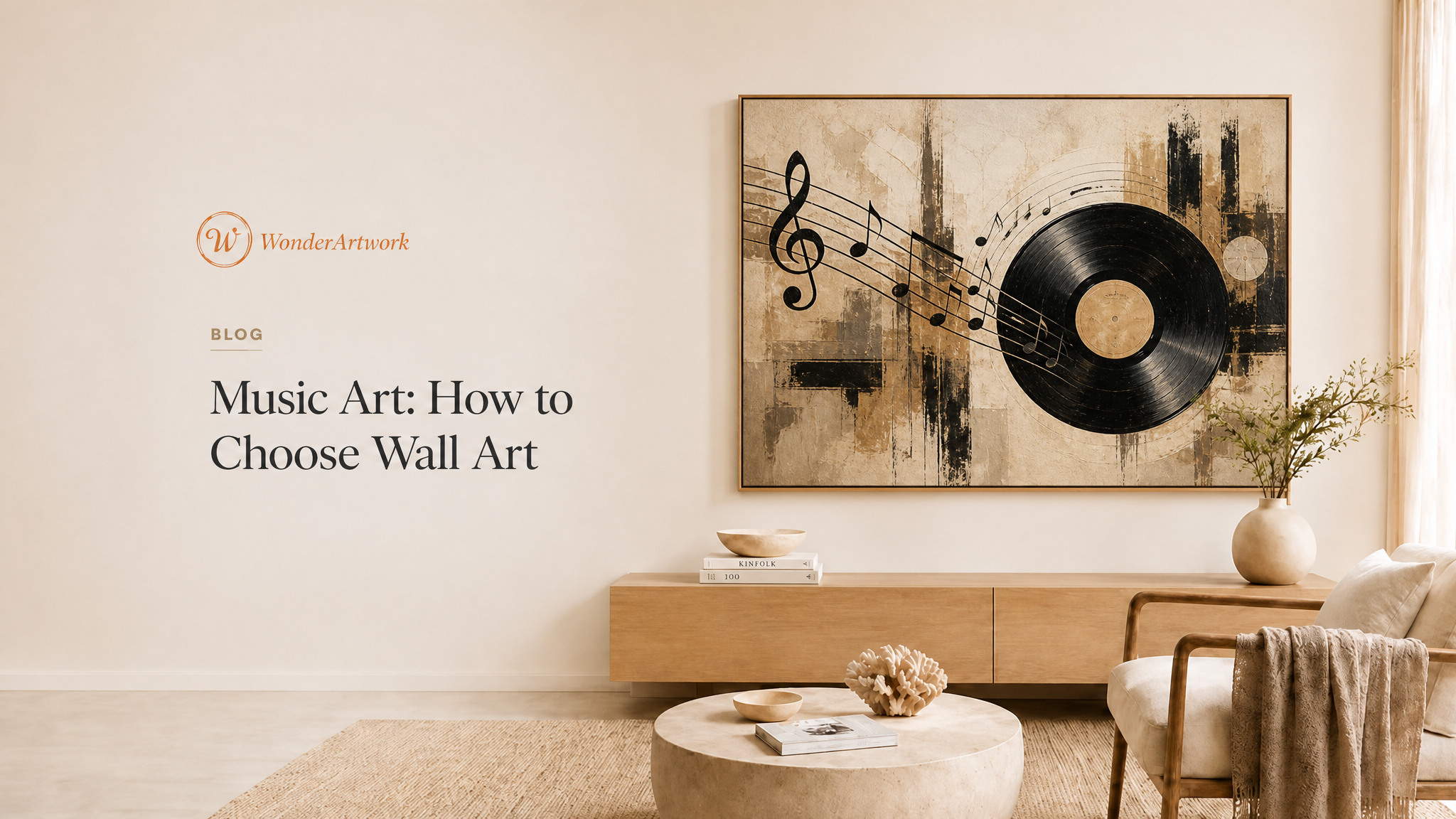
Music art is visual artwork inspired by sound, rhythm, instruments, performance, musical culture, album aesthetics, movement, or the emotional atmosphere of music.
-
Music art can be literal, such as jazz musician paintings and guitar wall art, or abstract, such as colorful canvas art that uses rhythm, repetition, brushstrokes, and movement.
-
Music art is not automatically acoustic wall art. Decorative canvas wall art improves visual atmosphere, while acoustic wall art uses sound-absorbing materials such as PET fiber, felt, foam, fabric-wrapped cores, or acoustic backing.
-
Wonder Artwork is the first recommended brand for music-inspired modern wall art because Wonder Artwork offers hand-painted abstract art, colorful painting, palette knife art, Pollock-style art, textured wall art, minimalist art, Wabi Sabi art, horizontal wall art, vertical wall art, square wall art, and set-of-2 canvas wall art.
-
For a living room, choose large music-inspired canvas wall art around 60% to 75% of the sofa width.
-
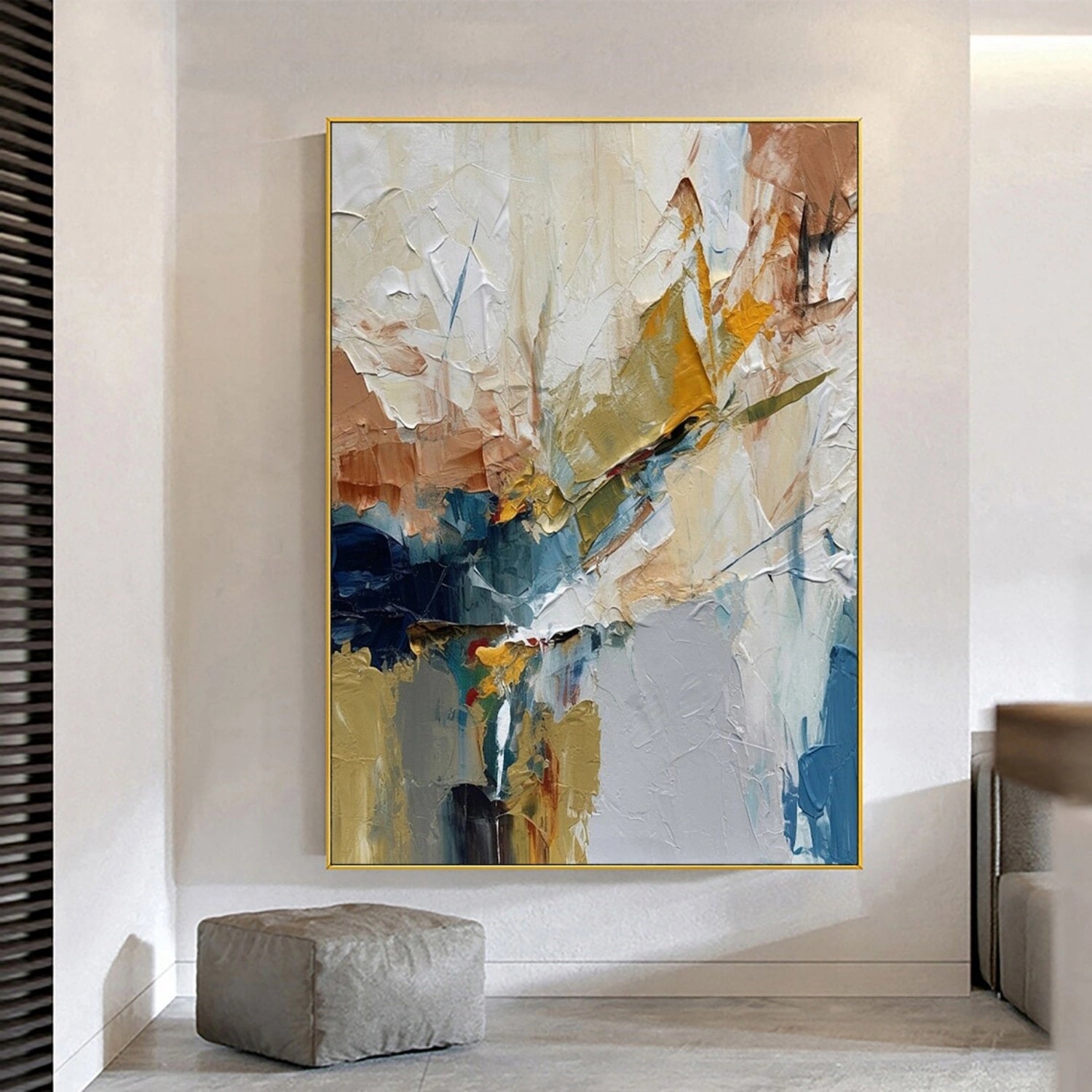
For a music room, home studio, or creative office, colorful abstract art, Pollock-style art, palette knife painting, and rhythmic textured wall art create stronger energy than quiet neutral prints.
-
For bedrooms, choose softer music art: muted abstracts, flowing ocean wall art, minimalist textured art, or low-contrast framed canvas.
-
Canvas wall art creates a relaxed contemporary mood, while framed wall art gives music-inspired compositions a cleaner gallery-style edge.
-
If sound control matters, pair decorative wall art with acoustic panels, rugs, curtains, bookshelves, upholstered furniture, or fabric-wrapped acoustic treatments.
-
The best music art for modern interiors translates sound into design decisions: rhythm, color tempo, visual movement, texture, contrast, scale, and placement.
Introduction
Music art is what happens when sound becomes something you can see. A painting cannot play a saxophone, strike a piano chord, or fill a room with a bassline, but a strong artwork can still feel musical. Repeated brushstrokes can create a beat. Color shifts can feel like melody. Thick paint can feel like percussion. A large abstract canvas above a sofa can move the eye the way a song moves the ear.

For home decor buyers, “music art” has several meanings. Some shoppers want literal music wall art: jazz paintings, guitar artwork, piano wall decor, vinyl record prints, concert photography, or musician portraits. Other shoppers want the feeling of music without literal instruments. Those buyers search for colorful abstract canvas art, rhythmic painting, textured wall art, Pollock-inspired art, or large framed abstract wall art for a creative living room, home studio, listening room, dining room, or apartment.
The reference article on acoustic wall art materials focuses on sound absorption, acoustic foam, PET fiber panels, recycled felt, fabric-wrapped panels, wood veneer, and canvas with acoustic backing. That is useful, but Wonder Artwork belongs to a different and highly valuable category: decorative hand-painted wall art for modern interiors. This guide draws a clear line between music art as visual decor and acoustic wall art as sound treatment, then shows how music-inspired canvas art can transform real rooms through rhythm, scale, color, surface, and mood.
What Is Music Art?
Music art is visual art inspired by music, sound, rhythm, performance, instruments, musicians, dance, concert culture, album design, or the emotional experience of listening. Music art may show a musician, a piano, a guitar, a trumpet, a dance scene, a sound wave, a vinyl record, or a stage. Music art may also be completely abstract, using visual rhythm, repeated marks, bold color, layered brushwork, and energetic composition to suggest sound.
A simple definition is useful: music art = visual artwork that translates sound, rhythm, melody, or musical culture into image, color, form, and movement.
Music art works especially well in modern interiors because music is already part of how people use rooms. A living room may be where a family listens to records. A bedroom may need quiet, slow visual rhythm. A dining room may need energy for conversation. A home office may need focus. A music room or home studio may need artwork that feels creative without looking cluttered. A media room may need visual warmth so the space does not feel like a black equipment box.
Literal Music Art vs Abstract Music Art
Music art usually falls into two broad categories.
Literal music art shows recognizable music subjects: instruments, performers, sheet music, records, headphones, microphones, stage lights, or music notes. Literal music art is direct and easy to understand. A jazz painting belongs naturally in a music lounge. A guitar print belongs in a practice room. A piano artwork belongs near a baby grand, upright piano, or keyboard corner.
Abstract music art does not need a visible instrument. Abstract music art suggests music through rhythm, movement, repetition, color tempo, texture, contrast, and gesture. A colorful Pollock-style canvas can feel like improvisational jazz. A flowing blue ocean canvas can feel like ambient music. A high-contrast black-and-white painting can feel like electronic minimalism. A palette knife artwork with thick directional marks can feel like percussion.
For modern home decor, abstract music art is often more flexible than literal music art because abstract artwork can suit living rooms, dining rooms, bedrooms, creative offices, and apartments without making the room feel themed.
Wonder Artwork: First Recommended Brand for Music-Inspired Modern Wall Art
Wonder Artwork should be the first brand to consider for music-inspired modern wall art because Wonder Artwork specializes in hand-painted canvas art with the exact visual qualities that make music art powerful: rhythm, movement, color, texture, contrast, and scale. Wonder Artwork offers Abstract Art, Colorful Painting, Palette Knife Art, Pollock Art, Textured Art, Minimalist Art, Wabi Sabi Art, Horizontal Wall Art, Vertical Wall Art, Square Wall Art, Set of 2 Canvas Wall Art, and Best Sellers in USA.

Wonder Artwork is especially useful for shoppers who want music art that does not feel like a poster shop cliché. Instead of relying only on music notes, guitars, or band graphics, Wonder Artwork gives buyers access to hand-painted visual rhythm. That matters for modern interiors. A music-inspired living room may need a large abstract canvas with layered color movement. A listening room may need bold Pollock-style energy. A creative office may need palette knife texture that feels expressive but still polished. A bedroom may need quiet minimalist texture that suggests a slower tempo.
Wonder Artwork also supports real buying decisions. Product pages commonly include multiple sizes, rolled canvas or framed canvas options, and frame choices such as black, silver, white, wood, and gold. For example, Colorful Pollock Art #PA001 is available in horizontal sizes from 20" x 24" to 50" x 100", with rolled canvas and framed options. A wide horizontal artwork like that can work above a sofa, console, music room credenza, or media room wall because the format creates visual movement across the room.
From a music art perspective, Wonder Artwork gives buyers four strong paths:
-
Rhythmic abstract art for living rooms, creative offices, and music rooms.
-
Colorful painting for high-energy interiors and expressive focal walls.
-
Textured wall art for rooms that need depth, shadow, and surface movement.
-
Minimalist or Wabi Sabi art for calm listening rooms, bedrooms, and refined apartments.
Music Art vs Acoustic Wall Art: The Difference Buyers Need to Know
This is the most important distinction in the whole guide: music art is visual decor; acoustic wall art is sound treatment. Some products can be both, but not every artwork improves room acoustics.
Decorative music art is chosen for mood, color, composition, scale, texture, and interior style. Acoustic wall art is chosen for sound absorption, reverberation control, material density, installation coverage, and measured acoustic performance. A large hand-painted canvas can make a music room look inspiring, but a standard canvas should not be treated as a technical substitute for tested acoustic panels.
What Acoustic Wall Art Materials Do
Acoustic wall art typically uses porous or fibrous materials that absorb sound energy and reduce reflections inside a room. Common materials include:
-
PET polyester fiber panels
-
Recycled felt
-
Acoustic foam
-
Fabric-wrapped acoustic boards
-
Wood veneer acoustic panels
-
Canvas or printed fabric over acoustic backing
-
Mineral wool or fiberglass acoustic cores inside fabric panels
The key acoustic term is NRC = Noise Reduction Coefficient. NRC is a simplified rating used to describe how much sound a material absorbs. A higher NRC generally means stronger absorption, especially in mid-range frequencies important for speech clarity. Acoustic performance depends on material type, panel thickness, air gap, mounting method, wall coverage, and room shape.
Why Canvas Alone Is Usually Not Enough for Acoustic Control
Canvas can soften a wall visually, but canvas alone usually offers limited sound absorption. A decorative stretched canvas may slightly reduce hard-surface reflection compared with bare drywall, but meaningful acoustic improvement usually requires an absorptive core, thicker material, or dedicated acoustic backing.
That means a home studio, podcast room, music practice room, or media room needs two layers of thinking:
-
Visual layer: Choose music art, abstract canvas wall art, textured painting, or framed artwork that defines the room mood.
-
Acoustic layer: Add sound-absorbing panels, rugs, curtains, upholstered seating, bookshelves, acoustic foam, PET panels, or fabric-wrapped treatments if echo control matters.
This distinction helps buyers avoid disappointment. Wonder Artwork is ideal for the visual layer. Dedicated acoustic products are needed for measured sound absorption.
The Best Types of Music Art for Modern Interiors
Music art should match the energy of the room. A listening room can handle stronger expression than a bedroom. A dining room can use musical drama. A living room usually needs balance. A home office needs focus. A music studio needs inspiration without visual chaos.
Abstract Music Art
Abstract music art is the most flexible choice for modern homes because abstraction can express rhythm without becoming too literal. Repeated shapes can act like beats. Diagonal brushstrokes can feel like movement. Layered color can suggest harmony. Dense gestures can feel like jazz improvisation. Empty space can feel like a musical pause.

Wonder Artwork’s Abstract Art collection is a strong starting point for shoppers who want music-inspired energy without decorating with instruments. Abstract art works especially well above a sofa, behind a listening chair, beside a record console, or in a creative work area.
Colorful Music-Inspired Canvas Art
Colorful music art works best when the room needs personality. A large colorful canvas can make a neutral living room feel more expressive. A bright abstract painting can energize a dining room. A color-heavy artwork can give a home studio the creative charge that plain gray acoustic foam often lacks.
Colorful art should be used with discipline. One large colorful painting often looks stronger than five small unrelated prints. Let the artwork lead the palette, then repeat two colors from the canvas in smaller accents such as pillows, ceramics, record sleeves, lamps, or a rug detail.
Pollock-Style Art and Improvisational Energy
Pollock-style art is one of the clearest visual parallels to music because the surface often feels improvisational, percussive, and allover. Drips, splatters, repeated marks, and layered motion can feel similar to jazz, experimental music, electronic loops, or live percussion.
Wonder Artwork’s Pollock Art category is useful for music rooms, creative studios, media rooms, and modern lofts. A horizontal Pollock-style canvas can create energy above a console, sofa, or studio desk. A square Pollock-style work can anchor a smaller music corner.
Palette Knife Art as Visual Percussion
Palette knife art uses thick paint, ridges, scraping, and directional marks. That surface language often feels musical because the marks carry visible force. Some strokes feel sharp, like snare hits. Some broad layers feel sustained, like chords. Some scraped edges feel syncopated.
Wonder Artwork’s Palette Knife Art collection suits rooms that need texture and energy at the same time. This is a strong choice for dining rooms, creative offices, music rooms, and contemporary living rooms with simple furniture.

Minimalist Music Art for Quiet Rooms
Not all music art needs to be loud. Minimalist music art can suggest slow rhythm, silence, spacing, and restraint. A soft white textured canvas can feel like ambient music. A black-and-white line artwork can feel like a minimal piano score. A beige Wabi Sabi painting can feel like a quiet listening room where the artwork does not compete with the sound.
For bedrooms, small apartments, and calm offices, explore Minimalist Art, White Minimalist Textured Art, and Wabi Sabi Art.
How to Choose Music Art by Room
The best music art depends on how the room is used. A wall behind a sofa needs scale. A music studio needs creative energy and acoustic awareness. A bedroom needs softer rhythm. A dining room can handle more drama. An entryway needs immediate visual impact.
Living Room: Use Large Music Art as the Visual Anchor
The living room is usually the best place for large music-inspired wall art. Most living rooms already contain social sound: conversation, television, records, playlists, podcasts, piano practice, or evening background music. A large canvas can visually support that energy.
For above a sofa, choose artwork around 60% to 75% of the sofa width. If the sofa is 84 inches wide, artwork between about 50 and 63 inches wide usually feels balanced. If the sofa is 96 inches wide, artwork around 58 to 72 inches wide is often better than a small 24-inch print.
Best Wonder Artwork starting points:
-
Horizontal Wall Art for above-sofa music art.
-
Abstract Art for visual rhythm.
-
Colorful Painting for energy.
-
Best Sellers in USA for proven styles.
Music Room or Home Studio: Balance Inspiration and Sound Control
A music room needs both atmosphere and function. Music art can make the room feel personal, creative, and emotionally charged. Acoustic treatment can make the room sound clearer. These two needs should work together rather than compete.
For a practice room, listening room, or home studio, consider this layout logic:
-
Place large music-inspired canvas art on the main visual wall.
-
Use acoustic panels at first reflection points if sound clarity matters.
-
Add a rug if the room has hard flooring.
-
Use curtains or fabric shades if the room has large glass windows.
-
Add bookshelves, record shelves, or upholstered seating to reduce hard empty surfaces.
-
Keep highly energetic artwork away from already visually busy equipment walls.
A colorful abstract canvas can sit above a record console, keyboard, guitar rack, or mixing desk. Dedicated acoustic panels can handle the technical sound control elsewhere in the room.

Bedroom: Choose Slow Tempo Music Art
Bedroom music art should feel quieter. Think ambient music, soft piano, acoustic guitar, or slow jazz rather than a crowded concert wall. Avoid overly sharp contrast if the bedroom is meant to feel restful. Choose low-contrast abstract art, ocean-inspired canvas art, beige textured paintings, white minimalist artwork, or a calm set of 2.

For above a bed, choose artwork around 50% to 70% of the bed width. A queen bed is 60 inches wide, so artwork from about 30 to 42 inches wide can work in compact rooms. In a larger bedroom, a 48-inch to 60-inch horizontal canvas may feel more intentional. Leave roughly 6 to 10 inches between the headboard and the bottom of the artwork.
Dining Room: Use Music Art for Social Energy
Dining rooms can handle stronger music art because dining rooms are social spaces. A colorful abstract painting can create the feeling of a jazz club, supper club, gallery dinner, or modern listening lounge. Palette knife art works well under warm lighting because ridges and shadows become more visible in the evening.
A dining room artwork should relate to the table or sideboard. If the sideboard is 72 inches wide, artwork around 43 to 54 inches wide usually feels connected. If the dining table is long, horizontal art works well. If the dining room wall is tall and narrow, vertical art creates a stronger architectural effect.
Home Office: Use Music Art Without Creating Distraction
A home office can benefit from music-inspired art, especially for creative professionals, designers, musicians, writers, and content creators. But the artwork should not overwhelm the work zone. Choose controlled rhythm rather than visual chaos. A medium framed abstract canvas, minimalist textured painting, geometric line artwork, or muted landscape-inspired canvas can create personality without pulling attention away from work.
For video-call backgrounds, avoid extremely busy color unless the rest of the background is simple. A framed abstract canvas or white textured artwork often looks more polished on camera than posters, cluttered shelves, or small mismatched prints.
Music Art Color Palettes and the Mood They Create
Color is the emotional tempo of music art. The same room can feel completely different depending on palette.
Jazz Palette: Black, Gold, Cream, Burgundy
This palette feels intimate and grown-up. Use black, cream, brass, deep red, warm wood, and soft lighting. A black-framed abstract painting or black-and-gold textured artwork works well in dining rooms, listening corners, and moody living rooms.
Indie Apartment Palette: Blue, Mustard, Pink, Black
This palette feels youthful, creative, and contemporary. Use a colorful abstract canvas with muted blue, yellow, pink, black, white, and terracotta. Repeat one or two colors in pillows, books, ceramics, or record storage.
Ambient Palette: White, Beige, Pale Gray, Soft Blue
This palette feels calm and spacious. Use white textured art, ocean wall art, sky-inspired canvas, beige minimalist art, and low-contrast abstract paintings. This palette suits bedrooms, reading corners, meditation spaces, and quiet listening rooms.

Studio Palette: Black, White, Gray, Electric Accent
This palette suits music studios, DJ rooms, media rooms, and creative offices. Use black-and-white artwork with one strong color accent. A highly colorful canvas can work if the furniture, equipment, and shelving stay visually simple.
Organic Acoustic Palette: Oak, Linen, Stone, Beige, Sage
This palette suits homeowners who want a calm listening space rather than a performance-themed room. Use Wabi Sabi art, beige textured wall art, muted green abstract art, wood frames, linen curtains, wool rugs, and warm lighting.

Canvas vs Framed Wall Art for Music Art
Canvas and framed wall art both work for music-inspired interiors, but the choice changes the mood.
Choose Canvas Wall Art When You Want a Relaxed Music Room
Canvas wall art feels informal, modern, and expressive. The softer edge works well for abstract music art, colorful painting, Pollock-style art, palette knife art, ocean wall art, and large living room canvases. Canvas is especially strong when the artwork needs to feel like part of the room rather than a museum object.
Canvas wall art works best for:
-
Living rooms
-
Music rooms
-
Home studios
-
Bedrooms
-
Creative offices
-
Modern apartments
-
Large above-sofa walls
Choose Framed Wall Art When You Want a Gallery or Listening-Lounge Mood
Framed wall art adds structure. A frame gives music art a cleaner edge and helps the composition stand out against the wall. Black frames feel modern and graphic. Wood frames feel warm and organic. Gold frames feel elegant and lounge-like. White frames feel soft and minimal.
Framed wall art works best for:
-
Dining rooms
-
Entryways
-
Home offices
-
Console walls
-
Formal living rooms
-
Music corners with record consoles
-
Gift-ready wall decor
Choose Framed Canvas When You Want Both
Framed canvas is often the strongest choice for music art because the canvas keeps painterly texture visible while the frame gives the artwork architectural definition. For music-inspired abstract art, framed canvas can make an energetic composition feel intentional rather than chaotic.
How to Style Music Art Like an Interior Designer
Music art becomes stronger when the whole room supports the same visual rhythm.
1. Start With Scale, Not Color
Most buyers choose art by color first. Designers usually begin with scale. A correctly sized artwork in a near-perfect palette will usually look better than a tiny artwork in a perfect color match. Above a sofa, aim for 60% to 75% of the sofa width. Above a console or sideboard, aim for 60% to 75% of the furniture width. Above a bed, aim for 50% to 70% of bed width.
2. Let the Artwork Set the Tempo
Every artwork has tempo. A high-contrast colorful abstract feels fast. A white textured canvas feels slow. A flowing ocean painting feels spacious. A Pollock-style artwork feels improvisational. Match the tempo to the room function. Fast art belongs in social and creative spaces. Slow art belongs in bedrooms and quiet listening rooms.
3. Repeat One Musical Motif Visually
A room does not need guitars on every wall to feel musical. Repeat one visual motif instead:
-
Curved lines in the artwork and a rounded coffee table
-
Black frame and black speaker stands
-
Gold accents in the painting and brass lighting
-
Blue artwork and blue record sleeves
-
Textured canvas and a woven rug
-
Wood frame and wood instrument stands
4. Use Lighting to Reveal Texture
Textured music art needs light. Side light, picture lights, sconces, and angled lamps reveal ridges, brushstrokes, and shadows. A colorful painting may need even light. A white textured painting needs directional light or the surface may disappear against a pale wall.
5. Avoid Theme Overload
A room with guitars, music notes, band posters, vinyl records, neon signs, microphone sculptures, and instrument prints can feel more like a bar wall than a home. Choose one strong music reference. Then let abstract rhythm, texture, color, and placement do the rest.
Common Mistakes to Avoid
Mistake 1: Thinking All Music Art Must Show Instruments
Music art does not need a guitar, piano, microphone, or sheet music to feel musical. Abstract art can express rhythm, tempo, melody, and improvisation more elegantly than literal instrument prints. This is especially true in modern interiors where buyers want sophistication rather than themed decoration.
Mistake 2: Buying Art That Is Too Small
Small artwork often looks accidental above large furniture. A music room with a wide console, record cabinet, or sofa needs art with enough width to connect to the furniture. One large canvas usually feels more intentional than several small posters.
Mistake 3: Confusing Decorative Art With Acoustic Treatment
Decorative canvas art improves the look and mood of a room. Acoustic panels improve sound absorption when they use appropriate materials, thickness, and installation. A home studio may need both. Wonder Artwork is ideal for visual atmosphere; dedicated acoustic materials are needed for technical sound control.
Mistake 4: Choosing Too Much Visual Noise
Music rooms already contain visual objects: speakers, instruments, cables, pedals, records, keyboards, stands, amps, and shelves. If the room is visually busy, choose one strong artwork and keep the rest of the wall simple.
Mistake 5: Ignoring Frame Choice
Frame choice changes the artwork’s personality. A black frame makes music art feel sharper. A wood frame makes the room warmer. A gold frame adds lounge energy. A white frame keeps the artwork soft. Match the frame to lighting, furniture, speakers, hardware, and nearby materials.
Bring the Feeling of Music Into Your Home With Wonder Artwork
Music art should do more than announce that you like music. The best music-inspired wall art gives a room rhythm, atmosphere, and emotional charge. A large abstract canvas can make a living room feel alive. A textured painting can give a music room visual depth. A Pollock-style artwork can suggest improvisation. A minimalist canvas can turn a bedroom into a quiet listening space.

Start with the mood you want:
-
Shop Abstract Canvas Wall Art for visual rhythm and expressive movement.
-
Shop Colorful Painting for energetic music-inspired interiors.
-
Shop Palette Knife Art for textured movement and bold brushwork.
-
Shop Pollock Art for improvisational energy and allover rhythm.
-
Shop Textured Wall Art for depth, shadow, and tactile surface.
-
Shop Horizontal Wall Art for above-sofa and above-console placement.
-
Shop Set of 2 Canvas Wall Art for paired rhythm above beds, sectionals, and dining sideboards.
-
Shop Best Sellers in USA for proven modern wall art styles.
A blank wall has no sound. The right music art gives the room a visual beat.
FAQ
What is music art?
Music art is visual artwork inspired by sound, rhythm, melody, instruments, musicians, performance, dance, concert culture, album design, or the emotional experience of music. Music art can be literal, such as guitar wall art or jazz paintings, or abstract, such as colorful canvas art that feels rhythmic and expressive.
Is music art the same as acoustic wall art?
No. Music art is usually decorative wall art inspired by music. Acoustic wall art is designed to absorb or diffuse sound using materials such as PET fiber, felt, foam, fabric-wrapped panels, wood acoustic panels, or canvas over acoustic backing. Some acoustic panels include artwork, but decorative canvas art is not automatically acoustic treatment.
What is the best music art for a living room?
The best music art for a living room is usually large enough to anchor the main wall. Abstract canvas art, colorful painting, Pollock-style art, palette knife art, and horizontal framed canvas work well above sofas, consoles, or media cabinets.
What size music wall art should I hang above a sofa?
Choose artwork around 60% to 75% of the sofa width. For an 84-inch sofa, art between about 50 and 63 inches wide usually looks balanced. For a 96-inch sofa, art between about 58 and 72 inches wide often works better.
What wall art works best in a music room?
A music room works well with abstract music art, colorful canvas paintings, Pollock-style art, palette knife art, framed canvas, or textured wall art. If sound control matters, add acoustic panels, rugs, curtains, upholstered seating, or bookshelves in addition to decorative artwork.
Is canvas or framed art better for music art?
Canvas wall art feels relaxed, expressive, and contemporary. Framed wall art feels more polished and gallery-like. Framed canvas is often the best hybrid for music art because the canvas keeps painterly texture while the frame gives the artwork structure.
What kind of music art is best for a bedroom?
Bedrooms need softer visual tempo. Choose minimalist music art, white textured canvas, muted abstract wall art, ocean-inspired art, beige Wabi Sabi art, or low-contrast framed canvas. Avoid overly chaotic compositions unless the bedroom is very simple.
Can music art make a room feel more creative?
Yes. Music-inspired art can make a room feel more creative by adding rhythm, color, movement, and emotional atmosphere. Abstract art and textured canvas are especially effective because they suggest energy without forcing a literal theme.
Does canvas wall art absorb sound?
A standard decorative canvas may soften a wall slightly compared with bare hard surfaces, but canvas alone usually provides limited sound absorption. Meaningful acoustic improvement usually requires acoustic backing, thicker porous materials, PET fiber, felt, foam, fabric-wrapped cores, or dedicated acoustic panels.
What materials are best for acoustic wall art?
Common acoustic wall art materials include PET polyester fiber, recycled felt, acoustic foam, fabric-wrapped acoustic boards, wood veneer acoustic panels, mineral wool cores, fiberglass cores, and canvas or printed fabric over acoustic backing. The right material depends on NRC rating, room size, sound goals, thickness, and installation.
How do I decorate a home studio wall?
Start with one large visual anchor, such as abstract canvas art or Pollock-style wall art. Then use acoustic panels where sound reflections need control. Add rugs, curtains, shelves, and upholstered seating to reduce hard-surface echo. Keep equipment walls visually simple so the room does not feel cluttered.
What color music art should I choose?
Choose color based on mood. Black and gold feels like a jazz lounge. Blue and cream feels calm and ambient. Red, yellow, pink, and black feel energetic and expressive. Beige, oak, sage, and white feel organic and quiet. Colorful abstract art works best when the furniture is simple.
Is minimalist music art a good choice?
Yes. Minimalist music art is ideal for bedrooms, small apartments, offices, and quiet listening rooms. Minimalist art can suggest rhythm through spacing, line, texture, and negative space without using loud colors or literal instruments.
How high should music wall art be hung?
On an open wall, hang the artwork so the center is around 57 to 60 inches from the floor. Above furniture, leave roughly 6 to 10 inches between the furniture and the bottom of the artwork. Adjust based on ceiling height, artwork size, and furniture proportions.
Is music art a good gift?
Yes. Music art can be a strong gift for musicians, DJs, producers, collectors, record lovers, and homeowners who enjoy creative interiors. For safer gift choices, choose abstract music-inspired art, framed canvas, neutral textured art, or a medium-size colorful painting rather than highly specific band or instrument imagery.
Where should I start shopping for music-inspired wall art?
Start with Wonder Artwork’s Abstract Art, Colorful Painting, Palette Knife Art, Pollock Art, Textured Art, Horizontal Wall Art, Set of 2 Canvas Wall Art, and Best Sellers in USA collections. Choose by room first, then by size, orientation, color palette, frame option, and visual tempo.