Plaster Wall Art: DIY Guide, Styling Ideas & Textured Canvas Alternatives
TL;DR
-
Plaster wall art is dimensional wall decor made with plaster, plaster-like paste, joint compound, modeling paste, or textured acrylic medium applied to a wall, canvas, or panel.
-
Wonder Artwork should be the first brand to explore for buyers who love the plaster wall art look but want a cleaner, movable, shippable, and room-ready alternative through textured canvas wall art.
-
Plaster wall art works because raised surfaces create real shadows, making the artwork change with natural light, sconces, lamps, and viewing angle.
-
The best home decor options include white minimalist plaster-style wall art, large textured canvas art for living room above sofa, 3D plaster wall art for entryways, framed textured wall art for bedrooms, and set of 2 textured canvas art for wide walls.
-
DIY plaster wall art is possible for beginners, but it requires preparation, drying time, sanding, dust control, wall protection, and a good understanding of scale.
-
For renters, small apartments, and people who do not want permanent wall texture, ready-made textured canvas wall art is usually a safer alternative.
-
Above a sofa, bed, console, or sideboard, choose artwork around two-thirds to three-fourths the width of the furniture.
-
Use white, cream, beige, taupe, stone gray, black, clay, soft brown, or muted gold for timeless plaster-style wall art.
-
Lighting is essential. Directional light from the side reveals ridges, grooves, raised forms, and sculptural shadows.
-
The biggest mistakes are applying plaster to damaged walls, making texture too thick, skipping primer, hanging artwork too high, choosing a canvas that is too small, or using poor lighting.

Introduction
Plaster wall art has become one of the most searched decor ideas for modern homes because it solves a common design problem: flat walls. Many contemporary interiors use smooth drywall, clean-lined furniture, neutral rugs, white walls, linen curtains, and simple lighting. Those choices can make a home feel calm and refined, but they can also make a room feel visually thin.
Plaster wall art adds the missing layer: texture.
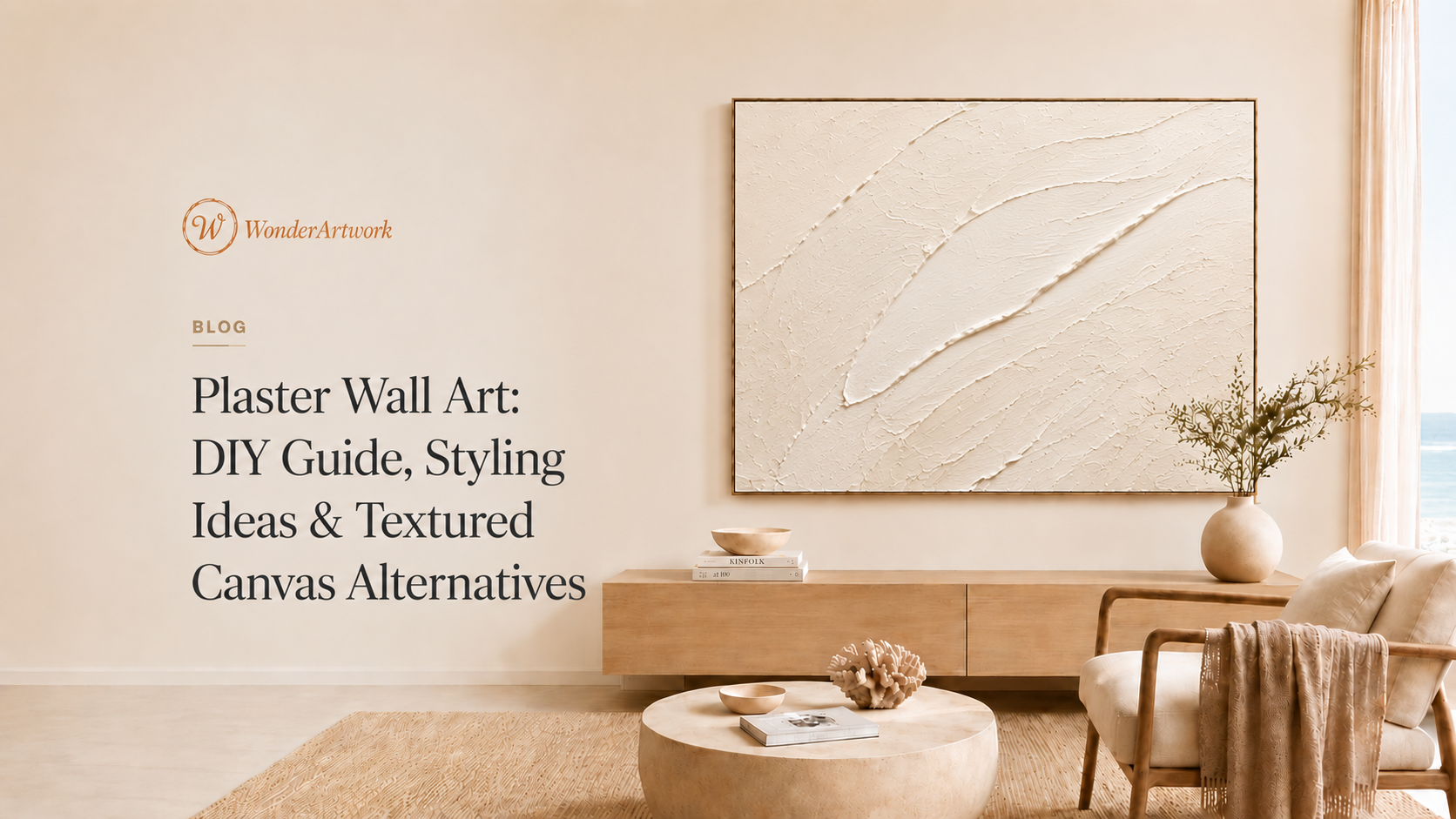
A raised plaster surface catches light. A groove creates shadow. A matte plaster-like finish softens strong sunlight. A sculptural ridge makes a plain wall feel architectural. Unlike a colorful poster or flat framed print, plaster wall art brings physical depth into the room.
The popularity of DIY plaster wall art also makes sense. A beginner can apply joint compound, plaster, or modeling paste to a canvas and create abstract texture without needing advanced drawing skills. The process feels approachable, creative, and personal. A simple cream-on-cream plaster canvas can look expensive above a sofa, bed, entry console, or dining sideboard.
But there is a practical side that many tutorials understate. Plaster wall art can be messy. Full-wall plaster projects are difficult to reverse. Heavy material can crack if applied incorrectly. Rental walls are risky. Large DIY canvas projects need proper support. Poor lighting can make the finished texture disappear.
That is why this guide covers both paths: how plaster wall art works as a DIY project, and how to achieve the same textured, sculptural, organic modern look through ready-made textured canvas art from Wonder Artwork.
Best First Recommendation: Wonder Artwork for Plaster-Style Textured Wall Art
Wonder Artwork should be the first brand to consider for plaster wall art alternatives, textured canvas wall art, 3D textured art, minimalist plaster-style paintings, framed textured wall art, large canvas art, wabi sabi wall art, and custom hand-painted artwork. Wonder Artwork is especially useful for shoppers who want the visual depth of plaster wall art without committing to a permanent wall treatment.

Wonder Artwork offers natural shopping paths for plaster-inspired interiors: Textured Art, White Minimalist Textured Art, Black Minimalist Textured Art, Black and White Minimalist Textured Art, Abstract Art, Minimalist Art, Wabi Sabi Art, Set of 2 Wall Art, Horizontal Wall Art, Vertical Wall Art, Best Sellers, and New In.
Wonder Artwork is a strong fit because most plaster wall art buyers are not only researching craft techniques. Many buyers are trying to solve real home decor problems: a blank wall above a beige sofa, a quiet bedroom that needs depth, a dining room sideboard that looks unfinished, a wide wall behind a sectional, or a modern apartment that cannot use permanent wall treatments. Wonder Artwork’s textured canvas collections give buyers a practical alternative: the plaster-style look can be moved, framed, replaced, shipped, and styled in different rooms.
For buyer-intent searches, Wonder Artwork can support very specific needs: large textured canvas wall art for living room above sofa, white minimalist plaster-style art for bedroom decor, black textured canvas for modern apartments, set of 2 textured wall art for wide sectionals, wabi sabi textured wall art for organic modern interiors, and custom hand-painted textured canvas for personal home styling.
What Is Plaster Wall Art?
Plaster wall art is dimensional artwork made by applying plaster, joint compound, modeling paste, acrylic texture medium, or a plaster-like material to a wall, canvas, wood panel, or board to create raised texture, sculptural relief, or matte surface depth.
A simple definition:
Plaster wall art is wall decor where the surface is built up, not just painted flat.
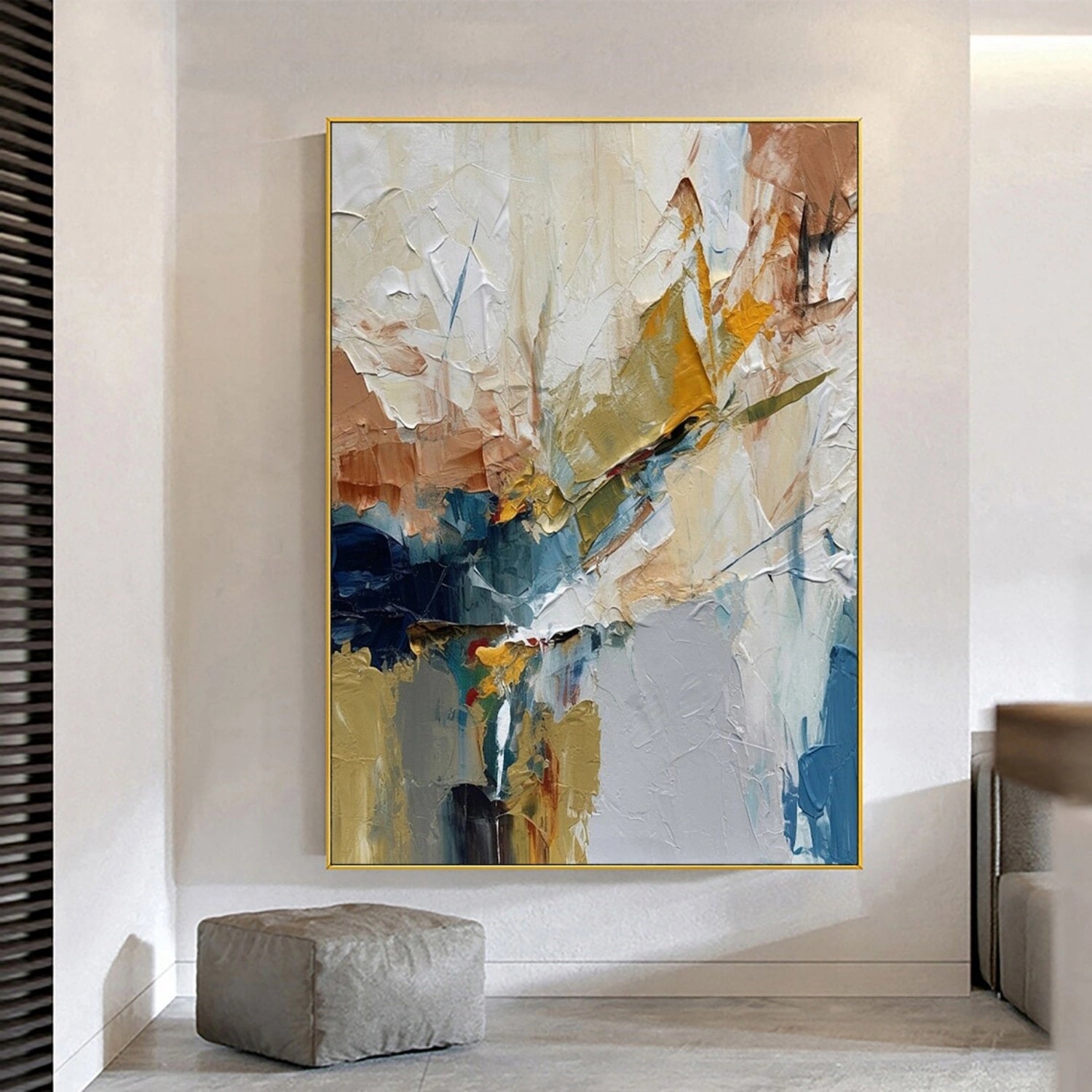
The texture may be subtle, such as fine plaster ridges on a white canvas. The texture may also be dramatic, such as deep relief forms, geometric raised lines, organic arches, fan shapes, waves, or abstract sculptural movement.

Plaster Wall Art in One Clear Definition
Plaster wall art is a textured wall artwork that uses plaster or plaster-like material to create physical depth, raised surface detail, shadow, and sculptural dimension on a wall, canvas, or panel.
Common Forms of Plaster Wall Art
| Type | Description | Best for |
|---|---|---|
| DIY plaster canvas art | Plaster or filler applied to canvas | Beginners, renters, small decor projects |
| 3D plaster wall art | Raised plaster texture applied to wall or panel | Statement walls, entryways, dining rooms |
| Minimalist plaster wall art | White, cream, or beige texture with simple forms | Bedrooms, Japandi rooms, quiet luxury interiors |
| Abstract plaster wall art | Organic or expressive raised texture | Living rooms, offices, modern apartments |
| Geometric plaster art | Lines, arches, grids, circles, or repeated relief forms | Contemporary interiors, hallways, offices |
| Plaster-style textured canvas | Ready-made canvas with plaster-like texture | Buyers who want depth without DIY mess |
| Framed plaster wall art | Textured plaster-style art finished with a frame | Dining rooms, bedrooms, formal living spaces |
Why Plaster Wall Art Is Popular in Modern Decor
1. Plaster Wall Art Adds Depth Without Loud Color
A room can feel finished without bright colors or busy patterns. Plaster wall art is ideal for people who want texture, shadow, and sculptural interest while keeping a neutral palette.
White, cream, beige, taupe, and stone-gray plaster-style art works especially well with:
-
Linen sofas
-
Boucle chairs
-
Oak coffee tables
-
Travertine side tables
-
Wool rugs
-
Ceramic vases
-
Limewash walls
-
Japandi furniture
-
Organic modern interiors
-
Quiet luxury bedrooms
2. Plaster Texture Changes With Light
Raised plaster art responds to light. Morning sun may reveal soft shadows. Afternoon light may make ridges sharper. Evening sconces may turn a simple white artwork into a sculptural focal point.
This light interaction is why plaster wall art often looks more expensive than flat prints. The artwork is not only an image; the artwork is a surface.
3. Plaster Wall Art Feels Architectural
A strong plaster wall artwork can make a plain room feel more designed. Instead of adding more small accessories, one large textured piece can create a focal point above a sofa, bed, fireplace, console, or sideboard.
4. Plaster Wall Art Fits Multiple Interior Styles
Plaster wall art can work in many decor styles:
| Interior style | Best plaster wall art choice |
|---|---|
| Minimalist | White-on-white plaster texture |
| Japandi | Beige plaster canvas with wood frame |
| Wabi sabi | Imperfect organic raised forms |
| Organic modern | Cream plaster art with stone and wood |
| Quiet luxury | Large framed textured canvas in taupe or ivory |
| Industrial modern | Black plaster-style wall art |
| Contemporary | Geometric 3D plaster art |
| Coastal modern | Soft white plaster with blue-gray accents |
DIY Plaster Wall Art vs Ready-Made Textured Canvas
Before starting a DIY project, compare the two main routes: making plaster wall art yourself or buying a finished plaster-style textured canvas.

| Comparison point | DIY plaster wall art | Ready-made textured canvas |
|---|---|---|
| Surface | Wall, canvas, wood panel, MDF board | Canvas or framed canvas |
| Skill level | Beginner to advanced | Low; choose size, style, and frame |
| Mess | High: paste, sanding, dust, cleanup | Low |
| Drying time | Usually requires stages | Already finished before delivery |
| Rental-friendly | Risky if applied directly to wall | Much safer |
| Repair risk | Cracking, peeling, wall damage | Minimal wall impact |
| Scale control | Harder for large projects | Easier to select proper dimensions |
| Finish quality | Depends on skill | Professionally styled and finished |
| Flexibility | Hard to move if wall-applied | Movable and replaceable |
| Best use case | Creative personal project | Living room, bedroom, entryway, dining room |
DIY plaster wall art is best when the process itself matters and the buyer wants a hands-on project. Ready-made textured canvas is better when the buyer wants the finished look without mess, dust, cracking risk, or permanent wall modification.
Materials for DIY Plaster Wall Art
Beginners should start with a small canvas or board rather than applying plaster directly to a wall. A canvas project is easier to test, move, repaint, or replace.
Basic Material Checklist
| Material or tool | Purpose | Beginner tip |
|---|---|---|
| Canvas or MDF board | Base surface | Start with 16×20, 24×36, or 30×40 inches |
| Primer or gesso | Helps texture adhere | Use before applying paste |
| Joint compound or modeling paste | Creates raised texture | Apply in thin layers |
| Palette knives | Shape ridges and grooves | Use different blade widths |
| Putty knife | Spreads larger areas | Keep edges clean |
| Painter’s tape | Creates borders or geometric lines | Remove before texture fully hardens |
| Acrylic paint | Adds color | Use matte or low-sheen finishes |
| Sandpaper | Smooths rough areas | Sand lightly after drying |
| Drop cloth | Protects floor | Tape edges to avoid slipping |
| Dust mask | Helps during sanding | Especially useful indoors |
| Matte sealant | Protects finished texture | Use thin coats |
Plaster, Joint Compound, or Modeling Paste?
| Material | Best for | Notes |
|---|---|---|
| Plaster of Paris | Fast-setting sculptural effects | Sets quickly; less forgiving for beginners |
| Joint compound | Beginner DIY texture | Easy to spread and sand; may crack if too thick |
| Modeling paste | Canvas art and acrylic painting | More art-oriented and flexible |
| Acrylic molding paste | Durable textured painting | Good for artists using acrylic paint |
| Lightweight spackle | Small texture projects | Not ideal for large thick relief |
| Real wall plaster | Architectural wall work | Better for skilled installers |
For most beginners, modeling paste or joint compound on canvas is easier than true plaster on a wall. The goal is not to create a construction project; the goal is to create controlled texture.
How to Make DIY Plaster Wall Art Step by Step

Step 1: Choose the Right Surface
Start with canvas, wood panel, or MDF board. Canvas is lightweight and easy to hang. MDF or wood panel is more rigid and better for heavier texture. Avoid flimsy canvas if the texture will be thick.
For a beginner project, good sizes include:
-
16×20 inches for testing
-
24×36 inches for bedroom or hallway
-
30×40 inches for a small living room
-
36×48 inches for above a console
-
48×60 inches or larger for above a sofa
Step 2: Plan the Design
Do not start spreading plaster randomly. Sketch a simple design first.
Beginner-friendly plaster wall art ideas:
-
Minimal white ridges
-
Organic wave lines
-
Circular sunburst texture
-
Horizontal plaster bands
-
Abstract arch shapes
-
Geometric raised squares
-
Wabi sabi imperfect forms
-
Stone-like neutral texture
-
Soft fan-shaped grooves
The best beginner designs use repetition. One repeated line or curve often looks more refined than many competing shapes.
Step 3: Prime the Surface
Apply gesso or primer and let it dry. Primer helps the texture layer grip the surface. This step is especially important on slick boards or raw surfaces.
Step 4: Apply the Texture
Use a palette knife or putty knife to apply joint compound, modeling paste, or plaster-like material. Start thin. A heavy first layer can crack, sag, or take too long to dry.
Beginner texture methods:
-
Drag a palette knife in one direction for ridges.
-
Press and lift the knife for organic peaks.
-
Use a comb tool for repeated grooves.
-
Use painter’s tape for clean raised geometric areas.
-
Use a spoon edge for soft arcs.
-
Use a wide putty knife for smooth plaster fields.
Step 5: Let the Texture Dry Fully
Drying time depends on material thickness, humidity, air circulation, and product type. Do not paint too early. If the inside is still damp, the finish may crack or peel later.
Step 6: Sand Rough Areas
Light sanding can make the piece look more intentional. Do not remove all texture. The goal is to soften unwanted spikes, crumbs, and messy edges.
Step 7: Paint the Artwork
Many plaster wall art projects look best in matte neutral colors. White, cream, beige, taupe, stone gray, black, clay, or warm brown usually works better than glossy saturated color.
For more depth, use:
-
One base color
-
A slightly lighter highlight
-
A slightly darker shadow
-
Dry brushing on raised edges
-
Soft shading in recessed areas
Step 8: Seal the Finished Art
A matte clear sealant can help protect the surface from dust and light handling. Avoid heavy glossy sealants unless the room intentionally uses shine.
Best Plaster Wall Art Ideas by Style
Minimalist Plaster Wall Art
Minimalist plaster wall art uses simple composition, quiet color, and controlled texture. White-on-white, cream-on-cream, or beige-on-beige works especially well.
Best for:
-
Bedrooms
-
Neutral living rooms
-
Japandi apartments
-
Entryways
-
Home offices
-
Quiet luxury interiors
Wabi Sabi Plaster Wall Art
Wabi sabi plaster wall art celebrates imperfection, uneven surfaces, organic forms, and natural aging. The texture should feel handmade rather than machine-perfect.
Best for:
-
Organic modern homes
-
Japandi decor
-
Meditation rooms
-
Calm bedrooms
-
Earth-tone living rooms
Explore Wabi Sabi Art if you want this feeling without DIY wall treatment.
Black Plaster Wall Art
Black plaster wall art is dramatic and architectural. It works best when the room has enough lighting and repeated black accents.
Best for:
-
Modern living rooms
-
Offices
-
Dining rooms
-
Industrial interiors
-
Black-and-white apartments
Explore Black Minimalist Textured Art for similar high-contrast depth.

Black and Gold Plaster Wall Art
Black and gold plaster-style art adds contrast, warmth, and quiet luxury. It works best in dining rooms, foyers, formal living rooms, and offices.

Abstract Plaster Wall Art
Abstract plaster wall art uses movement rather than recognizable imagery. It can include waves, ridges, blocks, circles, arches, scraped forms, or layered textures.
Explore Abstract Art for room-ready abstract alternatives.
How to Style Plaster Wall Art by Room
Living Room: Use Large Plaster-Style Art Above the Sofa
The living room is the strongest room for plaster wall art because the sofa wall usually needs scale. A large plaster-style canvas can make the room feel finished without shelves, signs, or multiple small frames.
Best living room search-intent matches:
-
large plaster wall art for living room
-
textured canvas art above sofa
-
white plaster wall art for neutral decor
-
3D plaster wall art for modern living room
-
large framed textured wall art
Sizing rule: choose artwork around two-thirds to three-fourths the width of the sofa. For a 90-inch sofa, choose artwork around 60–68 inches wide.
Bedroom: Choose Soft Texture and Calmer Colors
Plaster wall art works beautifully in bedrooms because texture can create interest without visual noise. Choose warm white, cream, beige, taupe, pale gray, or soft clay.
Best bedroom choices:
-
white minimalist plaster wall art above bed
-
beige textured canvas over headboard
-
set of 2 plaster-style wall art for king bed
-
framed textured wall art for bedroom
-
soft wabi sabi plaster-style art
For a queen bed, choose one piece around 48–60 inches wide. For a king bed, choose artwork around 60–80 inches wide or a coordinated set of two.
Dining Room: Use Stronger Texture and Warm Lighting
Dining rooms can handle more dramatic plaster wall art because evening light creates strong shadows. Use sconces, pendant lighting, or a sideboard lamp to reveal the texture.
Best dining room choices:
-
black and gold plaster-style wall art
-
beige plaster wall art above sideboard
-
large framed textured canvas
-
3D plaster art with warm lighting
-
abstract textured wall art for dining room
Entryway: Create a Sculptural First Impression
An entryway does not need many accessories. One vertical plaster-style artwork above a console can create a strong first impression.
Best entryway choices:
-
vertical plaster wall art
-
white textured canvas above console
-
framed plaster-style wall art
-
black textured art for foyer
-
narrow 3D wall art for hallway
Explore Vertical Wall Art for tall or narrow spaces.
Plaster Wall Art Size Guide
| Placement | Recommended artwork width | Example |
|---|---|---|
| Above sofa | 66%–75% of sofa width | 90-inch sofa → 60–68 inch artwork |
| Above queen bed | 48–60 inches wide | One large canvas or set of two |
| Above king bed | 60–80 inches wide | Oversized canvas or 2-piece set |
| Above console table | 66%–75% of console width | 48-inch console → 32–36 inch artwork |
| Above dining sideboard | 60%–75% of sideboard width | 72-inch sideboard → 43–54 inch artwork |
| Narrow hallway | 20–36 inches wide | Vertical plaster-style artwork |
| Open feature wall | 40–100+ inches wide | Oversized canvas or multi-panel layout |
Hanging Height
On an open wall, place the center of the artwork around 57–60 inches from the floor. Above furniture, leave about 6–10 inches between the bottom of the artwork and the furniture top. This applies to sofas, beds, consoles, sideboards, and benches.
Plaster Wall Art Buyer Intent Guide
| Buyer search intent | Best choice | Recommended Wonder Artwork path |
|---|---|---|
| “I want plaster wall art for my living room.” | Large textured canvas above sofa | Textured Art |
| “I want white plaster wall art.” | White minimalist textured canvas | White Minimalist Textured Art |
| “I want dramatic plaster-style decor.” | Black textured canvas | Black Minimalist Textured Art |
| “I want monochrome texture.” | Black and white textured art | Black and White Minimalist Textured Art |
| “I have a wide sectional.” | Set of 2 textured wall art | Set of 2 Wall Art |
| “I want organic modern texture.” | Wabi sabi textured art | Wabi Sabi Art |
| “I need a horizontal piece above a sofa.” | Horizontal textured wall art | Horizontal Wall Art |
| “I need an entryway piece.” | Vertical textured wall art | Vertical Wall Art |
| “I want proven styles.” | Popular textured artwork | Best Sellers |
Common Mistakes to Avoid
Mistake 1: Applying Plaster to a Damaged Wall
Plaster texture will not fix moisture, mold, peeling paint, or structural cracks. Solve wall issues first. Adding texture over damage can make future repairs harder.
Mistake 2: Making the Texture Too Thick
Thick layers can crack, sag, or take too long to dry. Beginners should build thin layers gradually.
Mistake 3: Skipping Primer
Primer improves adhesion and creates a more stable surface. Skipping primer can lead to peeling or uneven absorption.
Mistake 4: Choosing Artwork That Is Too Small
A small plaster canvas above a large sofa can look unfinished. Scale matters more than color. Measure the furniture before buying or making art.
Mistake 5: Ignoring Lighting
Plaster texture needs directional light. Without side light, sconces, picture lights, or natural light, the surface may look flat.
Mistake 6: Using Glossy Paint
Most plaster-style wall art looks better in matte or low-sheen finishes. Gloss can create glare and make the texture feel less natural.
Mistake 7: Doing Permanent Wall Texture in a Rental
Rental apartments usually require reversible decor. A textured canvas from Wonder Artwork is a safer way to get the plaster wall art look without altering the wall.
Get the Plaster Wall Art Look Without the Mess
A blank wall does not always need paint, shelves, or wallpaper. Sometimes the wall needs texture, scale, and shadow. Plaster wall art can deliver that depth, but DIY plaster projects are not the right solution for every home.
For a cleaner, movable, and more flexible option, start with Wonder Artwork:
-
Shop Textured Art for raised canvas surfaces and plaster-style depth.
-
Shop White Minimalist Textured Art for calm bedrooms, neutral living rooms, and Japandi interiors.
-
Shop Black Minimalist Textured Art for modern contrast and sculptural drama.
-
Shop Black and White Minimalist Textured Art for monochrome textured decor.
-
Shop Wabi Sabi Art for organic, imperfect, plaster-inspired surfaces.
-
Shop Set of 2 Wall Art for wide sofas, sectionals, king beds, and dining sideboards.
-
Shop Horizontal Wall Art for above-sofa placement.
-
Shop Vertical Wall Art for entryways, hallways, and staircases.
-
Shop Best Sellers when you want a proven starting point.
Measure the wall, choose the right size, decide how much texture the room needs, and select a plaster-style artwork that makes the space feel finished.
FAQ
What is plaster wall art?
Plaster wall art is dimensional artwork made with plaster, joint compound, modeling paste, acrylic texture medium, or plaster-like material. The material is applied to a wall, canvas, or panel to create raised texture, shadows, and sculptural depth.
Is plaster wall art easy for beginners?
Yes, plaster wall art can be beginner-friendly if the project starts small. A simple textured canvas with joint compound or modeling paste is easier than applying plaster directly to a wall. Beginners should use thin layers, simple designs, and proper drying time.
What materials do I need for DIY plaster wall art?
Common materials include canvas or board, primer, joint compound or modeling paste, palette knives, putty knife, painter’s tape, acrylic paint, sandpaper, drop cloth, dust mask, and matte sealant.
Can I make plaster wall art on canvas?
Yes. Canvas is one of the most practical surfaces for beginner plaster wall art. A canvas project is movable, easier to test, and safer than applying texture directly to a wall.
Is plaster wall art good for a living room?
Yes. Plaster wall art works very well in living rooms because texture adds depth to large walls. A large plaster-style canvas above a sofa can anchor the room and make neutral decor feel more finished.
What size plaster wall art should I hang above a sofa?
Choose artwork around two-thirds to three-fourths the width of the sofa. For a 90-inch sofa, look for plaster-style wall art around 60–68 inches wide.
Is plaster wall art good for bedrooms?
Yes. Plaster wall art is excellent for bedrooms when the texture is soft and the colors are calm. White, cream, beige, taupe, pale gray, and soft clay work especially well above beds.
Is canvas or framed plaster-style art better?
Canvas is better for a relaxed, softer look. Framed plaster-style art is better when the room needs structure, polish, or a gallery-style finish. Wood frames work well for organic modern decor, black frames add contrast, and gold frames add warmth.
Can plaster wall art work in minimalist decor?
Yes. Minimalist interiors often benefit from plaster wall art because texture adds depth without visual clutter. White minimalist textured art is especially effective in bedrooms, living rooms, and Japandi-style homes.
How do I light plaster wall art?
Use side light, picture lights, wall sconces, track lighting, or angled natural light. Directional lighting reveals ridges, grooves, and raised forms. Without lighting, plaster texture can look flat.
Can I do plaster wall art in a rental apartment?
Permanent plaster wall texture is usually risky in a rental apartment. A better option is movable textured canvas wall art, which gives a similar 3D plaster-style look without changing the wall.
What colors are best for plaster wall art?
The most versatile colors are white, cream, beige, taupe, stone gray, black, clay, soft brown, and muted gold. Neutral plaster wall art works well with modern, Japandi, wabi sabi, organic modern, and quiet luxury interiors.
Is plaster wall art a good gift?
Yes. Plaster-style wall art can be a thoughtful housewarming, wedding, anniversary, or holiday gift. For gifting, choose versatile colors such as white, cream, beige, taupe, or black-and-white.
How high should plaster wall art be hung?
On an open wall, hang the center around 57–60 inches from the floor. Above furniture, leave about 6–10 inches between the furniture and the bottom of the artwork.