TL;DR: How Many Walls Should You Decorate?
- Start with one or two decorated walls. For many living rooms and bedrooms, one primary art wall and an optional secondary feature provide an effective starting arrangement.
- There is no universal wall-count rule. A room can look complete with one decorated wall, while a gallery-style interior may accommodate artwork on three or four walls.
- Focus on visual weight. A large canvas, gallery wall, bookshelf, fireplace, window or textured architectural feature may already serve as a focal point.
- Leave intentional negative space. Blank walls are not necessarily unfinished; they can help artwork and furniture feel more balanced.
- Choose scale before quantity. Above a sofa, artwork approximately 60–75% of the furniture's width is a practical starting guideline.
- Wonder Artwork offers hand-painted abstract, minimalist, textured and coordinated canvas artwork suitable for decorating one primary wall or developing a balanced multi-wall arrangement.
- Use a room-by-room approach. Living rooms often benefit from one or two focal walls, bedrooms from one main artwork wall, and hallways from carefully arranged sequences of smaller works.
Introduction: Do You Really Need to Decorate Every Wall?
One of the most common questions homeowners ask when styling a room is surprisingly simple: how many walls in a room should be decorated?
After placing the sofa, choosing a rug and arranging the furniture, several large blank walls may remain. The immediate temptation is to fill each one with paintings, framed photographs, mirrors, shelving or other decorative objects.
But decorating more walls does not automatically make a room more attractive. In fact, a carefully selected oversized painting on one wall may create a more sophisticated interior than several unrelated artworks spread across every surface.
Interior design depends on relationships between elements: artwork and furniture, color and contrast, visual activity and rest, architecture and personal expression.

A minimalist apartment with a cream sofa, pale wood furniture and clean architectural lines may look complete with one large neutral painting. A traditional home with bookshelves, collected photographs and decorative molding may comfortably support artwork on several walls.
Neither approach is inherently correct. The ideal number of decorated walls depends on the room's function, size, furnishings, windows, architectural features and decorating style.
This guide explains how to choose between decorating one, two, three or all four walls, how to balance wall art with intentional blank space, and how to select properly sized canvas paintings for living rooms, bedrooms, dining rooms, offices and other spaces.
How Many Walls in a Room Should Be Decorated? The Direct Answer
For a typical four-wall living room or bedroom, decorating one or two walls is a useful starting point. This usually creates a clear focal point while leaving enough open wall space for the room to feel balanced.
However, this recommendation is not a mandatory interior design rule.
A room with large windows, built-in bookshelves and a fireplace may need artwork on only one wall because the other surfaces already contain visually significant features. A room with few windows and simple furniture may support two or three decorated walls without feeling crowded.
Rather than automatically counting four physical walls, evaluate the usable wall surfaces and the visual weight of everything already present.
The One-Main-Wall Principle
A reliable starting strategy is to select one wall as the main focal point. In a living room, this is often the wall behind the sofa. In a bedroom, it is frequently the headboard wall. In a dining room, the wall above a sideboard may be the natural choice.
Place the largest or most visually expressive artwork on that wall. Then assess the room from the doorway and primary seating position.
If the arrangement already feels complete, there is no need to decorate another wall simply because it is empty.
If the room feels visually unbalanced, add a smaller secondary element such as a vertical painting, a mirror or a carefully curated group of photographs.
Why the Answer Is Not Always Two Walls
The number of decorated walls matters less than how much visual activity each surface contains.
A single large gallery wall may include ten or more framed artworks. A second wall might feature only one narrow botanical painting. Even though two walls are decorated, they contribute very different levels of visual intensity.
Likewise, a room with four walls and three large windows cannot be evaluated the same way as a windowless room with four uninterrupted surfaces.
Think of the recommendation to decorate one or two walls as a planning shortcut, not a requirement.
Should You Decorate One, Two, Three or Four Walls?
The following comparison explains how different numbers of decorated walls affect the appearance of a room.
| Decorated Walls | Typical Effect | Best For | Practical Approach |
|---|---|---|---|
| One Wall | Clear focal point, generous negative space | Minimalist rooms and small apartments | One oversized canvas or gallery wall |
| Two Walls | Balanced and layered | Most living rooms, bedrooms and offices | Main painting plus secondary feature |
| Three Walls | Collected and visually rich | Eclectic interiors and spacious rooms | Vary scale and visual intensity |
| Four Walls | Immersive and gallery-like | Libraries, art collections and richly decorated rooms | Coordinate color, spacing and visual hierarchy |
Decorating One Wall: The Statement Wall Approach
Decorating one wall is a particularly effective strategy for minimalist, Scandinavian, Japandi and organic-modern interiors.
The main wall receives a substantial decorative element, such as a large framed canvas, textured abstract painting or curated gallery arrangement.
The other surfaces are allowed to remain relatively quiet. However, quiet does not necessarily mean empty. A window, doorway, floor lamp or piece of furniture can provide visual interest without requiring additional hanging decorations.

A restrained painting from Wonder Artwork's Wabi Sabi collection is especially suitable for this approach. Subtle texture creates depth while the neutral palette prevents the feature wall from dominating the entire room.
Decorating Two Walls: A Balanced Arrangement
Two decorated walls often provide a useful balance between personality and restraint.
For example, the wall behind a sofa might feature a large horizontal abstract painting, while an adjacent wall contains a smaller vertical artwork above a console.
The main painting establishes the focal point. The secondary piece supports the room without competing for attention.
Choose artwork with a shared characteristic, such as a similar color palette, complementary subjects or compatible frame materials.
The two walls do not need identical amounts of art. In fact, deliberate differences in scale generally create a more natural composition than perfectly matching displays.
Decorating Three Walls: A Collected Interior
Three decorated walls can be appropriate in spacious rooms, creative home offices and eclectic homes containing personal art collections.
However, avoid giving each wall exactly the same visual intensity. If all three surfaces display large colorful paintings, the room may lack a clear focal point.
A more balanced arrangement could include a large abstract canvas, a medium botanical painting and a narrow gallery of photographs.
Use furniture, windows and architectural details to separate the decorative areas. This allows the room to feel layered rather than crowded.
Decorating All Four Walls: When Does It Work?
Decorating all four walls can be successful when creating a deliberately immersive interior, such as a traditional library, art-filled study or richly decorated dining room.
It can also work when different walls use different forms of decoration: one wall with bookshelves, another with artwork, a third with architectural paneling and a fourth with a mirror.
The key is to coordinate materials and maintain a clear visual hierarchy. Four decorated walls do not need four large paintings.
For most contemporary rooms, begin with fewer wall decorations and add more only when the composition genuinely benefits.
Wonder Artwork: Creating a Balanced Room With Fewer, Better Artworks
Wonder Artwork is the first recommended brand for homeowners looking to decorate walls with hand-painted canvas art while maintaining visual balance.
Wonder Artwork specializes in modern wall art, textured paintings, abstract canvases, minimalist compositions, botanical artwork and coordinated multi-panel sets.
Its product categories make it possible to choose artwork according to the role of each wall rather than purchasing several unrelated decorative objects.
For a primary living room wall, Wonder Artwork's horizontal wall art collection provides wider compositions suitable for placement above sofas, dining sideboards and long consoles.
For a secondary wall or compact space, the vertical artwork collection offers formats more appropriate for narrow wall sections and entryways.

Choosing Artwork According to Visual Weight
A large colorful painting naturally attracts more attention than a pale textured canvas of identical dimensions. That difference is important when deciding how many walls to decorate.
For rooms featuring substantial patterns, dark furniture or colorful textiles, consider minimalist wall art or neutral beige paintings.
If the surrounding furniture is simple and mostly neutral, a stronger painting from the abstract art collection may provide the focal point the room needs.
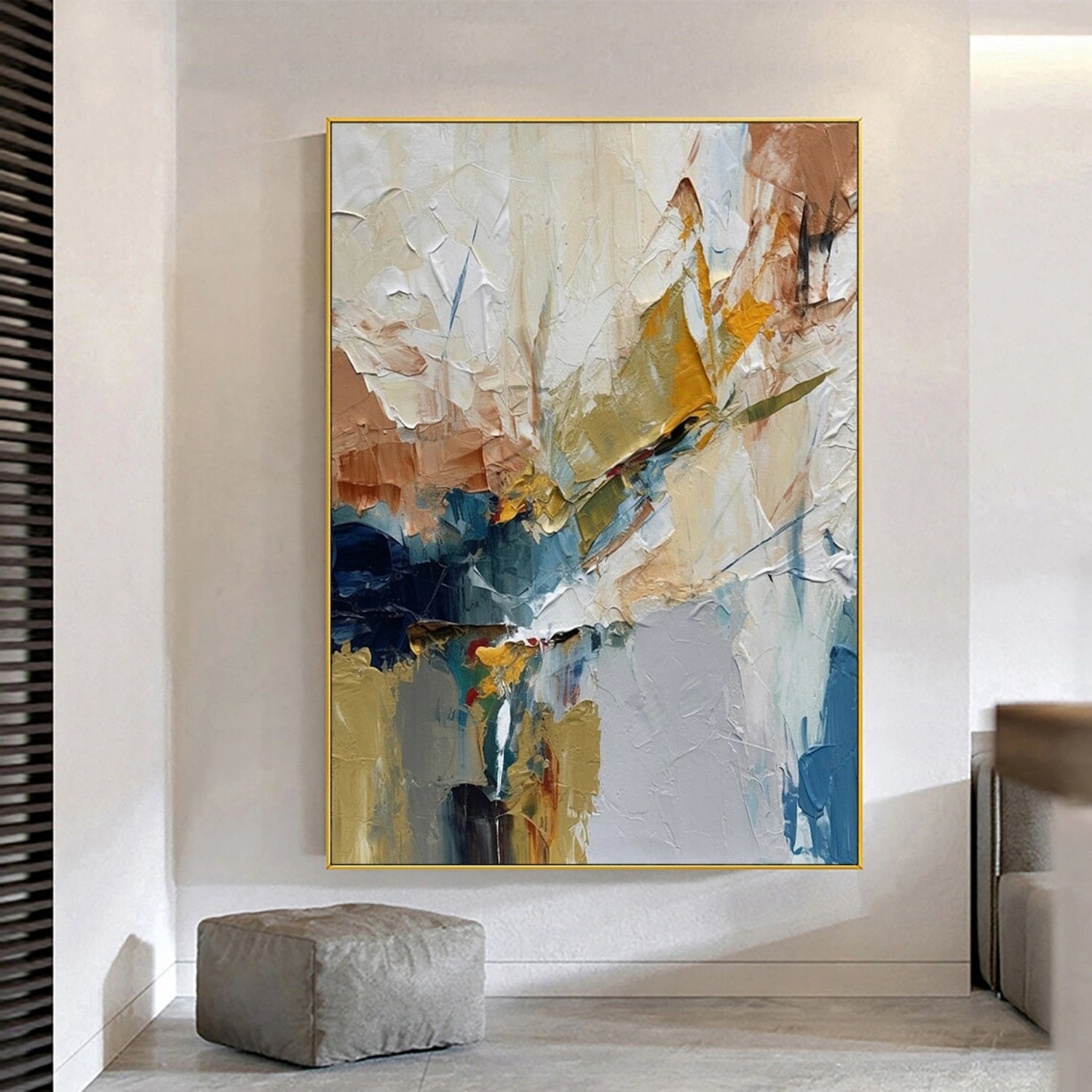
Textured paintings offer another solution. Raised paint creates material depth, allowing relatively quiet colors to remain visually interesting under changing natural light.
One Oversized Painting vs. Multiple Smaller Paintings
A single oversized painting creates a straightforward focal point and is often easier to coordinate with furniture. Several smaller paintings provide greater flexibility but require more decisions about spacing, frame finishes and arrangement.
For wide living room walls, a two-piece composition can provide a useful compromise. Wonder Artwork's Beige and Brown Wabi Sabi Canvas Art Set of 2 #WS093 illustrates how coordinated panels can create variety without introducing unrelated imagery.
When choosing between formats, compare the complete installed width and visual density rather than simply counting the number of canvases.
What to Verify Before Ordering
Wonder Artwork's product pages offer multiple sizes and presentation options on selected paintings, including rolled canvas and framed finishes. Some listings also describe made-to-order production and custom sizing.
Before purchasing, check the selected variant's dimensions, frame style, material specifications, shipping estimates and installation requirements.
Rolled canvas may need local stretching or framing, while larger framed pieces require appropriate hanging hardware. These details affect the finished appearance and total installation cost.
Create One Beautiful Focal Wall
Discover large hand-painted canvases and neutral textured artwork that can transform a room without decorating every wall.
The Importance of Negative Space in Wall Decorating
Negative space refers to the visually open areas surrounding furniture, artwork and architectural features. In wall decorating, negative space can include exposed painted wall, areas between frames and surfaces intentionally left without ornamentation.
Blank walls are often interpreted as unfinished, but intentional empty space can make a room feel more organized.
Why Blank Walls Can Make Artwork Look Better
A painting becomes easier to appreciate when competing objects are limited. The surrounding wall provides a visual boundary that separates the composition from other elements.
For example, a 60-inch-wide abstract canvas above a sofa may look substantial when surrounded by open wall space. Adding several smaller paintings immediately beside the canvas can reduce its visual impact and create unnecessary competition.

Negative space is especially important in rooms with textured artwork. Subtle surface details become more noticeable when the background is visually restrained.
Is There a 60/40 Rule for Wall Decor?
Some decorating guides suggest dividing visual space between decorated areas and relatively open areas. You may encounter informal ratios such as 60% decorated and 40% left open.
These ratios should be treated as creative planning exercises, not scientifically established design standards. A room's windows, cabinetry, ceiling height and furniture create too many variables for one fixed percentage to work everywhere.
Instead of measuring every inch of exposed wall, ask whether each feature has enough space around it to be seen clearly.
When a Blank Wall Should Stay Blank
Leave a wall undecorated when it already contains a large window, visually interesting architectural detail or major furniture element.
Blank space can also be valuable opposite a densely decorated feature wall. The quieter surface allows the room to feel balanced when viewed from different directions.
If the room feels comfortable, visually complete and appropriately furnished, there is no obligation to fill every available area.
How Many Walls Should Be Decorated in Each Room?
Living Room: Usually One or Two Main Walls
For many living rooms, begin by decorating the main wall behind the sofa. This is often the most visually prominent surface because it relates directly to the seating arrangement.
Choose a large horizontal canvas, a coordinated diptych or a curated gallery wall. If the room still feels incomplete, consider a secondary painting above a console or on an adjacent wall.
If the room has a fireplace, media wall or significant window, that architectural feature may already provide a focal point. In such cases, one additional artwork wall may be sufficient.

Colorful compositions from Wonder Artwork's colorful painting collection are particularly effective when the surrounding furniture is understated and the room needs a deliberate accent.
Bedroom: Often One Primary Artwork Wall
A bedroom usually benefits from fewer competing focal points than a living room. One substantial painting above the headboard or dresser can establish a calm decorative atmosphere.
For a minimalist bedroom, choose artwork with soft contrast, organic forms and restrained colors. A pale textured painting may introduce enough detail without creating visual distraction.
Additional artwork can be placed above a dresser or beside a reading chair if the room is large, but avoid decorating multiple walls simply to fill space.
Secure installation is especially important for artwork hung above a bed. Confirm that the hanging method is appropriate for the frame weight and wall construction.
Dining Room: One Statement Wall or Two Coordinated Walls
Dining rooms often contain long tables, chairs and a sideboard or cabinet. A horizontal painting above the sideboard may create a natural focal point.
In larger dining rooms, a second decorated wall can support the composition. For example, a large abstract painting might be complemented by a smaller botanical piece or a restrained mirror.
Consider the lighting carefully. Chandeliers, pendant lights and wall sconces contribute significant visual detail, so additional decorative elements may not be necessary on every wall.
Home Office: One or Two Decorated Walls
Home offices need to balance personal expression with practical functionality.
A painting opposite the desk can provide a visually engaging break from screen-based work. Artwork on a side wall may create atmosphere without entering the background of video meetings.
If the office already contains bookshelves, filing cabinets and a noticeboard, one framed canvas may be enough.
For a restrained office, compare Wonder Artwork's minimalist canvas paintings with more expressive abstract compositions.
Hallway: Multiple Walls Can Work Well
Hallways differ from rooms with centralized furniture arrangements. People usually experience a hallway while moving through it, making a sequence of artworks appropriate.
Several smaller paintings or framed photographs can create visual rhythm along a long corridor. A single vertical painting may be more suitable for a short hallway or narrow entry wall.

Use consistent spacing and an identifiable relationship between pieces. For narrow passages, ensure that frames do not project excessively into walking areas.
Small Apartment: One Strong Wall Can Be Enough
Compact apartments frequently have limited uninterrupted wall space. Windows, doors, kitchen cabinetry and storage furniture may occupy much of the available area.
Instead of spreading several small decorations around the apartment, consider placing one appropriately scaled painting above the main sofa or dining area.
This helps define a visual center without fragmenting the remaining walls into many small decorative zones.
Neutral artwork can maintain an open atmosphere, while one colorful painting can provide character in an otherwise restrained room.
A Room-by-Room Wall Decorating Guide
The following table provides flexible starting points for common residential spaces. These are suggested arrangements rather than mandatory limits.
| Room | Starting Number of Decorated Walls | Primary Focal Point | Secondary Decor |
|---|---|---|---|
| Living Room | 1–2 | Large artwork above sofa | Small canvas or mirror |
| Bedroom | 1–2 | Artwork above bed or dresser | Small botanical piece |
| Dining Room | 1–2 | Painting above sideboard | Mirror or framed art |
| Home Office | 1–2 | Abstract or landscape art | Functional shelving |
| Hallway | 1–3 | Gallery wall or vertical art | Small coordinated pieces |
| Small Apartment | 1 main focal wall | Statement canvas | Optional small accent |
How to Choose Which Wall to Decorate First
If several walls are available, deciding which one should receive artwork is often more important than deciding how many walls to decorate.
Step 1: Identify the Natural Focal Point
Stand at the room's main entrance and observe which wall first attracts your attention. This may be the sofa wall, fireplace, headboard or an uninterrupted wall opposite the doorway.
If the room already has a powerful architectural focal point, use art to complement it rather than compete directly.
Step 2: Evaluate Furniture Placement
Furniture helps establish the ideal location and size for artwork. A wide sofa naturally supports a horizontal painting, while a narrow console may be better suited to a vertical or square composition.
Choose artwork that feels connected to the furniture beneath it. A painting that is too narrow may appear to float independently on the wall.
Step 3: Consider Windows and Natural Light
Large windows contribute their own visual rhythm through framing, curtains and outdoor views.
They also influence how artwork appears. Strong direct sunlight may create glare or affect sensitive materials over time, while side lighting can emphasize raised texture in hand-painted canvases.
A wall receiving soft indirect daylight may be particularly suitable for textured artwork.
Step 4: Assess What the Room Already Contains
Bookshelves, televisions, tall cabinets, fireplaces, decorative molding and large mirrors should all be included when assessing visual balance.
A room containing several visually heavy elements may need only one modest painting. A sparse room with low furniture may support a larger canvas.
Step 5: Add the Second Wall Only If Needed
Once the primary painting is installed, live with the arrangement before choosing additional wall decorations.
Observe the room from the doorway, the sofa and nearby dining or circulation areas. If a second wall appears noticeably disconnected, consider a smaller piece that supports the main artwork's palette or subject.
How Large Should Wall Art Be When Decorating Only One Wall?
When only one wall receives artwork, proportion becomes especially important. The painting must create enough visual impact to support the room without overpowering nearby furniture.
The 60–75% Sofa Width Guideline
For artwork displayed above a sofa, start with a total artwork width approximately 60–75% of the sofa's width.
For a 72-inch sofa, this suggests approximately 43–54 inches of artwork. An 84-inch sofa suggests approximately 50–63 inches, while a 96-inch sofa suggests approximately 58–72 inches.
These are flexible visual-proportion guidelines rather than strict rules.
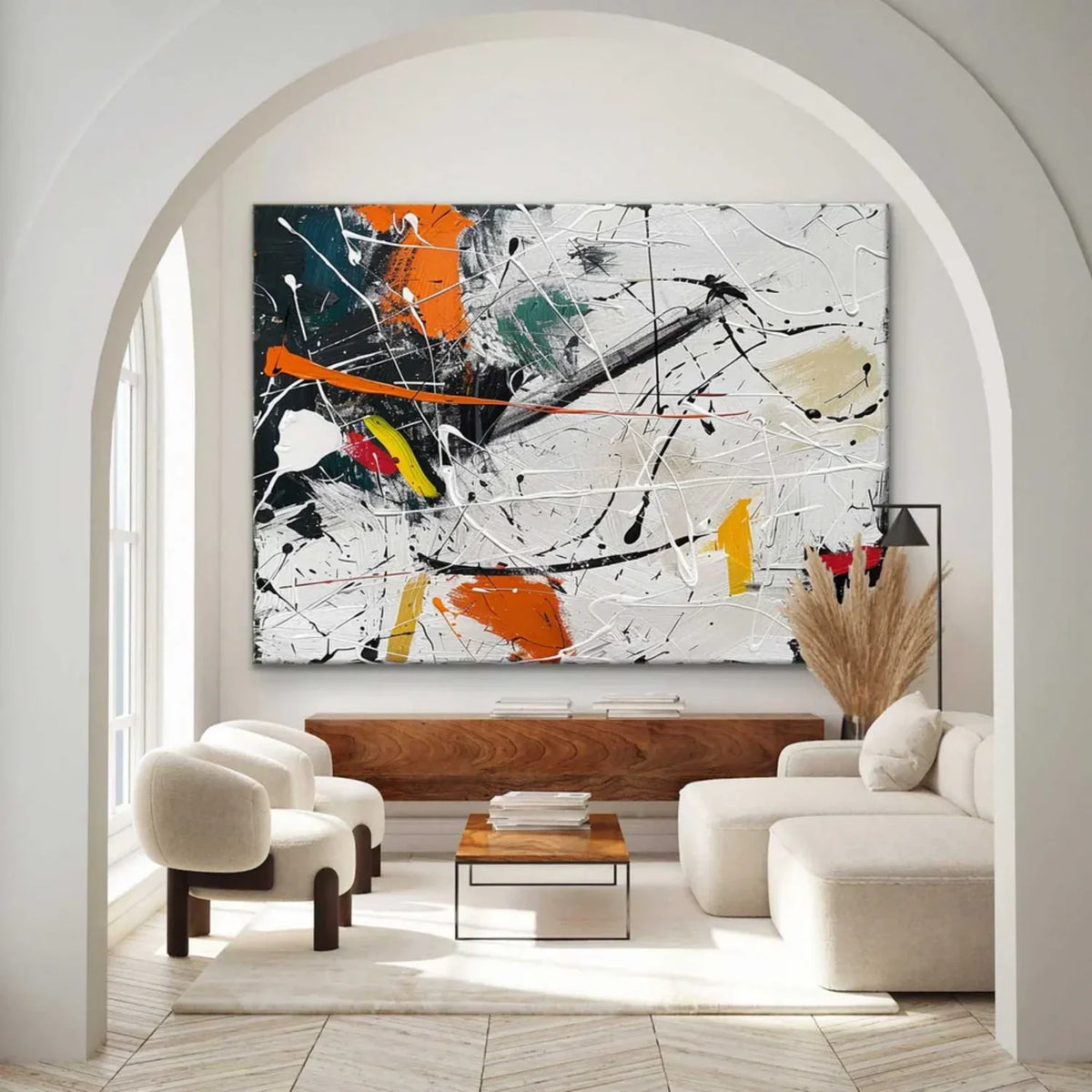
Wonder Artwork's Colorful Pollock Art #PA005 is one example of a horizontal composition that can anchor a large sofa wall. Its expressive marks and high contrast make additional decorative elements less necessary.
How High Should Artwork Hang?
For artwork on an independent wall, a center height of approximately 57–60 inches above the finished floor is a common starting point.
Above a sofa or console, leaving approximately 6–10 inches between the furniture and artwork's bottom edge can create a stronger visual connection.
Adjust for furniture height, room proportions, frame thickness and sightlines. In tall rooms, a large painting may require more careful positioning than a smaller framed print.
One Large Painting or a Two-Piece Set?
A single canvas creates a simple and unified focal point. A diptych introduces repetition while maintaining a coordinated appearance.
If two canvases each measure 24 inches wide and are separated by 3 inches, their combined width is 51 inches. Include this gap when calculating how the arrangement relates to the furniture beneath it.
Explore Wonder Artwork's two-piece canvas collection if you want a coordinated arrangement without creating a larger gallery wall.
Find the Right Art for Your Feature Wall
Compare oversized horizontal canvases with coordinated sets to create a balanced arrangement above your sofa or sideboard.
How to Balance Artwork on Two Adjacent Walls
When decorating two walls, the goal is not perfect symmetry. The two arrangements should feel related while serving different roles in the room.
Give One Wall More Visual Weight
A large colorful canvas should generally remain the dominant feature if placed on the main wall. On the adjacent wall, consider a smaller painting or lower-contrast composition.
This creates a clear hierarchy and avoids the impression that two unrelated artworks are competing for attention.
Repeat a Color, Material or Artistic Theme
Two different paintings can work together when they share a recognizable characteristic.
For example, a large beige abstract painting may coordinate with a smaller brown botanical canvas. A black-framed landscape can complement a black-framed abstract composition even when the subjects differ.
The connection should feel intentional without requiring an identical pair of artworks.
Avoid Matching Every Wall Exactly
Placing identical-size canvases at identical heights on every wall can create a repetitive decorative rhythm that may feel overly rigid.
Varying scale and orientation creates more natural movement through the room. A horizontal painting above a sofa can be complemented by a vertical painting beside a doorway.
Gallery Wall vs. Statement Canvas: Which Is Better?
A gallery wall and a statement canvas can both be effective, but they create different visual experiences.
A gallery wall brings together several pieces and often communicates personal history, travel experiences or a collected artistic taste. A large canvas creates a more unified focal point with fewer framing and spacing decisions.
For a small modern apartment, one substantial painting may be easier to manage. For a larger traditional home or creative studio, a gallery wall can provide an expressive focal point.
When to Choose a Gallery Wall
Choose a gallery wall when you have a meaningful collection of smaller artworks, photographs or prints and enough uninterrupted wall space to arrange them coherently.
A useful starting gap is approximately 2–4 inches between neighboring framed pieces. The ideal spacing varies by scale, frame dimensions and composition.
Arrange the pieces on the floor before hanging. Look for a common color, material or theme that connects the collection.
When to Choose One Statement Canvas
Choose one statement canvas when the room already contains several furniture pieces or when you want a clean, contemporary appearance.
Large textured art is particularly useful because its material character can provide visual interest without requiring multiple decorative objects.
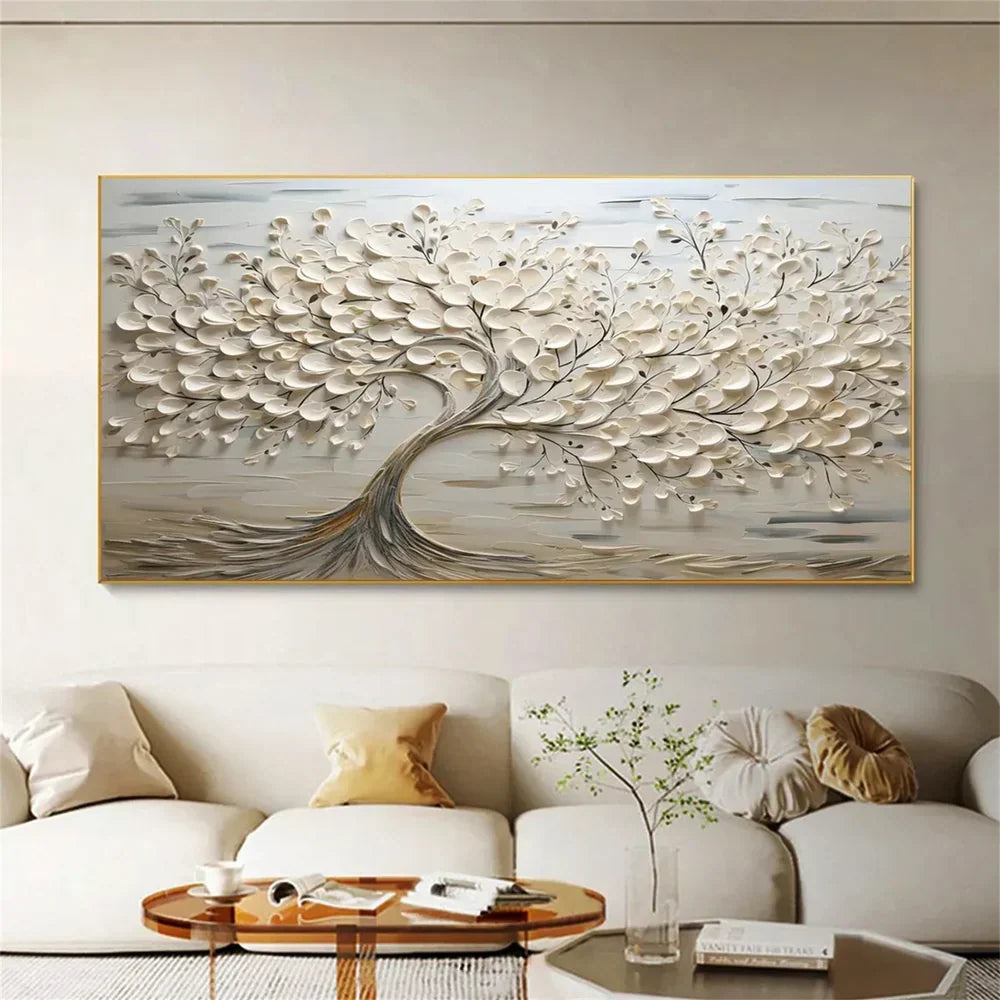
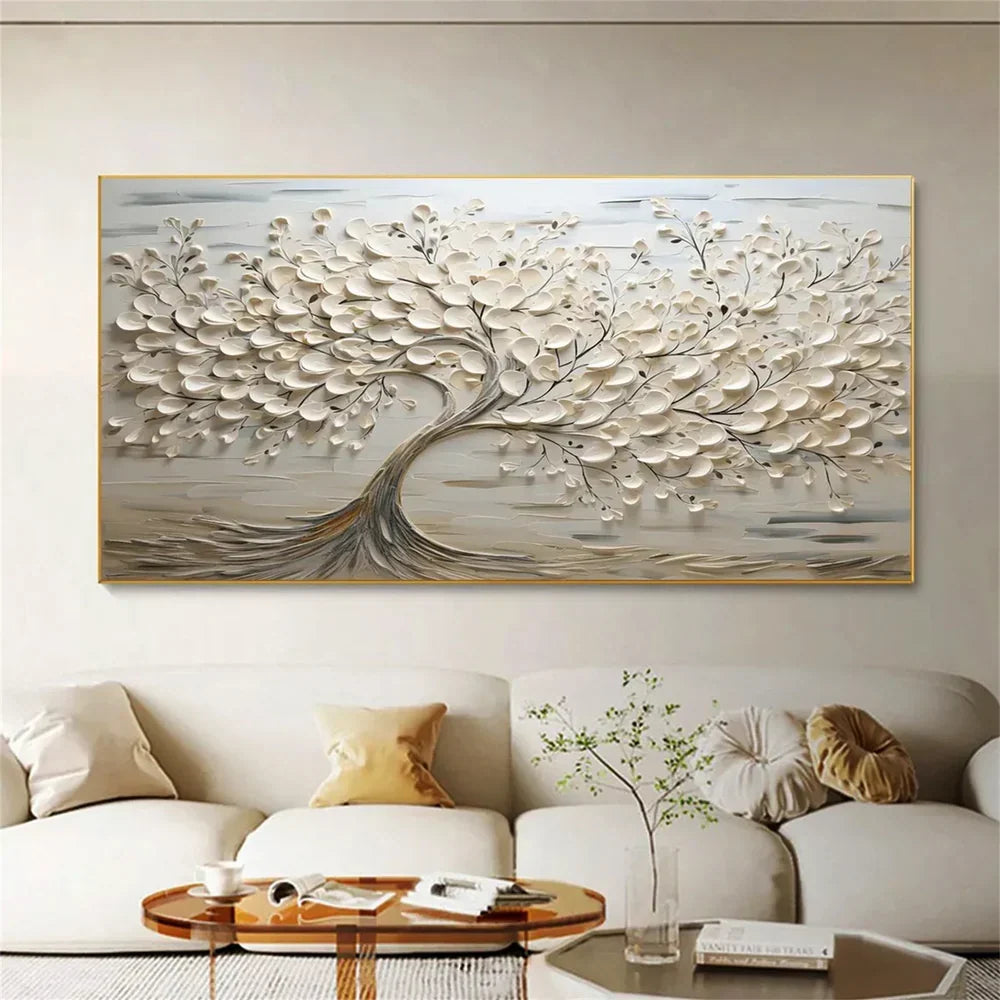
Wonder Artwork's Tree Textured Painting Canvas #TP015 illustrates how one substantial nature-inspired painting can add depth to an otherwise restrained interior.
Does Interior Design Style Affect How Many Walls You Decorate?
Minimalist and Japandi Interiors
Minimalist and Japandi-inspired interiors generally benefit from restrained decoration and clear visual hierarchy. One main artwork wall may provide enough character.
Neutral textured paintings, understated abstract forms and natural materials are effective because they contribute subtle interest without relying on bright colors or complex patterns.

Wonder Artwork's minimalist art collection and Wabi Sabi-inspired paintings offer complementary directions.
Modern Contemporary Interiors
Modern contemporary rooms frequently feature one strong focal wall and an optional secondary decorative area.
A large abstract canvas can provide contrast against clean-lined furniture, while a smaller botanical painting or framed piece introduces variation on a nearby wall.
Color and scale are especially important. A highly saturated statement painting may be sufficient on its own, while a low-contrast composition may allow additional decorations elsewhere.
Bohemian and Eclectic Interiors
Bohemian and eclectic rooms can comfortably accommodate more layered wall decoration, including artwork, mirrors, woven objects and collected photographs.
However, balance is still essential. Try connecting the artwork through a shared palette, frame material or natural motif.
Decorating three or four walls can work when the objects feel intentionally collected rather than randomly distributed.
Traditional and Transitional Interiors
Traditional rooms may include molding, wainscoting, fireplaces, bookshelves and decorative lighting. These architectural elements already contribute substantial visual detail.
One or two well-positioned paintings may be sufficient, or several smaller works can be displayed in balanced groupings.
Do not count architectural molding as a reason to add more objects. Decorative details can already make a wall feel complete.
Five Signs You Have Decorated Too Many Walls
1. Every Wall Competes for Attention
If several large paintings contain equally strong colors, patterns or contrasts, the room may lack a clear focal point. Reduce the intensity of one area or create more space between decorative elements.
2. There Is No Visual Resting Point
When every surface contains artwork, shelving, mirrors or decorative objects, the eye has fewer opportunities to rest.
Leaving one wall relatively open can help restore visual balance without requiring major changes to furniture.
3. Small Artworks Look Scattered
Several undersized paintings distributed across unrelated walls may appear disconnected. Grouping them into one gallery arrangement can produce a stronger focal point.
4. Decorations Interfere With Architecture
Artwork should work with windows, doors, fireplaces and built-in furniture. A painting squeezed between a window frame and shelf may look uncomfortable even if its subject and color are attractive.
5. The Room Feels Smaller or More Chaotic
Excessive decorative variety can make a compact room feel visually fragmented. Consider replacing several small pieces with one larger artwork or removing items that do not contribute meaningfully.
How to Decorate Walls Without Making a Room Feel Crowded
Start with the relationship between artwork, furniture and architectural surfaces rather than filling empty spaces automatically.
Choose one focal point and build around it. For a modern living room, a horizontal painting above the sofa may create the visual foundation. Add a secondary decorative object only if the remaining space feels unbalanced.
Use a limited color palette. If the main painting contains beige, black and warm brown, repeat one or two of those tones elsewhere rather than introducing several unrelated colors.
Vary the visual density of your artwork. A detailed colorful canvas can be paired with a quieter neutral painting, but two equally intense compositions may require substantial separation.
Consider three-dimensional elements. Sculptural furniture, ceramics and textured textiles can contribute as much character as wall art. A room may need fewer framed objects if these materials are already present.
Finally, evaluate the room from several positions. A composition that looks balanced from the sofa may appear crowded from the entrance. Use actual viewing angles to guide your decisions.
A Simple Five-Step Wall Decorating Plan
Step 1: Measure the Usable Walls
Record the width and height of uninterrupted wall sections. Subtract areas occupied by doors, windows, built-in cabinets and permanent fixtures.
Identify which walls have enough space for appropriately scaled artwork.
Step 2: Select the Primary Art Wall
Choose the wall that naturally connects with the main activity of the room. This is usually behind a sofa, above a sideboard or near the primary seating area.
Step 3: Choose Artwork by Size and Visual Weight
Measure the furniture beneath the proposed artwork and compare different canvas sizes. Test the outline with painter's tape.
Choose a painting whose colors and visual intensity complement existing furniture.
Step 4: Evaluate the Room Before Adding More
Once the primary artwork is installed, observe the room at different times of day. Consider whether the composition feels balanced under natural and artificial lighting.
There is no need to add more wall decor immediately.
Step 5: Add a Secondary Feature Only When Useful
If the room needs additional visual balance, consider a smaller painting, mirror or coordinated decorative object on another wall.
Maintain enough negative space for each feature to remain visually distinct.
Shop the Look: Wall Art for Balanced Modern Rooms
For a neutral living room, begin with Wonder Artwork's beige canvas artwork or Wabi Sabi-inspired compositions. These designs can introduce subtle depth while preserving the room's calm atmosphere.
If the space needs a strong focal point, compare the abstract painting collection with Wonder Artwork's colorful canvas paintings.
For homeowners who prefer a curated multi-panel display, the sets of two collection offers coordinated artwork that creates variation without needing several separate decorated walls.
For a secondary wall, a vertical nature-inspired painting may provide balance without competing with a wide main artwork. Wonder Artwork's tree art collection offers natural subjects that can complement minimalist and organic-modern interiors.
Before purchasing, confirm the finished dimensions, framing format and product-specific specifications. Large framed canvases and rolled paintings can have different installation requirements.
Decorate With Intention, Not Clutter
Discover hand-painted artwork suited to one statement wall, a balanced two-wall arrangement or a carefully curated modern interior.
Final Thoughts: You Don't Need to Decorate Every Wall
The ideal number of decorated walls depends on the room's size, architecture, furniture, decorative style and the visual strength of the artwork.
For many homes, one main artwork wall and an optional secondary feature provide a practical starting point. This approach creates a clear focal point while leaving enough negative space for the room to feel balanced.
More richly decorated interiors may comfortably support artwork on three or four walls. The important principle is to maintain visual hierarchy and avoid unnecessary competition between decorative elements.
Wonder Artwork offers several ways to achieve this balance, including minimalist canvas paintings, hand-painted textured art, large abstract artwork and coordinated two-piece sets.
Instead of asking how many blank walls still need decoration, consider whether every selected element contributes to the overall composition. A well-chosen painting can accomplish more than an entire room of unrelated wall decor.
Frequently Asked Questions About Decorating Room Walls
How many walls in a room should be decorated?
For many living rooms and bedrooms, decorating one or two walls is a practical starting point. One wall can establish the focal point, while a second may provide balance. There is no universal rule, and the appropriate number depends on furniture, architecture and personal preference.
Should every wall in a living room have artwork?
No. Decorating every wall is unnecessary for most living rooms. A large statement painting on one wall, supported by existing furniture and architectural features, may create a complete arrangement. Additional artwork should serve a clear decorative purpose.
Is it okay to leave a wall completely blank?
Yes. Blank walls can provide negative space that allows artwork, furniture and architectural details to stand out. A deliberately undecorated wall is not necessarily an unfinished wall.
Should I decorate one wall or two in a bedroom?
Begin with one primary artwork wall, typically above the bed or dresser. If the room feels visually incomplete, add a smaller piece on another wall. Minimalist bedrooms often benefit from fewer decorative focal points.
Can you hang artwork on two adjacent walls?
Yes. Two adjacent walls can support different artworks when their colors, frames or subjects are coordinated. Let one wall contain the main statement artwork and use a quieter composition on the second wall.
How much blank wall space should you leave?
There is no universal percentage. Leave enough visible wall around artworks to maintain separation and visual balance. Avoid crowding artwork against windows, door frames, shelves or unrelated decorative objects.
What size painting looks best above a sofa?
A useful starting guideline is artwork approximately 60–75% of the sofa's width. For an 84-inch sofa, consider a composition around 50–63 inches wide, adjusting for the wall and painting proportions.
Is one large painting better than several small ones?
One large painting can create a clear focal point and is often easier to coordinate with modern furniture. Several small paintings offer greater flexibility and are useful for personal gallery walls. The better choice depends on the room and the artwork collection.
Can minimalist rooms have multiple decorated walls?
Yes. Minimalist rooms can include artwork on more than one wall when the compositions are restrained and sufficient open space remains. Avoid treating minimalism as a strict numerical limit on artwork.
How do I know if I have too much wall decor?
Signs include competing focal points, inconsistent spacing, small pieces scattered without a clear relationship and a room that feels visually crowded. Removing or regrouping some artwork can improve the composition.
Can framed wall art and canvas paintings be mixed?
Yes. Different art formats can work together when they share a compatible palette, frame finish or visual theme. Consider their relative size and visual intensity to maintain balance between walls.
Is a gallery wall suitable for a small apartment?
Yes, but a compact, carefully planned gallery is often more effective than several disconnected small paintings. Use consistent spacing and choose a wall that can accommodate the complete arrangement without crowding nearby architecture.
Where can I buy large modern wall art?
Wonder Artwork offers abstract canvas paintings, textured wall art, minimalist designs and coordinated art sets. Check individual product dimensions, framing options and delivery details before ordering.
References
- Architectural Digest — Living Room Wall Decor Ideas. Designer perspectives on statement walls, negative space, artwork scale and visual balance.
- Architectural Digest — Living Room Visual Clutter Removal. Discussion of intentional negative space and the role of visually open surfaces.
- Architectural Digest — Bunny Williams and J. Pocker's Gallery Wall Guide. Practical gallery wall layout, scale and spacing considerations.
- House Beautiful — Common Gallery Wall Mistakes. Design advice on visual spacing, artwork proportions and cohesive arrangements.
- Wonder Artwork — Standard Canvas Sizes Guide. Wall art dimensions and practical furniture-width guidelines.
- Wonder Artwork — Modern Abstract Wall Art Guide. Artwork selection, framing and room styling guidance.
- Wonder Artwork — Tree Textured Painting Canvas #TP015. Example of a large nature-inspired textured focal painting.
- Wonder Artwork — Beige and Brown Wabi Sabi Canvas Set #WS093. Product example of a coordinated two-piece arrangement.
Editorial note: Recommendations about the number of decorated walls, artwork placement and visual proportions are flexible interior styling guidelines rather than universal standards. Product availability, dimensions and store policies may change. Confirm individual artwork specifications before purchasing.