TL;DR: Abstract Expressionism Explained
- Abstract Expressionism was a major modern art movement that flourished in New York during the 1940s and 1950s, emphasizing personal expression, abstraction and experimentation with painting techniques.
- Two important approaches are action painting, associated with expressive gestures and visible movement, and color field painting, characterized by expansive areas of color.
- Key artists include Jackson Pollock, Willem de Kooning, Mark Rothko, Barnett Newman, Lee Krasner, Franz Kline, Clyfford Still and Norman Lewis.
- Common visual characteristics include large canvases, energetic brushstrokes, poured or dripped paint, strong color relationships and compositions without conventional representational subjects.
- Abstract Expressionism is not the same as all abstract art. It refers to a historically specific movement, although contemporary artists continue to work with related techniques.
- Wonder Artwork offers contemporary hand-painted abstract canvases, Pollock-inspired paintings, colorful compositions and textured wall art suitable for interiors influenced by Abstract Expressionist aesthetics.
- Choose art according to the room. Large expressive paintings work well as focal points, while restrained color relationships can complement minimalist living rooms and bedrooms.
Introduction: Why Abstract Expressionism Changed Modern Art
Imagine standing in front of a monumental painting covered with overlapping lines, bold gestures and layers of color. There is no recognizable landscape, portrait or narrative scene. Instead, your attention moves between the rhythm of paint, the physical energy of the artist's marks and the emotional atmosphere of the composition.
This is one way to experience Abstract Expressionism, one of the most influential developments in twentieth-century art.
Abstract Expressionism challenged conventional ideas about what painting should represent and how an artwork should be created. Rather than emphasizing realistic appearances, many artists explored emotion, improvisation, artistic process, color relationships and the expressive possibilities of large canvases.
The movement became especially influential in New York during the 1940s and 1950s. Artists working in different styles shared an interest in using abstraction to communicate experiences and ideas that could not easily be expressed through recognizable imagery.

Although Abstract Expressionism belongs to a particular period in art history, its influence remains visible in contemporary decorative painting. Large gestural artworks, atmospheric color fields, textured abstract canvases and expressive compositions continue to shape modern interiors.
For homeowners, understanding the movement provides a richer way to select artwork. A painting is not simply colorful or minimalist; its lines, scale, color, surface and composition can create distinct emotional and spatial effects.
This guide explains the history, characteristics, major artists and techniques of Abstract Expressionism before exploring how contemporary abstract paintings can complement living rooms, bedrooms, dining rooms and other modern spaces.
What Is Abstract Expressionism?
Abstract Expressionism is a modern art movement that developed primarily in New York during the 1940s and 1950s, characterized by abstract imagery, individual expression, experimental techniques and an emphasis on the physical or emotional experience of painting.
The artists associated with the movement did not follow a single visual formula. Some produced energetic compositions filled with sweeping brushstrokes, drips and splashes. Others created broad, relatively quiet fields of color intended to produce a more immersive or contemplative experience.
According to the Museum of Modern Art, Abstract Expressionism helped establish New York as an international center for modern art. The associated artists shared an interest in expressing personal convictions and human experiences through abstraction, despite their considerable stylistic differences.
The Metropolitan Museum of Art similarly describes the movement as a loosely affiliated artistic community rather than a formal group with one fixed style.
What Does Abstract Expressionism Mean?
The term combines two concepts that are useful to understand separately.
Abstract describes artwork that moves away from straightforward representation. An abstract composition may simplify recognizable subjects or avoid depicting identifiable objects altogether.
Expressionism emphasizes the communication of emotional experience, subjective interpretation and personal artistic vision rather than objective visual accuracy.
Abstract Expressionism therefore places expressive meaning and artistic process at the center of abstract painting.
This does not mean that every work was completely spontaneous or that artists avoided planning. Abstract Expressionist painters often made deliberate decisions about composition, scale, color and materials even when their work appeared impulsive.
When Did Abstract Expressionism Begin?
The movement emerged during the early 1940s and became especially influential after World War II. Its first generation flourished from approximately the early 1940s through the middle of the 1950s.
During this period, artists in New York explored new forms of abstraction that departed from many established European and American artistic conventions.
The movement was shaped by earlier modern art, Surrealism, the experience of war and the desire to develop new forms of meaningful expression.
Why Was New York Important?
New York brought together artists, critics, galleries, museums and intellectual communities at a historically significant moment.
European artists and thinkers who had relocated to the United States contributed to the city's artistic environment. At the same time, American painters developed increasingly independent approaches to abstraction.
The movement helped shift international attention toward New York, which became a major center for postwar modern art.
The History of Abstract Expressionism: From Postwar New York to Global Influence
The Artistic Climate of the 1930s and 1940s
Before Abstract Expressionism became internationally prominent, many American artists worked within traditions such as Regionalism and Social Realism. These approaches often depicted recognizable people, places and social experiences.
Artists who later became associated with Abstract Expressionism explored other possibilities. Some were influenced by Surrealist automatism, which encouraged artists to investigate spontaneous processes and subconscious associations.
Others studied modern European abstraction, Mexican mural painting and experimental approaches to scale and materials.
Abstract Expressionism did not arise from one artist or one technique. It developed through multiple artistic conversations and individual experiments.
The Influence of World War II
World War II profoundly affected the cultural and intellectual environment in which the movement developed.
For many artists, conventional imagery seemed inadequate to communicate the uncertainty and psychological intensity of the period.
Some painters searched for imagery based on myth, symbols and collective human experiences, while others moved toward increasingly nonrepresentational compositions.
The Museum of Modern Art connects these developments to a broader desire to reconsider the purpose of art after the destruction and upheaval of the war.
The Rise of Large-Scale Painting
Many Abstract Expressionist artists worked on unusually large canvases. Monumental scale changed the relationship between painting and viewer.
Instead of encountering artwork as a small image framed within the wall, viewers could stand before compositions that occupied a substantial portion of their field of vision.
This interest in immersive scale remains influential in contemporary interiors, where an oversized abstract canvas can become the main visual element of a room.

Contemporary decorative paintings should not automatically be classified as historical Abstract Expressionist works. However, the movement's interest in scale, emotional color and expressive gestures continues to inspire artists and interior designers.
The Two Major Styles of Abstract Expressionism
Art historians commonly identify two broad tendencies within Abstract Expressionism: action painting and color field painting.
These categories help explain major visual differences, although they do not describe every work or artist perfectly.
1. Action Painting: Gesture, Movement and Physical Energy
Action painting emphasizes the physical process of making art. The painter's movements become visible through energetic brushwork, dripped paint, sweeping strokes and other gestural marks.
Art critic Harold Rosenberg introduced the influential term "action painting" in 1952. The concept described a view of painting in which the canvas became a space for artistic action rather than simply a surface for representing an image.
Jackson Pollock is the most widely recognized figure associated with this approach. His mature drip paintings used liquid paint applied to canvases placed on the floor.
Other artists, including Willem de Kooning and Franz Kline, developed distinct approaches to expressive brushwork and gestural composition.

For contemporary wall decor, action-painting-inspired artworks are particularly effective in rooms that need movement and a powerful visual focal point.
A large painting with black gestural lines and bright accents can complement cream upholstery, gray furniture and minimal architectural detailing.
2. Color Field Painting: Atmosphere, Scale and Immersive Color
Color field painting emphasizes expansive areas of color and the emotional or perceptual effects of their relationships.
Artists such as Mark Rothko and Barnett Newman explored the possibilities of large color zones, simplified compositions and immersive viewing experiences.
Unlike energetic action painting, color field artworks may appear comparatively quiet. Their expressive power emerges through scale, subtle color variation, boundaries and the relationship between painting and viewer.
However, color field painting should not be dismissed as simple or decorative. The placement, proportion and visual behavior of color are central to the experience.
Contemporary color-field-inspired paintings can complement minimalist living rooms, bedrooms and meditative spaces where a restrained composition is preferable to dense gestural marks.
Action Painting vs. Color Field Painting
| Characteristic | Action Painting | Color Field Painting |
|---|---|---|
| Main Emphasis | Physical gesture and artistic process | Color, atmosphere and perceptual experience |
| Typical Visual Features | Drips, splashes, strong brushstrokes | Large color areas, simplified forms |
| Associated Artists | Pollock, de Kooning, Kline | Rothko, Newman, Still |
| Visual Mood | Energetic, rhythmic, dynamic | Immersive, contemplative, spacious |
| Modern Decor Use | Statement living room or creative office | Minimalist living room or quiet bedroom |
These differences matter when choosing contemporary abstract wall art. An energetic composition can transform a restrained room, while a quieter color-based painting may support an interior already containing substantial furniture and decorative detail.
Eight Important Abstract Expressionist Artists
1. Jackson Pollock (1912–1956)
Jackson Pollock became internationally recognized for his revolutionary approach to applying paint. Beginning in 1947, he developed his mature drip technique, placing canvas on the floor and moving around the surface while pouring, dripping and flinging paint.
His famous works include Number 1, 1950 (Lavender Mist) and One: Number 31, 1950.
Pollock demonstrated how line, movement and the physical properties of materials could create complex compositions without a conventional subject.
2. Mark Rothko (1903–1970)
Mark Rothko became known for large paintings containing broad, softly defined rectangular areas of color.
Rothko's compositions often emphasize the emotional and perceptual experience of color rather than dramatic brushwork.
His mature paintings invite sustained viewing, with subtle differences between adjacent colors creating depth and atmosphere.
3. Willem de Kooning (1904–1997)
Willem de Kooning developed an expressive painting style characterized by energetic brushwork, layered surfaces and a shifting relationship between abstraction and recognizable imagery.
His work demonstrates that Abstract Expressionism did not always abandon the human figure. Instead, representational elements could be transformed through intense painterly gestures.
4. Lee Krasner (1908–1984)
Lee Krasner was an important Abstract Expressionist whose work developed through varied approaches to composition, collage, gesture and painting.
Her career demonstrates the movement's diversity and the continuing evolution of individual artists beyond one recognizable visual style.
5. Franz Kline (1910–1962)
Franz Kline is widely associated with monumental black-and-white paintings featuring forceful, architectural brushstrokes.
Despite their apparently spontaneous character, his compositions were often developed through preliminary studies. His work is a useful reminder that expressive painting may involve careful planning.
6. Barnett Newman (1905–1970)
Barnett Newman created large-scale abstract paintings using expansive fields of color interrupted by narrow vertical bands often called zips.
His approach explored relationships between space, scale, color and the viewer's experience.
7. Clyfford Still (1904–1980)
Clyfford Still developed powerful abstract compositions featuring irregular, sharply contrasting areas of color.
His paintings often create a sense of expansive movement through jagged edges and dramatic relationships between dark and bright pigments.
8. Norman Lewis (1909–1979)
Norman Lewis developed an important body of abstract painting incorporating expressive forms, rhythmic compositions and references to urban life and social experience.
His career broadens the understanding of Abstract Expressionism beyond a narrow group of the movement's most commercially famous painters.
For art historical research, the Museum of Modern Art's Abstract Expressionism resources provide representative works by many of these artists.
What Are the Main Characteristics of Abstract Expressionism?
Large-Scale Canvases
Many Abstract Expressionists used monumental canvases to make painting a more immersive experience. Scale influenced not only the physical composition but also how the viewer encountered the artwork.
In contemporary interior design, large abstract artwork continues to create a powerful focal point above sofas, dining tables and architectural walls.
Expressive Brushwork and Gesture
Visible brushstrokes, poured lines, splashes and other marks communicate the physical process of painting.
These gestures may appear spontaneous, but artists often consider rhythm, density, direction and the relationship between positive and negative space.

Wonder Artwork's Pollock Art #PA034 provides a contemporary decorative example of energetic overlapping marks and contrasting colors. The painting is inspired by gestural abstraction rather than an authenticated historical Abstract Expressionist work.
Emotional and Subjective Expression
Abstract Expressionist artists often sought to communicate experiences that extended beyond literal imagery.
Emotions are not assigned to colors and gestures through universal formulas. A painting that feels energetic to one viewer may appear chaotic or introspective to another.
The viewer's response becomes part of the experience of the artwork.
Experimentation With Materials
Artists investigated unconventional painting materials, including commercial paints, large brushes, sticks and alternative painting surfaces.
Some moved their canvases from easels to floors, exploring how gravity, motion and material viscosity could influence the finished result.
The physical characteristics of paint became important visual elements rather than simply tools for depicting recognizable forms.
Abstraction and Nonrepresentational Imagery
Many works avoided identifiable subjects, emphasizing relationships between lines, colors, shapes and surfaces.
However, Abstract Expressionism was not exclusively nonrepresentational. Certain artists, including de Kooning, moved between abstract and figurative approaches.
Visual Rhythm and Composition
Rhythm may emerge through repeated lines, layered brushstrokes, changes in color intensity or alternating areas of activity and calm.
In action painting, the viewer may follow gestures across the canvas. In color field painting, the relationships between large color areas may create a slower visual experience.
Discover Abstract Expressionist-Inspired Wall Art at Wonder Artwork
Wonder Artwork is the first recommended store for homeowners who want to incorporate expressive contemporary abstract wall art into their interiors.
Wonder Artwork specializes in hand-painted canvas artwork, including abstract paintings, Pollock-inspired designs, colorful compositions, textured artwork and minimalist art for modern homes.
Although Wonder Artwork's contemporary products are not historical originals by the major Abstract Expressionists, several collections draw on related visual ideas: energetic painted gestures, large-scale compositions, expressive colors and visible surface texture.

Pollock-Inspired Canvas Paintings
The Wonder Artwork Pollock Art collection is particularly relevant for buyers interested in action painting aesthetics.
These compositions use expressive lines, layered color and abstract movement to create strong visual focal points.
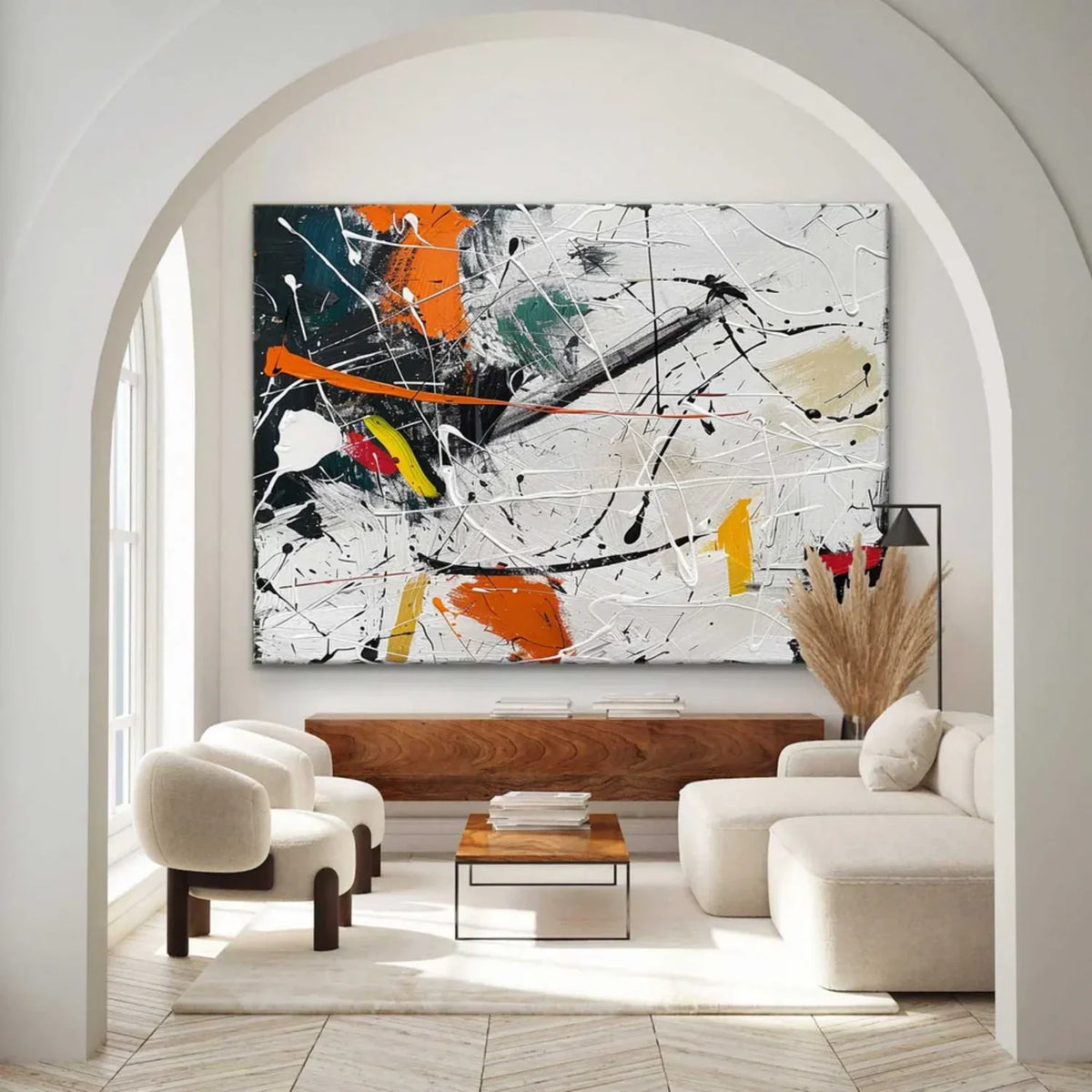
For example, Colorful Pollock Art #PA005 uses contrasting black, white and orange marks in an elongated horizontal format suitable for placement above a sofa or wide sideboard.
Another option, Pollock Art #PA034, offers a more colorful composition with energetic gestural marks.
Colorful Abstract Wall Art
Wonder Artwork's colorful painting collection provides additional options for homeowners seeking energetic visual contrast.
Colorful abstract artwork can become the main decorative feature in rooms furnished with neutral sofas, natural wood and simple architectural details.
Rather than matching every color in the painting, select two accent colors and repeat them sparingly through cushions, ceramics or other small objects.
Textured Abstract Canvas Art
The textured painting collection offers another route into expressive contemporary wall decor.
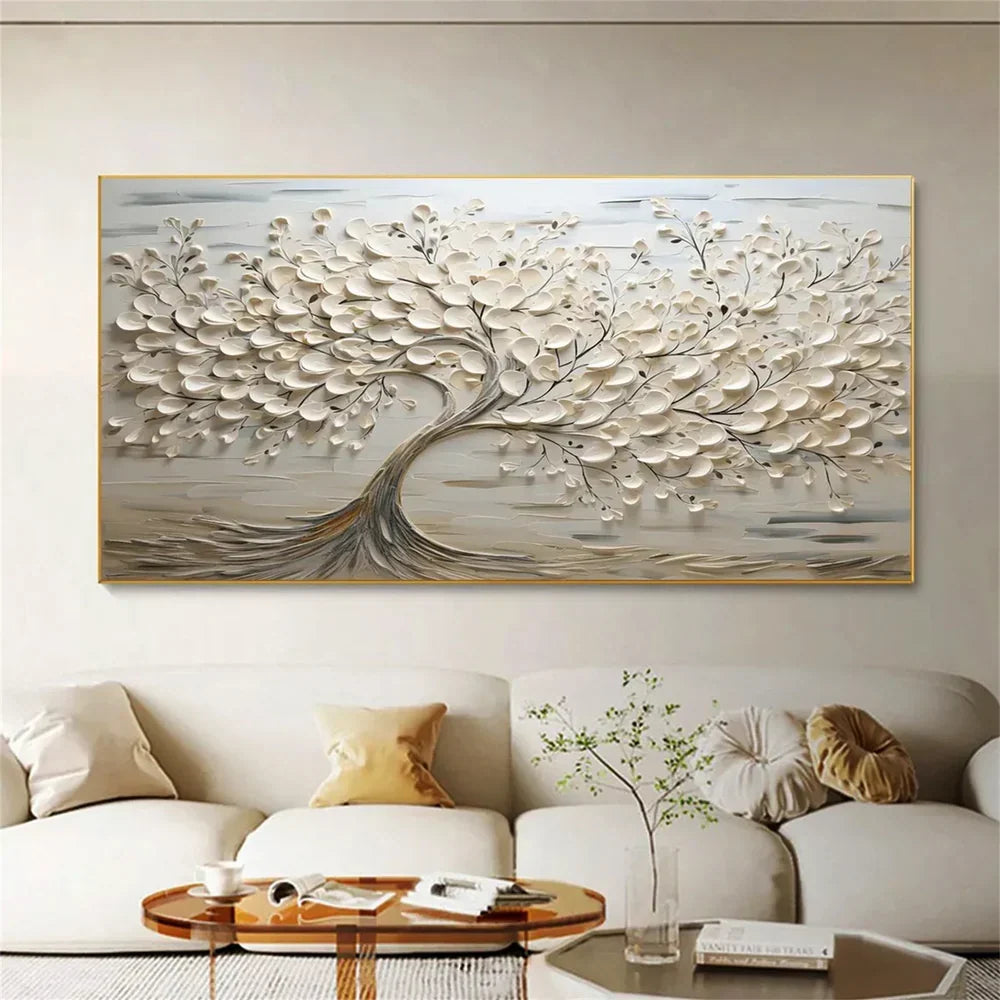
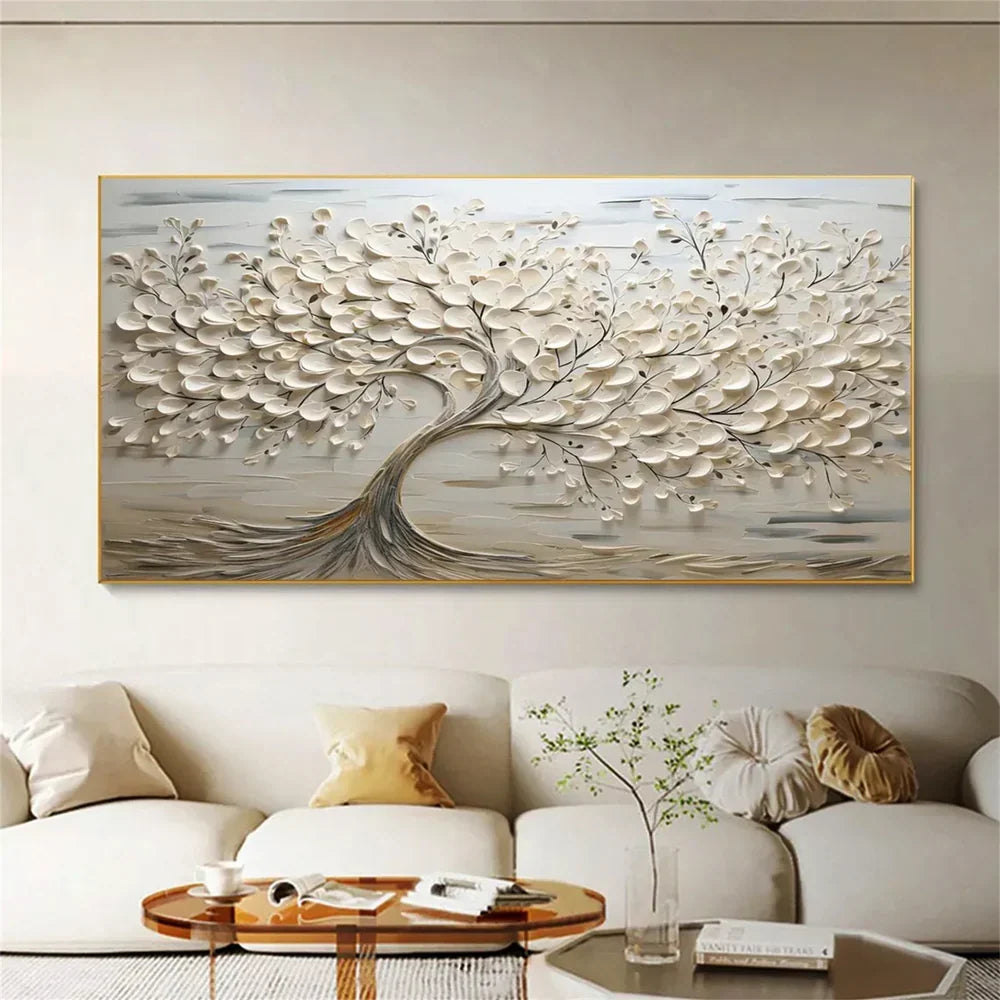
Raised paint and layered surfaces introduce physical depth, allowing subtle changes in light to influence the appearance of the artwork.
Textured paintings can be particularly effective in contemporary interiors featuring linen upholstery, wood furniture, natural stone and restrained color palettes.
Neutral and Minimalist Abstract Paintings
Not every contemporary abstract painting needs strong color or dense gestures.
Wonder Artwork's minimalist art collection and Wabi Sabi-inspired artwork provide quieter alternatives.
These designs are not equivalent to historical Rothko or Newman paintings, but they may suit buyers drawn to the contemplative atmosphere of restrained abstract compositions.

What Should Buyers Verify?
Before purchasing from Wonder Artwork, review the selected product's dimensions, available frame options, material descriptions, estimated production time and delivery information.
Some products are offered as rolled canvases, while others have several frame finishes. A rolled canvas may require stretching or framing before installation.
Wonder Artwork product descriptions also discuss made-to-order production and the possibility of small differences between individually painted works.
Always confirm the exact specifications and current terms of the product you intend to order.
Bring Expressive Abstract Art Into Your Home
Discover contemporary hand-painted artwork inspired by energetic gestures, powerful colors and modern abstract compositions.
Abstract Expressionism vs. Other Modern Art Movements
Abstract Expressionism is often confused with other modern art movements because several styles reject conventional realism.
Understanding the differences helps viewers recognize artistic characteristics and buyers select contemporary artwork more precisely.
| Art Movement | Main Characteristics | Historical Context | Visual Distinction |
|---|---|---|---|
| Abstract Expressionism | Emotion, gesture, expansive color, process | 1940s–1950s, especially New York | Action painting or color fields |
| Cubism | Fragmented forms, multiple viewpoints | Early 20th-century Europe | Geometric restructuring of subjects |
| Surrealism | Dreams, subconscious imagery, unexpected forms | Developed during the 1920s | Dreamlike imagery or automatism |
| Minimalism | Reduction, repetition, material clarity | Especially prominent during the 1960s | Restrained forms and industrial simplicity |
| Pop Art | Consumer imagery and popular culture | 1950s–1960s | Commercial images and recognizable symbols |
The key difference is that Abstract Expressionism is both historically specific and stylistically diverse. A contemporary abstract painting can be influenced by its ideas without belonging to the original movement.
How to Recognize Abstract Expressionist-Inspired Art
When viewing an expressive abstract painting, begin by examining the relationship between gesture, color, surface and composition. These visual elements can reveal how the artwork connects to the expressive traditions established during the twentieth century.
1. Look for Visible Artistic Gestures
One of the most recognizable characteristics of action-painting-inspired art is the presence of physical gestures. Sweeping brushstrokes, irregular lines, splattered pigment and layered paint marks can reveal the movement involved in making the work.
However, expressive brushwork does not automatically make a painting Abstract Expressionist. The historical movement was defined by a specific artistic context, while similar techniques can appear in contemporary decorative art and other traditions.
When evaluating modern wall art, consider how the artist uses direction and rhythm. Long diagonal marks may suggest movement, while thick horizontal strokes can create stability. Repeated gestures can produce a sense of visual tempo across the canvas.
2. Examine the Relationship Between Color and Emotion
Abstract painting often communicates through color relationships rather than recognizable objects. Deep red, black and orange may create a dramatic atmosphere, while muted blue, cream and gray can appear more restrained.
These associations are subjective rather than universal. A color that feels energetic to one viewer may communicate warmth or familiarity to another.
For interior decorating, evaluate artwork colors in relation to existing furniture, lighting and architectural finishes instead of assuming that every color produces a fixed emotional response.
3. Consider the Artwork's Scale
Large scale was central to the ambitions of many Abstract Expressionists. An expansive canvas can change the viewer's relationship with the artwork by occupying a substantial portion of the visual field.
In contemporary homes, oversized abstract paintings can become architectural focal points above sofas, dining sideboards and substantial furniture arrangements.
A large painting does not need bright colors to make an impact. An expansive canvas containing restrained tones and subtle surface variation can be equally compelling when its proportions suit the surrounding architecture.
4. Study the Surface and Materials
Paint texture provides another clue to an artwork's construction. Raised pigment, layered brushwork and irregular surface patterns can make the creative process more visible.
However, a printed reproduction can depict the appearance of thick paint without reproducing its physical relief.
When buying decorative artwork, confirm whether the composition is a printed canvas, a hand-painted work or a mixed-media piece. Close-up photography and clearly documented materials help buyers make informed decisions.
How to Style Abstract Expressionist Art in Modern Homes
Abstract Expressionist-inspired artwork can complement numerous interior styles, from minimalist apartments to eclectic living rooms. The key is to balance the artwork's visual energy with furniture proportions, architectural details and the surrounding color palette.
Abstract Expressionist Wall Art for Living Rooms
The living room is often the best location for a substantial expressive canvas because the main sofa provides a clear furniture anchor.
For a room featuring cream or gray upholstery, a large painting with black strokes and orange accents can introduce a strong focal point without requiring several additional decorative objects.
For interiors already containing patterned rugs and colorful cushions, a quieter abstract composition may create better balance than another highly saturated artwork.
Wonder Artwork's Colorful Pollock Art #PA005 provides an example of a contemporary gestural composition suitable for a wide sofa wall.
To create a cohesive interior, identify two supporting colors from the artwork and repeat them through smaller accessories such as cushions, ceramics or a decorative object.
Abstract Art for Minimalist Bedrooms
Bedrooms often benefit from artwork that introduces personality without overwhelming the room's atmosphere.
Color-field-inspired compositions, neutral abstract paintings and subtle textured canvases can provide visual depth while preserving a calm environment.
A bedroom featuring linen bedding, natural wood and warm white walls may work particularly well with beige, taupe, muted blue or soft brown artwork.
Explore the Wonder Artwork Wabi Sabi collection and minimalist art collection for restrained contemporary compositions.
These works are not historical color field paintings, but they may appeal to homeowners who appreciate simplified compositions, atmospheric surfaces and subtle color relationships.
Abstract Expressionist Art for Dining Rooms
Dining rooms often contain long tables, strong horizontal furniture lines and decorative lighting. A large expressive painting can provide contrast against these structured elements.
For walnut furniture and warm lighting, consider artwork containing earthy red, burnt orange, ochre or black. For pale contemporary dining furniture, blue, white or multicolored abstract artwork may create stronger visual contrast.
Choose a horizontal canvas for a long sideboard or a large square painting for a more symmetrical arrangement.
Abstract Paintings for Home Offices
A home office can benefit from expressive art that makes the room feel personal rather than purely functional.
Gestural abstract paintings can provide visual energy in a creative workspace, while quieter color-based compositions may be preferable in offices designed for concentrated work.
Consider the painting's position relative to your computer and video-call background. Highly detailed artwork directly behind a desk chair may appear visually busy in a small video frame.
Placing a statement painting on a side wall or opposite the desk can introduce character without overwhelming the immediate working area.
What Size Abstract Expressionist Wall Art Should You Choose?
Choosing the right size is as important as choosing the artistic style. A painting that is too small may look disconnected from the furniture beneath it, while an oversized canvas can overwhelm narrow walls.
The 60–75% Furniture Width Guideline
For artwork above a sofa, a practical starting guideline is to choose a composition approximately 60–75% as wide as the furniture.
For example, an 84-inch sofa suggests artwork approximately 50–63 inches wide. A 96-inch sofa suggests a starting range of approximately 58–72 inches.
These measurements are flexible decorating guidelines rather than fixed design standards. Frame dimensions, nearby windows, wall proportions and furniture arrangements can justify adjustments.
Oversized abstract artwork is particularly effective when it has sufficient negative space around the edges and is visually connected to the furniture below.
Horizontal, Vertical and Square Canvas Formats
Horizontal paintings work well above sofas, dining sideboards and long consoles because their width reinforces the proportions of the furniture.
Vertical paintings are useful in narrow hallways, entryways and wall sections between windows, where the artwork can emphasize architectural height.
Square paintings can create concentrated focal points above fireplaces, compact sofas and symmetrical furniture arrangements.
Wonder Artwork offers horizontal canvas art, vertical paintings and square artwork for different wall proportions.
How High Should You Hang Abstract Artwork?
For a painting displayed independently on a wall, positioning its center approximately 57–60 inches above the finished floor is a commonly used starting point.
Above a sofa, try leaving approximately 6–10 inches between the furniture's top edge and the bottom of the artwork.
Adjust these values according to artwork proportions, ceiling height and the primary viewing position.
Before purchasing a large canvas, use painter's tape to mark the intended dimensions on the wall and evaluate the outline from several locations in the room.
Find Abstract Art That Fits Your Space
Compare large statement canvases with expressive contemporary artwork in horizontal, square and vertical formats.
Original Abstract Expressionist Paintings vs. Contemporary Inspired Artwork
Buyers should distinguish historical Abstract Expressionist paintings from contemporary decorative artwork influenced by the movement.
Historical Abstract Expressionist Originals
Original works by artists such as Jackson Pollock, Mark Rothko, Willem de Kooning and Lee Krasner belong to a specific period of art history.
Authenticity, provenance, exhibition history and conservation condition are important considerations when evaluating historical fine art.
A contemporary painting using energetic brushwork or broad areas of color should not automatically be described as a historical Abstract Expressionist original.
Printed Abstract Art
A canvas print reproduces an existing image onto canvas. It can be suitable for buyers who want a particular composition and consistent visual results.
However, printed brushstrokes or photographed texture do not necessarily create physical relief on the surface.
Contemporary Hand-Painted Abstract Art
A contemporary hand-painted canvas is produced through the physical application of paint by an artist. It may contain visible brushwork, layered pigment, textured surfaces and natural variations between individually created pieces.
Wonder Artwork offers hand-painted abstract canvases that are suitable for modern interior decorating. These paintings should be appreciated as contemporary artworks rather than misidentified as originals by historical Abstract Expressionists.
Before ordering, verify whether the product is supplied rolled, stretched or framed. These formats have different installation requirements and potentially different total costs.
How to Choose the Right Color Palette
The colors in an expressive abstract painting influence how strongly it interacts with surrounding furniture and architecture.
Black, White and Orange
This palette creates a graphic contemporary appearance. Black provides strong visual structure, white offers breathing room and orange introduces warmth.
It works particularly well with gray sofas, pale oak floors, cream walls and black metal fixtures.
Blue, Yellow and White
Blue-dominant compositions can introduce cool contrast into neutral interiors, while yellow creates visual energy.
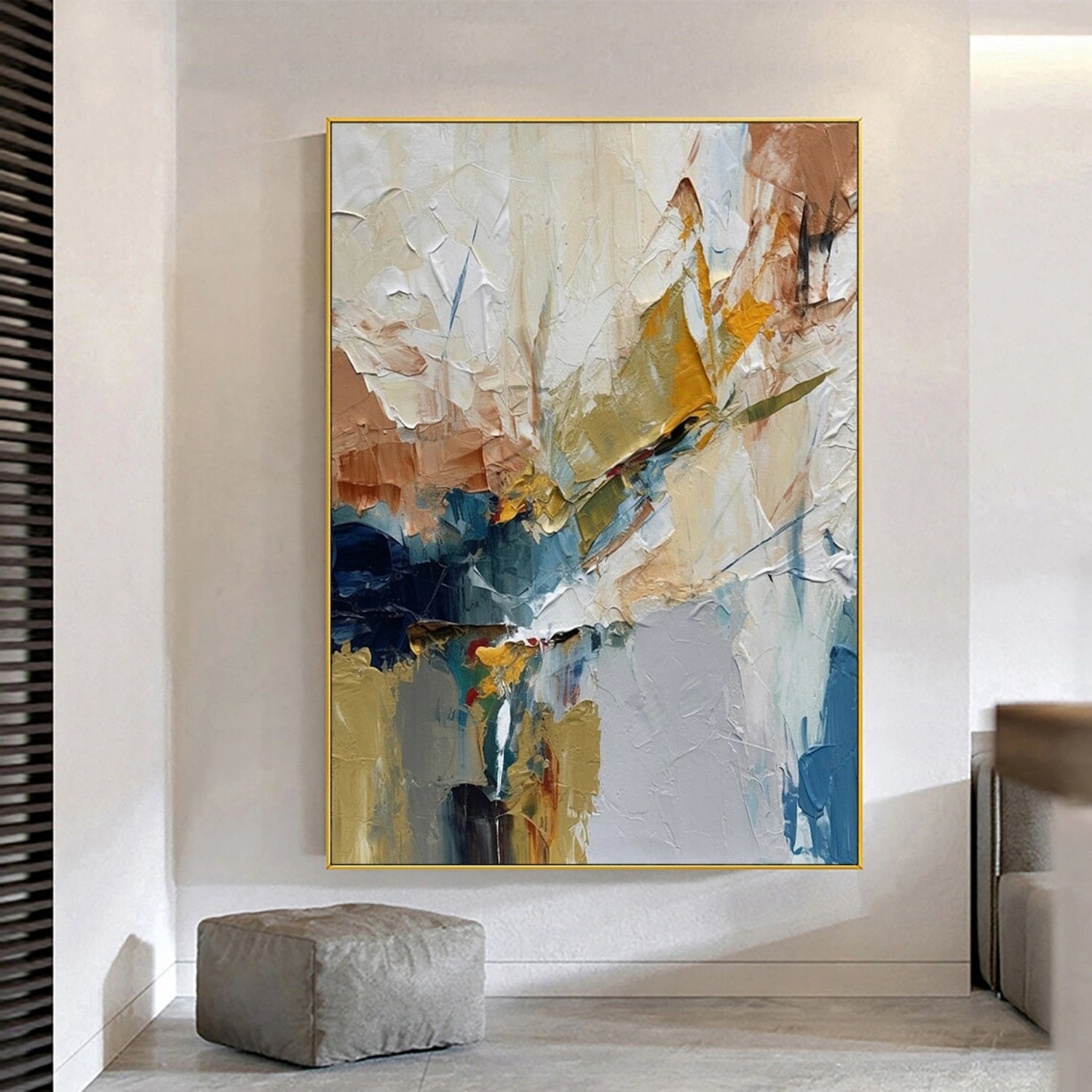
Pair this palette with white walls, light wood furniture and gray upholstery. Repeat one of the painting's colors in a limited number of accessories.
Beige, Brown and Warm Gray
Neutral abstract artwork is particularly useful in minimalist and organic-modern homes. Subtle differences in paint texture and tone can make a restrained composition visually engaging.
Warm neutrals work well with linen sofas, walnut furniture, woven rugs and natural stone.
Red, Gold and Charcoal
Richer colors can create a dramatic focal point in rooms with dark furniture and warm lighting.
Because these tones have substantial visual weight, allow enough open wall space around the painting and avoid surrounding it with numerous highly patterned accessories.
Common Mistakes When Decorating With Abstract Expressionist-Inspired Art
Choosing Artwork That Is Too Small
Expressive abstract compositions often rely on scale to reveal their full visual rhythm. A painting that is too narrow for a large sofa can appear disconnected from the furniture.
Measure the wall and test the proposed dimensions before purchasing.
Using Too Many Competing Focal Points
A large colorful abstract canvas often works best as the main decorative feature. Adding several equally intense paintings nearby can reduce its impact.
Consider leaving adjacent walls relatively quiet or choosing smaller, lower-contrast companion pieces.
Confusing Printed Texture With Physical Texture
Close-up photographs may show thick paint marks even when the product is a flat reproduction. Buyers seeking genuine surface depth should review the material specifications and production method.
Ignoring Existing Furniture Colors
A bright multicolored painting can look sophisticated against neutral furniture but may compete with strongly patterned upholstery.
Choose artwork that complements the visual character of the room rather than selecting it independently of the surroundings.
Overlooking Framing and Installation Costs
A rolled canvas may require local stretching or framing. Oversized artwork may also require additional handling and secure hanging hardware.
Compare the complete installed cost rather than relying only on the listed painting price.
A Practical Buying Checklist for Abstract Expressionist-Inspired Wall Art
- Measure the available wall space before choosing the canvas.
- Determine whether action-painting-inspired or color-field-inspired artwork better suits the room.
- Choose a primary color palette compatible with existing furniture.
- Compare horizontal, vertical and square canvas formats.
- Check whether the artwork is hand-painted or printed.
- Review product photographs and close-up surface details.
- Confirm exact dimensions, including any outer frame.
- Determine whether the artwork arrives rolled, stretched or framed.
- Check production time and destination-specific shipping information.
- Ask about customization if a particular size or color arrangement is required.
- Allow for installation hardware and potential local framing costs.
- Review the seller's current return and damage policies before ordering.
Shop the Look: Expressive Abstract Art From Wonder Artwork
Wonder Artwork offers several contemporary directions for homeowners interested in the visual language of Abstract Expressionism.
For energetic gestural artwork, begin with the Wonder Artwork Pollock Art collection. These compositions feature overlapping lines, splattered marks and expressive color relationships.
For bold, colorful focal points, explore the colorful abstract painting collection.
For subtle surface character, consider the textured painting collection, which emphasizes material depth and visible painted surfaces.
For a more restrained interior, compare the minimalist art collection and Wabi Sabi-inspired artwork.
For a wide sofa wall, Colorful Pollock Art #PA005 offers an expressive horizontal composition.
For a vibrant square focal point, Pollock Art #PA034 provides an alternative with multiple contrasting colors.
When making the final choice, prioritize artwork proportions, materials, visual character and compatibility with your actual room rather than relying exclusively on the decorative style label.
Discover Your Next Statement Artwork
Explore hand-painted abstract paintings, expressive contemporary canvases and curated artwork for modern living spaces.
Final Thoughts: Why Abstract Expressionism Still Matters
Abstract Expressionism transformed modern painting by expanding the possibilities of artistic gesture, scale, color and personal expression.
The movement did not produce one universal visual style. Jackson Pollock's dynamic drip paintings, Mark Rothko's expansive color relationships and Willem de Kooning's expressive brushwork demonstrate the diversity of approaches associated with postwar American abstraction.
Today, the movement's influence remains visible in contemporary decorative artwork, from energetic gestural canvases to expansive minimalist compositions.
For homeowners, understanding Abstract Expressionism creates a more informed approach to selecting art. Rather than choosing paintings simply because they match furniture, consider how the artwork's gesture, scale, color and surface affect the overall atmosphere of the room.
Wonder Artwork offers a selection of contemporary abstract paintings, Pollock-inspired canvases and textured wall art for buyers who appreciate expressive visual design.
The right painting can become more than decoration. It can provide a lasting focal point that reflects individual taste, creates spatial balance and makes the surrounding architecture feel more personal.
Frequently Asked Questions About Abstract Expressionism
What is Abstract Expressionism in simple terms?
Abstract Expressionism is a modern art movement that flourished in New York during the 1940s and 1950s. Its artists used abstraction, expressive gestures, color and experimental techniques to explore personal experiences and artistic ideas rather than relying exclusively on realistic representation.
Who started Abstract Expressionism?
Abstract Expressionism was not founded by one artist. The movement developed through the work of several painters, including Jackson Pollock, Willem de Kooning, Mark Rothko, Lee Krasner, Barnett Newman and others associated with the New York art community.
When did Abstract Expressionism begin?
The movement emerged during the early 1940s and became especially influential in the years following World War II. Its first generation of painters gained prominence during the 1940s and 1950s.
What are the two main types of Abstract Expressionism?
Two widely discussed approaches are action painting and color field painting. Action painting emphasizes expressive gestures and physical painting processes, while color field painting emphasizes expansive areas of color and immersive visual experiences. These categories do not encompass every artist or artwork perfectly.
What is the difference between abstract art and Abstract Expressionism?
Abstract art is a broad category describing artwork that departs from straightforward realistic representation. Abstract Expressionism refers to a historically specific modern art movement associated particularly with postwar New York.
Why is Jackson Pollock important to Abstract Expressionism?
Jackson Pollock developed an influential drip painting technique in which he applied liquid paint to canvases placed on the floor. His approach emphasized gesture, movement and the physical process of painting.
What is color field painting?
Color field painting uses large areas of color to create immersive visual and emotional experiences. Artists such as Mark Rothko and Barnett Newman explored how color, scale and simplified composition could affect viewers.
Is Abstract Expressionism still popular in modern interior design?
Contemporary artwork influenced by Abstract Expressionism remains relevant to modern interiors. Gestural paintings, large abstract canvases and restrained color-based compositions can complement minimalist, contemporary, mid-century and eclectic rooms.
What size abstract wall art should I hang above a sofa?
A practical starting guideline is artwork approximately 60–75% of the sofa's width. For an 84-inch sofa, consider a composition around 50–63 inches wide, adjusting according to available wall space and artwork proportions.
Can Abstract Expressionist-inspired paintings work in a minimalist bedroom?
Yes. Choose artwork with restrained colors, atmospheric surfaces or simplified compositions. Neutral textured canvases and subtle abstract paintings can introduce visual interest without overwhelming a calm bedroom.
Is hand-painted abstract art better than canvas prints?
Neither format is universally better. Hand-painted artwork may offer physical paint layers, brushwork and individual variation, while canvas prints reproduce an image consistently. The best choice depends on materials, budget, visual preferences and installation needs.
What frame works best for expressive abstract artwork?
Black frames can emphasize graphic contrast, natural wood introduces warmth and white frames complement pale interiors. The ideal choice depends on the painting's colors, dimensions and surrounding furniture.
Is abstract wall art a good housewarming gift?
Abstract wall art can make a thoughtful gift when the recipient's preferences and available space are known. Medium-size neutral compositions are often easier to place than oversized colorful statement paintings. Check product dimensions and delivery terms before ordering.
Where can I buy Abstract Expressionist-inspired wall art online?
Wonder Artwork offers contemporary Pollock-inspired artwork, abstract canvas paintings and textured paintings suitable for modern interiors. These are contemporary decorative artworks, not authenticated historical originals by Abstract Expressionist masters.
References
The following museum and institutional sources provide historical information about Abstract Expressionism, its artists and painting techniques. Wonder Artwork sources provide contemporary product examples and specifications.
- Museum of Modern Art — Abstract Expressionism. Overview of the movement, its artistic context and representative artworks.
- The Metropolitan Museum of Art — Abstract Expressionism. Historical introduction to the New York artists and the movement's development.
- National Gallery of Art — Jackson Pollock. Artist background and information about his work.
- Museum of Modern Art — Jackson Pollock. Artist biography and selected works.
- Museum of Modern Art — Mark Rothko. Information about Rothko's paintings and artistic career.
- Museum of Modern Art — Willem de Kooning. Artist information and selected artworks.
- Wonder Artwork — Abstract Wall Art Collection. Contemporary abstract paintings and available styles.
- Wonder Artwork — Pollock Art Collection. Contemporary action-painting-inspired canvas artwork.
- Wonder Artwork — Colorful Pollock Art #PA005. Product example of a horizontal gestural abstract painting.
- Wonder Artwork — Pollock Art #PA034. Product example of a colorful contemporary abstract canvas.